
Last updated November 18, 2026
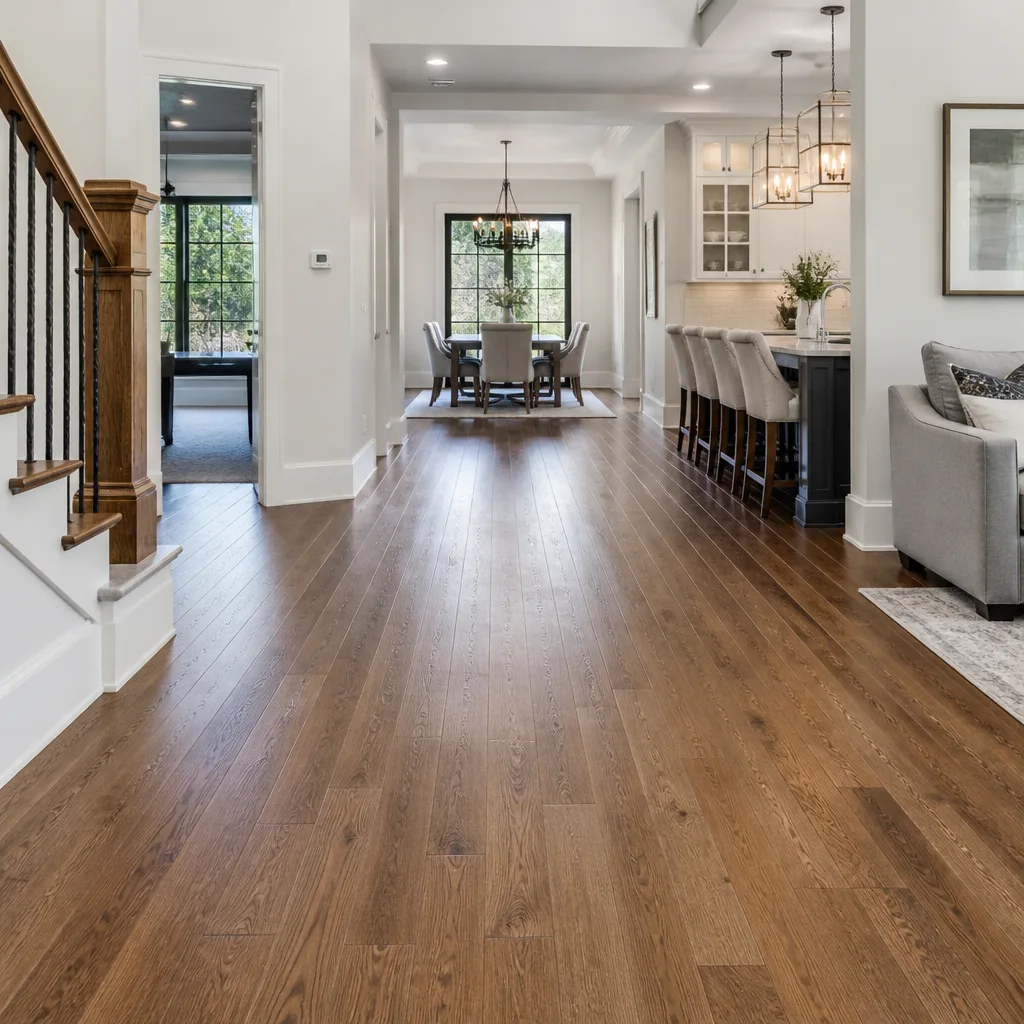 Hardwood
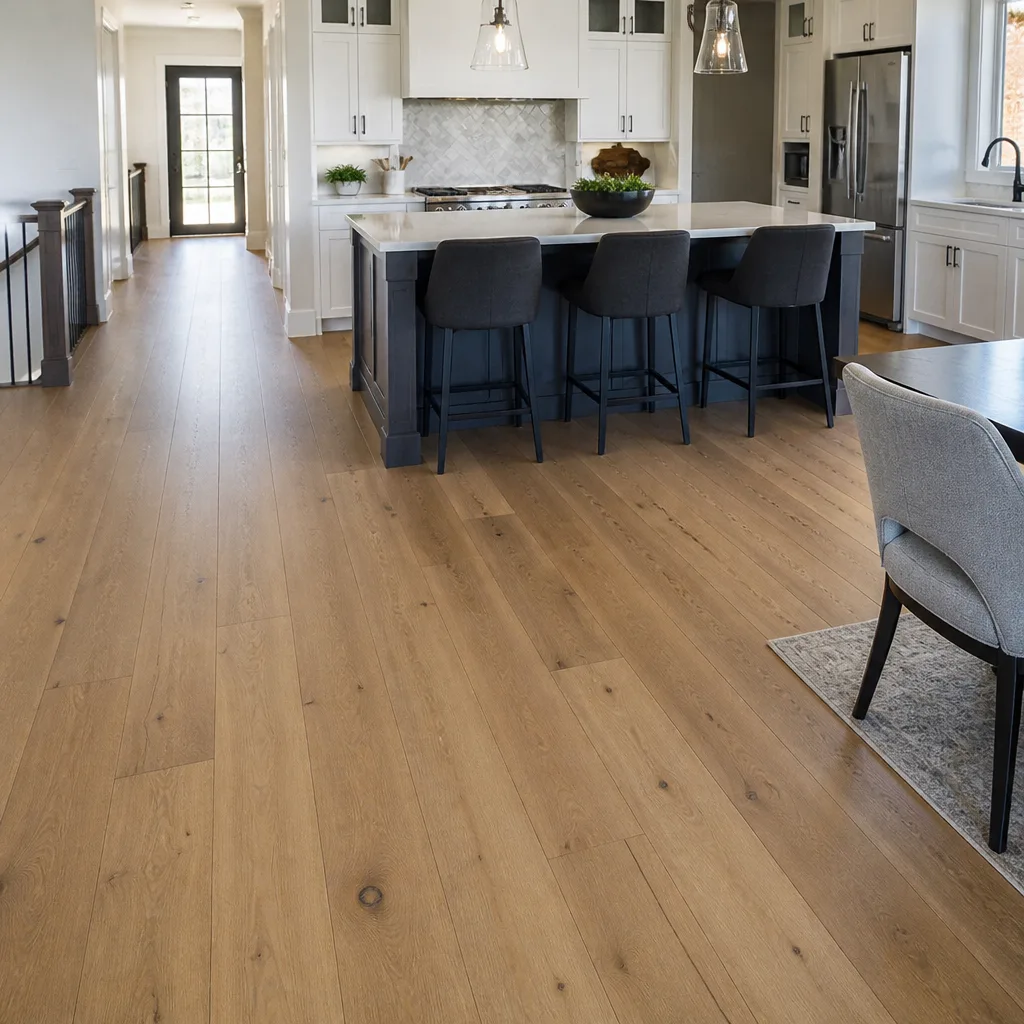 Engineered hardwood
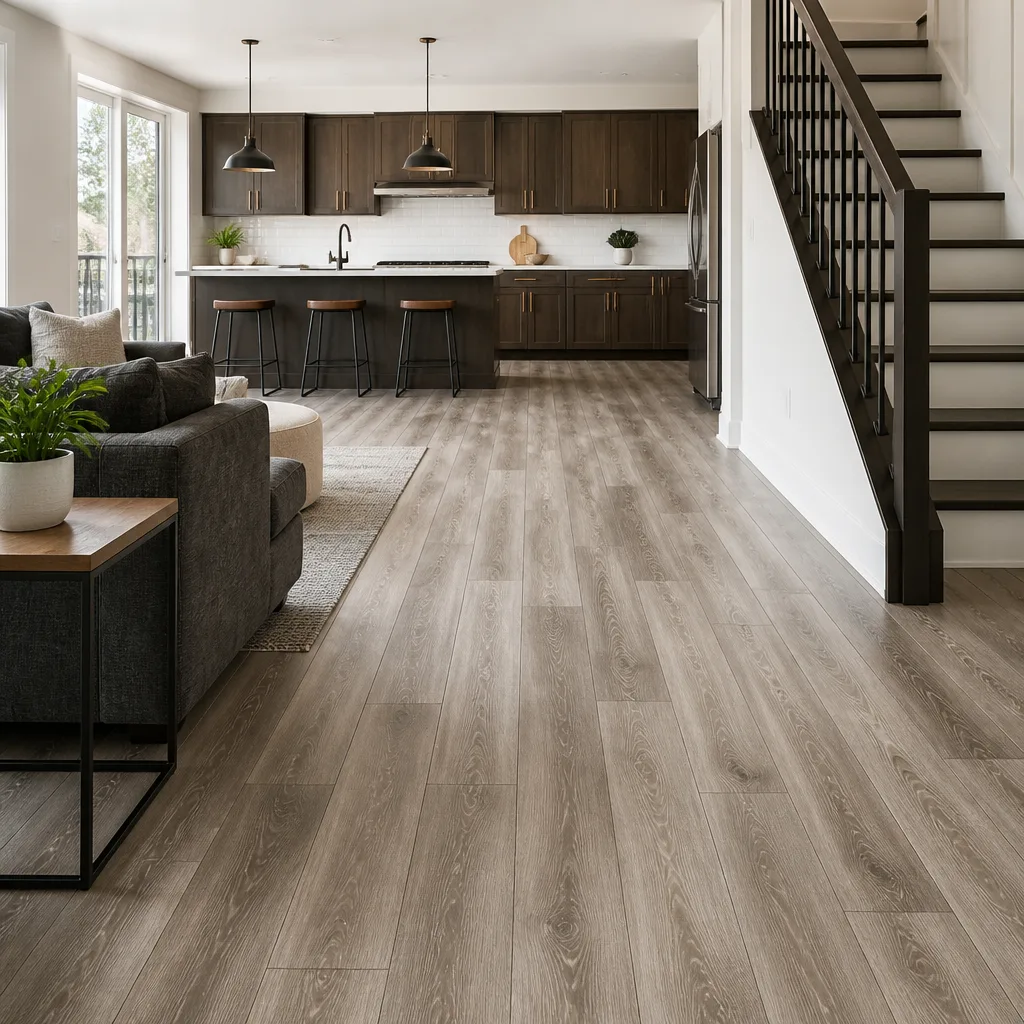 Luxury vinyl plank
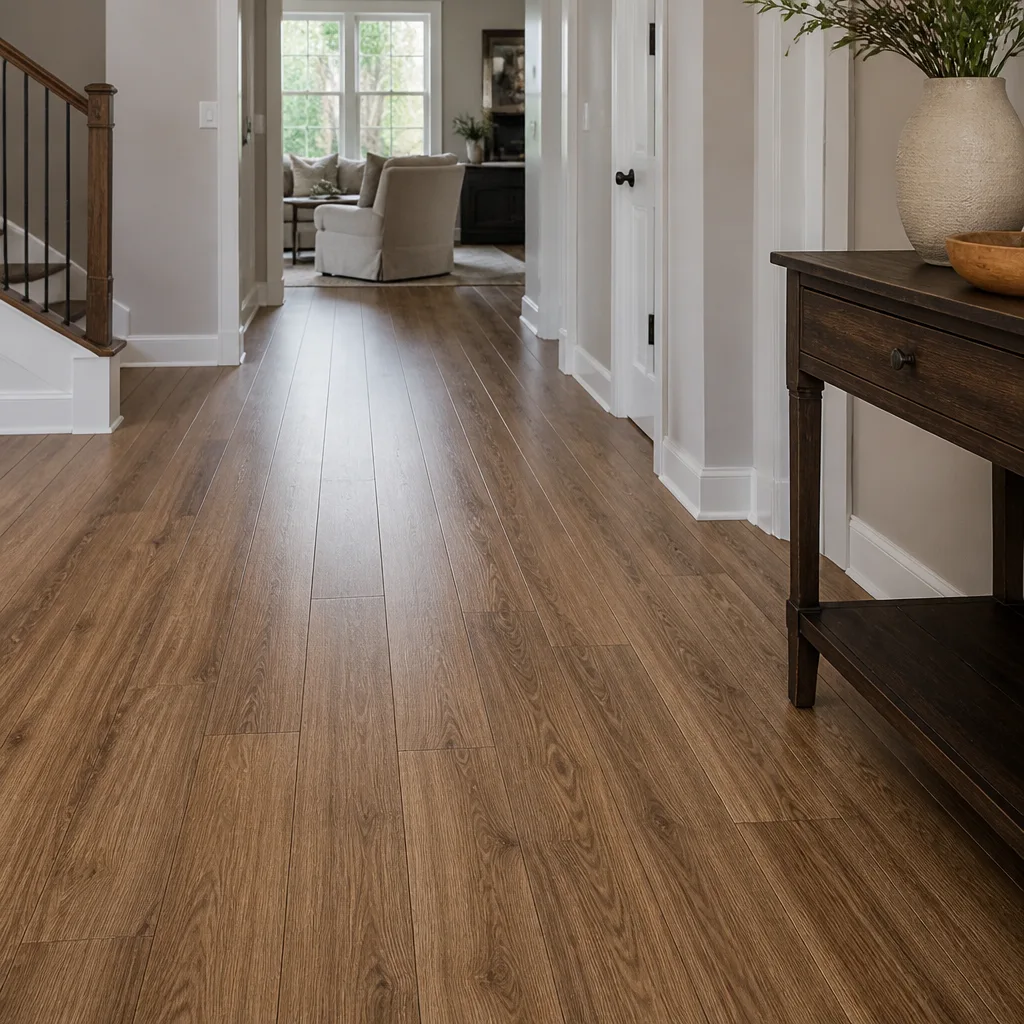 Laminate
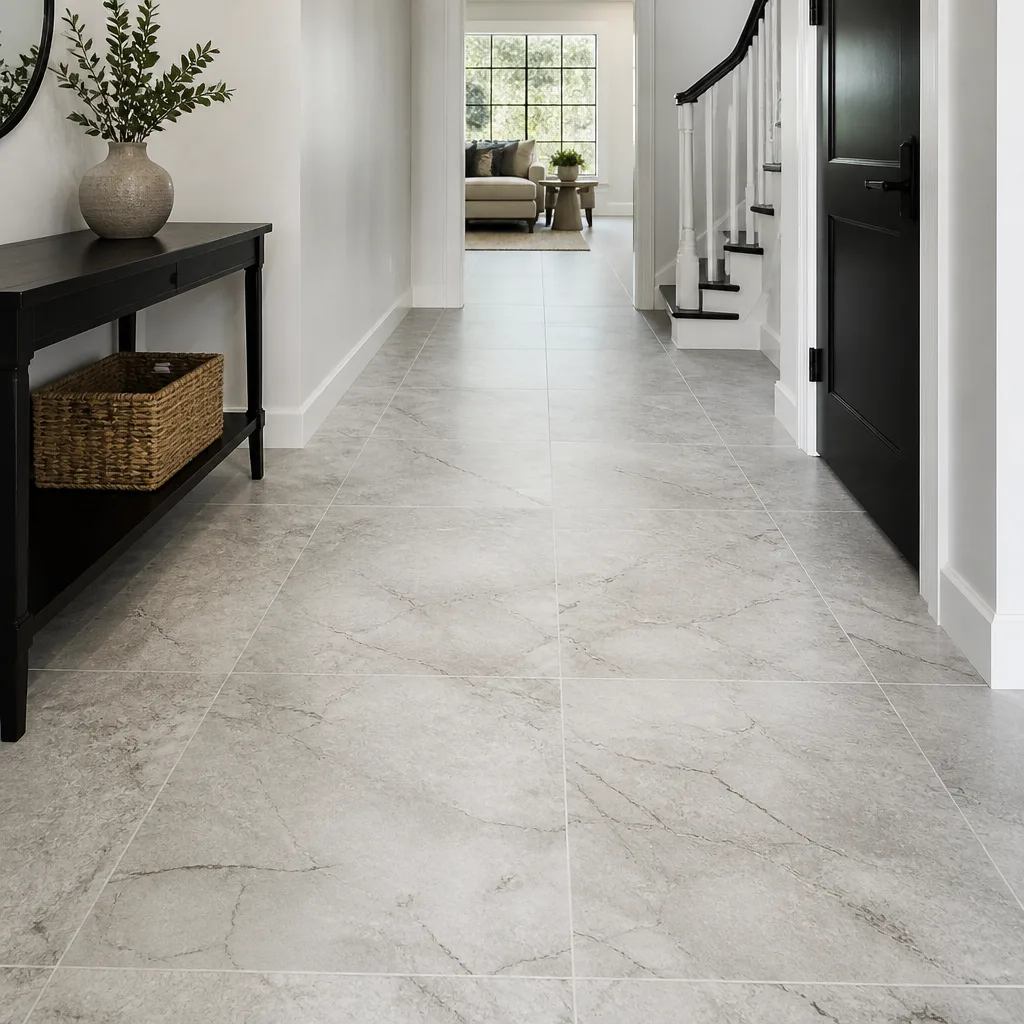 Porcelain tile
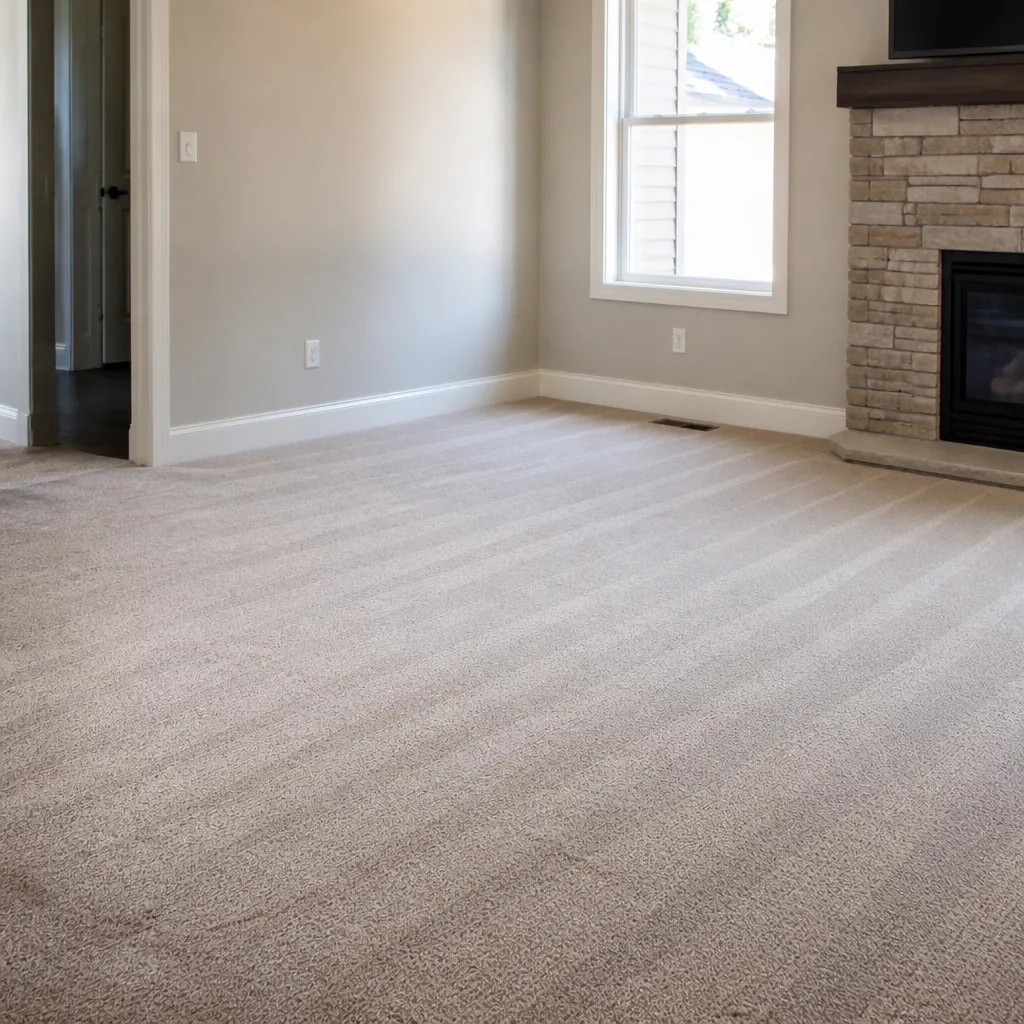 Carpet
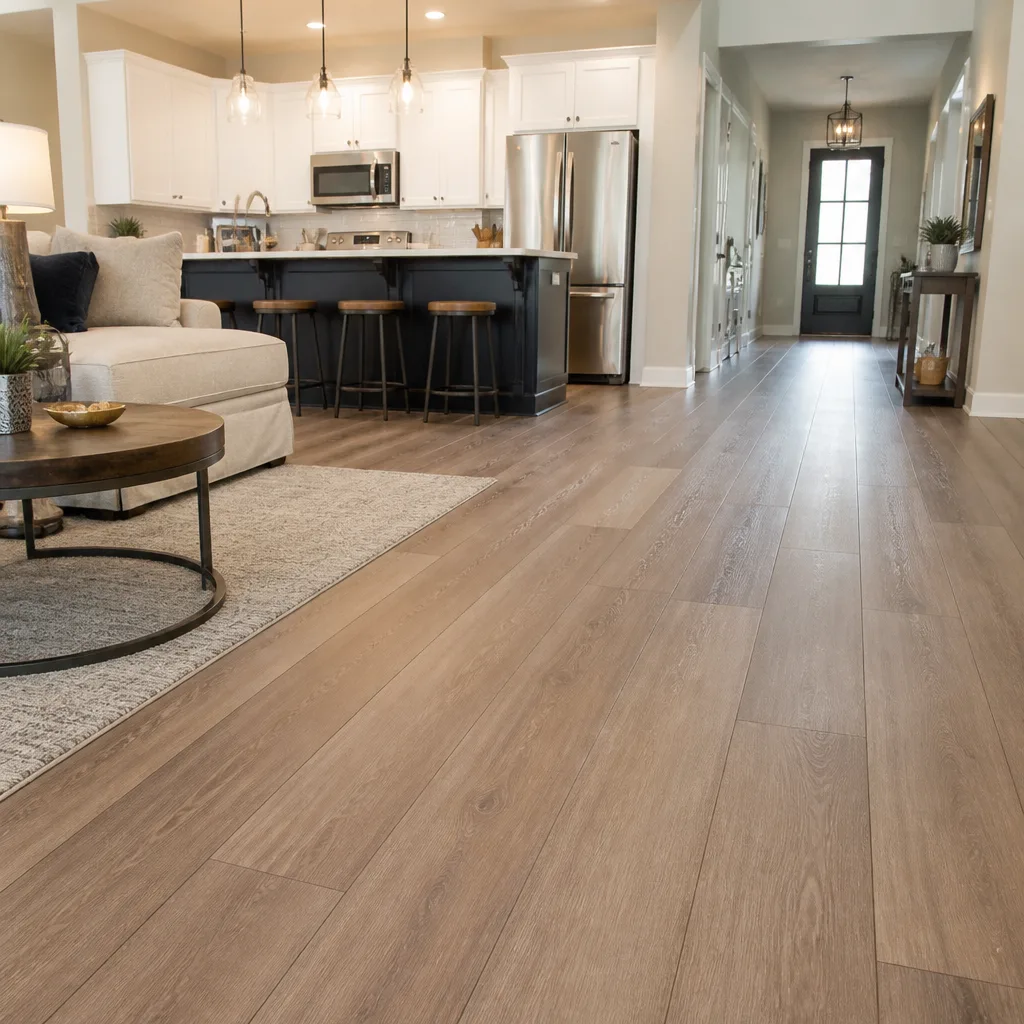 Shaw
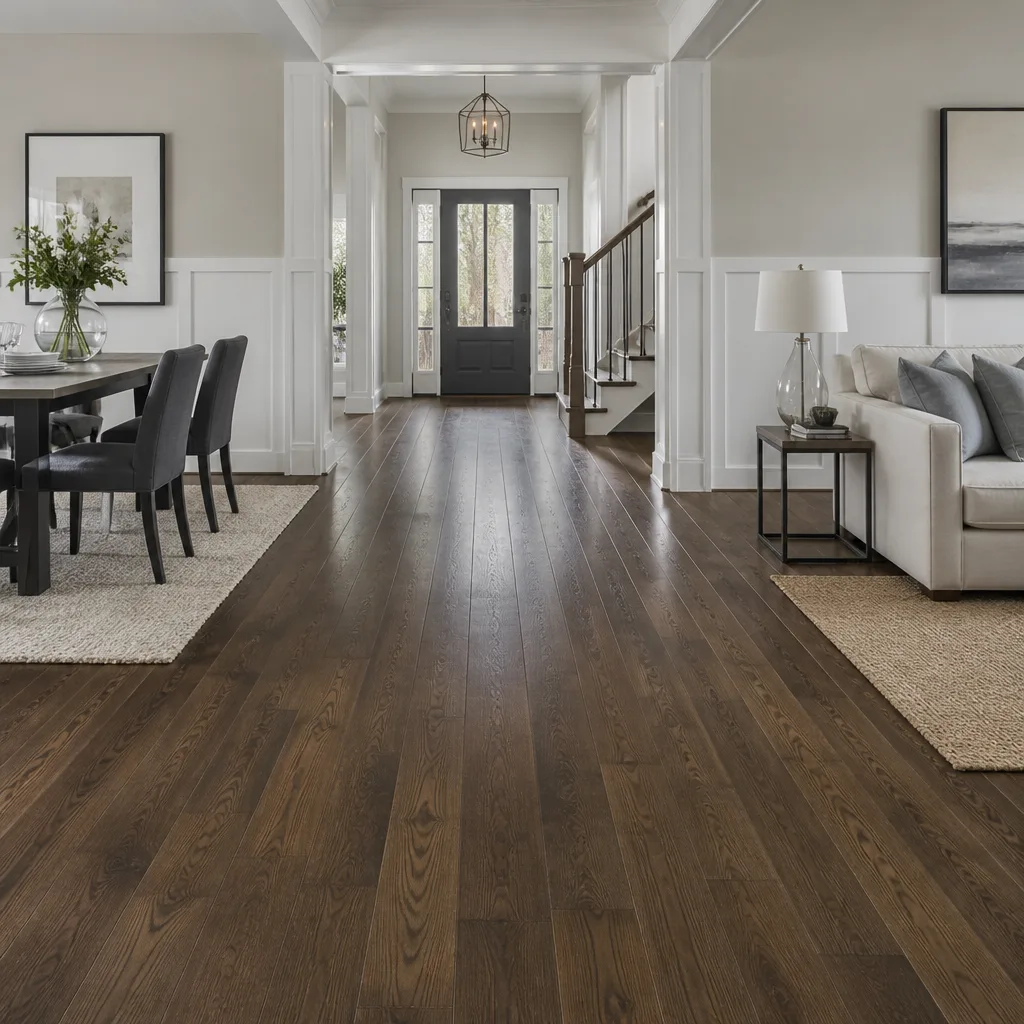 Mohawk
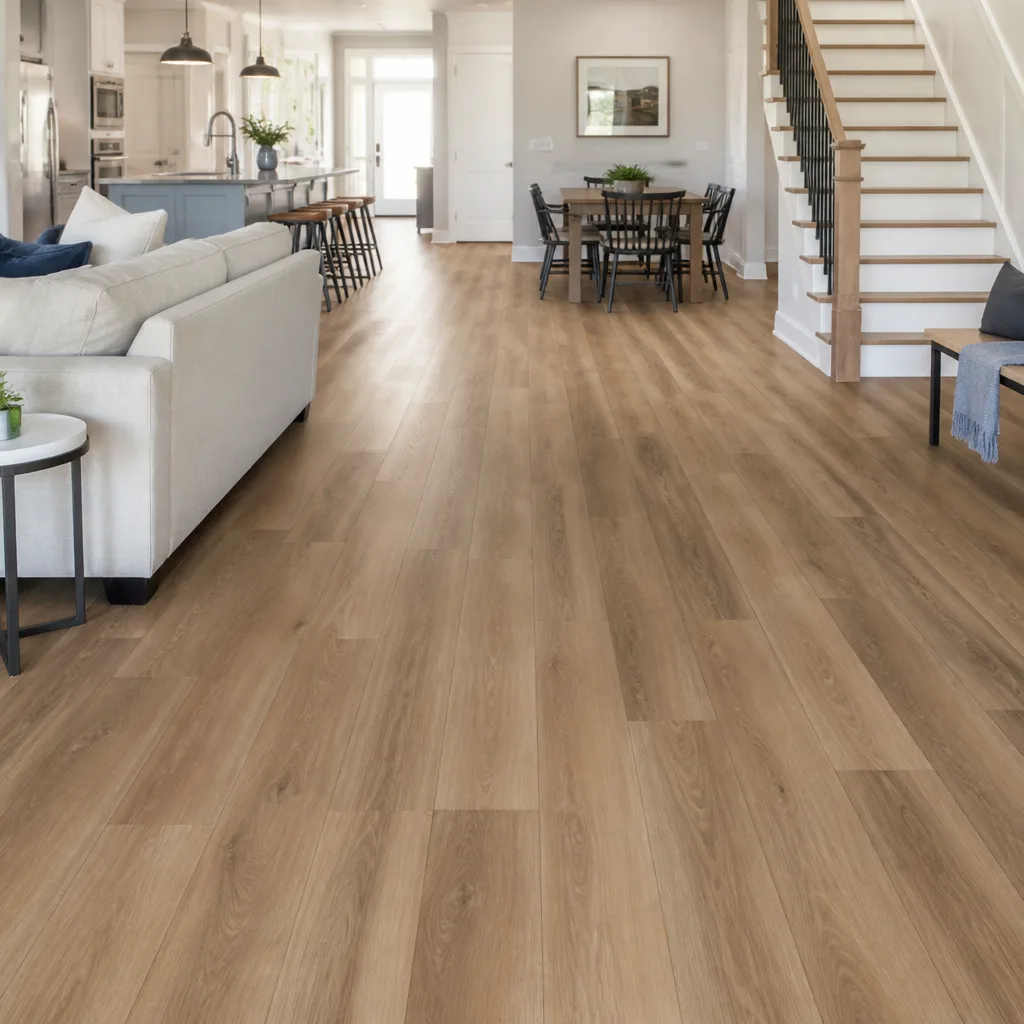 COREtec
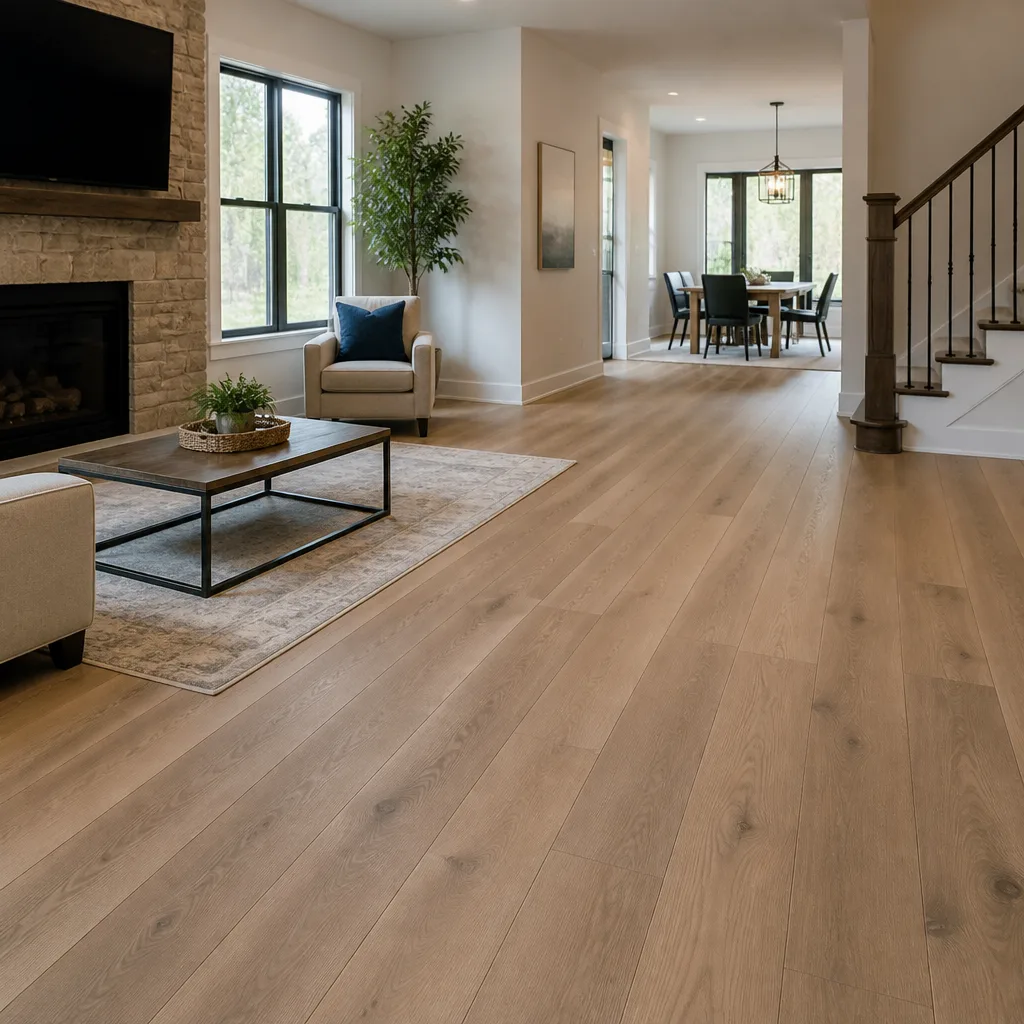 Pergo
Free in-home measure and written estimate: Shaw, Mohawk, COREtec and Pergo lines compared on your own rooms, with carpet, tile, vinyl plank, laminate and hardwood laid out side by side
Get your free estimateHow Henderson’s Climate Can Affect Your Flooring Choice
Henderson averages roughly a 30°F swing between daytime highs and nighttime lows. That’s not weather trivia. It’s the reason solid hardwood has no business going into most Henderson homes without serious caveats, and it’s why the subfloor under your floor matters more than the box the planks came in. Most flooring failures we get called about aren’t product defects. They’re climate mismatches, installed by people who picked a floor for its look and never asked how it behaves when the desert pulls moisture out of it every single day. In this guide, we’ll walk through the actual mechanics: low humidity, concrete slab thermal mass, UV load through south-facing glass, and the indoor climate you control with your thermostat.
Quick Answer
The best flooring for Henderson’s climate is engineered wood or luxury vinyl plank over a properly prepped slab, with tile in wet zones and humidity-tolerant carpet in bedrooms. Henderson’s 20-30% relative humidity and daily thermal swings punish solid hardwood and any wood product that isn’t dimensionally stable. The product you choose matters, but subfloor prep and moisture control matter more.
Styles & brands we work with
- Hardwood
- Engineered hardwood
- Luxury vinyl plank
- Laminate
- Porcelain tile
- Carpet
- Shaw
- Mohawk
- COREtec
- Pergo
Table of Contents
- Why Low Humidity Is the Biggest Factor in Henderson
- Concrete Slabs and Thermal Mass: What Happens Underfoot
- UV Load and South-Facing Rooms
- The Indoor Climate You Create Matters as Much as the Desert
- Which Brands and Products Are Built for Arid Installs
- Matching Floor Category to Room in a Henderson Home
- Subfloor Prep: The Step That Decides Whether the Floor Lasts
- Common Mistakes to Avoid
Why Low Humidity Is the Biggest Factor in Henderson
Henderson runs 20-30% relative humidity most of the year, and it can drop lower during a windy spring afternoon. Wood is hygroscopic, meaning it absorbs and releases moisture from the air around it. When the air is this dry, wood-based flooring loses moisture and shrinks. That shrinkage shows up as gapping between planks, cupping at the edges, and in extreme cases, splitting along the grain. It’s not a defect in the wood. It’s physics, and it’s predictable.
Solid hardwood is the most vulnerable category because the entire board is one piece of wood moving in one direction. A 4-inch solid oak plank in a Henderson living room will gap noticeably in winter and close back up in monsoon season. That movement is normal for solid wood, but many homeowners don’t want to live with it, and some solid products can’t handle the range at all.
Engineered hardwood solves most of this by cross-plying the core. Each layer runs perpendicular to the one below, which locks the board’s movement to a fraction of what solid wood does. That’s why engineered constructions tolerate Henderson’s humidity swing far better than solid. Luxury vinyl plank, which is a plastic composite rather than a wood product, is essentially immune to humidity-driven dimensional change, though it has its own expansion and contraction rules (more on that below).
Two practical rules follow from this:
- If you want wood, go engineered and ask about the core construction. Not all engineered planks are equal; the ply count and core material dictate stability.
- If you want solid hardwood, plan on indoor humidity management via a whole-home humidifier or targeted room humidifiers during the dry months. Without that, expect gapping.
Our technicians have up to 10 years of experience across these categories, and the conversations we have most often with Henderson homeowners start with “will this gap?” For solid wood in this climate, the honest answer is: yes, some, and you need to decide if that’s acceptable to you before the install, not after.
Concrete Slabs and Thermal Mass: What Happens Underfoot
Most Henderson homes sit on concrete slabs, and that slab is a giant thermal battery. It absorbs heat all day and releases it slowly through the evening. The result is a slab surface that can run several degrees warmer than the air in the room during peak summer afternoons, then cool back down overnight. That cycle stresses the bond between floor and slab in a way that wood subfloors in other climates never experience.
Here’s what that means for each category:
- Adhesive-set floors (engineered hardwood, some LVP): Adhesive performance is temperature-sensitive. A slab that heats and cools daily needs an adhesive rated for the temperature range the floor will actually see, not the ambient air temp on install day. This is one place cheap adhesives fail.
- Floating LVP: Floating floors move as a unit and need expansion gaps at the perimeter. In a Henderson home with a hot south-facing slab, the floor expands more than the manufacturer’s baseline numbers assume. Skipping or under-sizing the perimeter gap is how you get buckling in July.
- Tile: Tile is dimensionally stable, but the thin-set bond to a hot slab has to be right. Tile cracks start at the bond line, not in the tile itself.
- Carpet: Carpet over a slab needs a moisture-tested underlayment and a cushion rated for slab-on-grade installation. Warm slabs plus cheap cushion equals premature compression.
Before any hard-surface install on a Henderson slab, we test for moisture vapor emission. Slabs on grade wick moisture from below even in a dry climate, and the desert doesn’t eliminate that. A slab that reads dry on the surface can still push vapor through over time. Skipping this test is the single most common reason floors fail early in Henderson.
UV Load and South-Facing Rooms
Henderson gets roughly 300 sunny days a year. In a home with south- or west-facing glass, the UV load on flooring is intense during the afternoon. That matters for three reasons:
- Fading and color shift. Wood and laminate products will visibly change tone under sustained UV exposure. LVP and tile hold color much better because they use inorganic pigments and UV-stable wear layers.
- Surface degradation. Finishes break down faster under high UV. A polyurethane finish on hardwood in a bright room will need recoating sooner than one in a shaded room, regardless of traffic.
- Heat gain at the surface. A south-facing room’s floor can hit surface temperatures well above the air temp, which compounds the slab thermal effect covered above.
Practical guidance: if a room gets hours of direct afternoon sun, favor LVP, tile, or a UV-stabilized engineered hardwood, and add solar shades or UV-blocking window film. That window treatment does more for your floor’s life than any product upgrade. If you’re set on wood in a bright room, plan on refinishing sooner and accept some color shift as normal.
The Indoor Climate You Create Matters as Much as the Desert
Here’s the counterintuitive part: the outdoor desert is only half the story. Your HVAC system controls the other half, and most Henderson homeowners run air conditioning hard from May through September, which drops indoor humidity even further. A house that sits at 25% outdoor RH can run 15-20% indoors under heavy AC use. That’s harsh on any wood-based floor.
Here’s how to think about the indoor environment you’re managing:
- Know your numbers. Pick up a cheap hygrometer and check indoor RH in a few rooms. You’ll be surprised how low it gets in summer.
- Target indoor RH in the 35-55% range as a general comfort and material-stability zone. Many flooring manufacturers publish the range their products are rated for; the product instructions are the authority, not us.
- Manage the swing, not just the average. A floor that sees 20% RH one week and 60% the next will move more than one that sees a steady 40%. Consistency is the goal.
- Seasonal adjustment. Winter in Henderson brings cooler nights and dry air; a whole-home humidifier or targeted humidifiers help hold wood floors steady through that stretch.
The only thing we’d add: the HVAC setpoint you like for comfort isn’t necessarily what your floor likes. A little compromise, or a little humidity management, prevents most of the callbacks we see. This is why our first conversation with any Henderson homeowner considering wood is about their HVAC habits, not just their aesthetic preferences.
Which Brands and Products Are Built for Arid Installs
We carry nine brands across carpet, luxury vinyl plank, hardwood, tile, and stone, and the range covers both value-driven lines and premium constructions. What follows are the categories and specific brands the market offers for Henderson’s conditions. We’ll tell you what each one is genuinely good at, not just what it looks like on a sample.
Luxury Vinyl Plank: COREtec and LifeProof
COREtec is a strong fit for Henderson’s arid climate because its rigid core construction is dimensionally stable and water-resistant (not waterproof, and standing water still has to be dealt with). LifeProof is another water-resistant option in a value tier, popular for kitchens, laundry rooms, and whole-home installs where budget and durability both matter. Both handle humidity swings better than any wood product. Neither one is immune to heat, and floating installs still need proper expansion gaps.
Engineered Hardwood and Laminate: Pergo and Mohawk
Pergo’s laminate lines sit in the budget-accessible tier with a rigid core that tolerates a wider humidity range than old-school laminate did. Mohawk’s engineered hardwood lineup covers a range of core constructions, and the ply structure is what you want to ask about for a Henderson install. We look at the specific product’s rated humidity range and the slab moisture reading together before recommending any wood-based product.
Tile and Stone: Daltile
Daltile brings both residential aesthetics and commercial-grade durability options. Tile is the most climate-neutral category in Henderson. It doesn’t care about the humidity or the thermal swing, so the risk is concentrated at installation: thin-set selection and slab prep. Daltile’s range means you can go from a designer-look bathroom floor to a high-traffic commercial-grade kitchen tile without switching brands.
Carpet: Shaw, Mohawk, Mannington
Carpet is soft and forgiving for bedrooms, but the cushion under it needs to be slab-rated and the room’s humidity needs to stay reasonable. Over-drying a home in summer and then letting it sit at 20% RH isn’t great for carpet backing, either. Mannington, Shaw, and Mohawk cover the value through premium tiers for carpet installs.
If you want the full picture of what we do, our Floors Henderson page walks through the three-service model: carpet, tile, and hardwood refinishing. That focus means we’re a floor category specialist, not a general contractor who also installs floors.
Matching Floor Category to Room in a Henderson Home
Different rooms in a Henderson home face different climate loads. A south-facing kitchen with a slab and big windows is a different install than a shaded bedroom over a wood-framed addition. Here’s how we think through the match:
Kitchens and laundry rooms
LVP (LifeProof or COREtec) or tile. Water-resistance matters here, and so does dimensional stability. Carpet is the wrong call for a laundry room, and solid hardwood in a kitchen is a humidity-risk decision most homeowners regret.
Living areas with south or west glass
LVP, tile, or a UV-stabilized engineered hardwood, with solar shades as the real long-term fix. Wood finishes will change tone under heavy UV; LVP and tile hold their color.
Bedrooms
Carpet is often the right answer for comfort and quiet, with a slab-rated cushion and attention to the room’s humidity. Engineered hardwood and LVP are also fine here. Bedrooms tend to be shaded and have less thermal load.
Bathrooms
Tile, always. Daltile’s residential range gives plenty of room for design without compromising on the moisture reality of a bathroom.
Whole-home re-floor
You can absolutely mix categories room by room, and we do it all the time. Carpet in bedrooms, LVP in the living space, tile in bathrooms, engineered hardwood in the entry, all under one company. That’s a benefit of the flooring-only focus: no subcontractor coordination, no waiting on another trade.
Existing hardwood
If you’ve got original hardwood in decent shape, refinishing is worth a serious look before you consider a full replacement. Restoring what you have is often the smartest move in a Henderson home, preserving the character and avoiding the cost of a tear-out. Whether refinishing is an option depends on the thickness of the wood and its condition, checked at the estimate visit. We won’t promise every floor can be refinished; we’ll tell you what we see.
If you’re weighing a tile project for a bathroom or kitchen, our tile flooring installation page covers the specifics. Homeowners weighing carpet for bedrooms will find the category fit sketched out on our carpet installation page.
Subfloor Prep: The Step That Decides Whether the Floor Lasts
If your slab is flat and dry, most products will perform. If it isn’t, no product will save you. Subfloor prep is the single biggest variable in a Henderson install, and it’s the step that gets skipped by installers who quote fast and cheap.
Here’s the prep sequence we run for a hard-surface install on a Henderson slab:
- Moisture test the slab. Vapor emission matters even in the desert. The reading dictates the underlayment or vapor barrier required.
- Check flatness. The product instructions specify the flatness tolerance for the specific floor. Out-of-tolerance slabs get leveled before anything goes down.
- Address cracks and surface damage. Any crack repair and surface prep happens before adhesive or underlayment.
- Clean and prime. Dust and residue kill adhesive bonds. Priming is not optional on a bare slab.
- Select adhesive or underlayment for the thermal range. The slab is going to heat and cool. The adhesive has to be rated for that.
- Set expansion gaps relative to the product and the room. Especially for floating floors in hot south-facing rooms.
Acclimation time also depends on the product and the home, and the product instructions and the written estimate set it. Don’t let an installer promise a set number of days; get it from the product documentation.
Common Mistakes to Avoid
- Choosing solid hardwood for a Henderson slab without humidity management. It will gap in winter and close in summer, and no finish prevents it. If you want solid wood, plan for a humidifier.
- Skipping the slab moisture test because “it’s the desert.” Slab-on-grade vapor emission is a real issue in Henderson, and it’s the most common reason floors fail early. Insist on the test.
- Undersizing the perimeter expansion gap on floating LVP. A hot south-facing slab expands the floor more than baseline numbers assume, and undersized gaps buckle in summer.
- Running heavy AC all summer without watching indoor RH. The house drops into the teens, wood products shrink, and the floor pays the price. Pick up a hygrometer and stay in the 35-55% range.
- Ignoring UV in a south-facing room. No window treatment and a wood floor equals visible color shift within a few seasons. Solar shades do more than any product upgrade.
- Calling a product waterproof when it isn’t. Luxury vinyl plank and laminate are water-resistant, not waterproof. Standing water and moisture from below still have to be dealt with.
- Hiring an installer who also does six other trades. A generalist will treat the subfloor as an afterthought. A floor category specialist treats it as the job.
See the difference
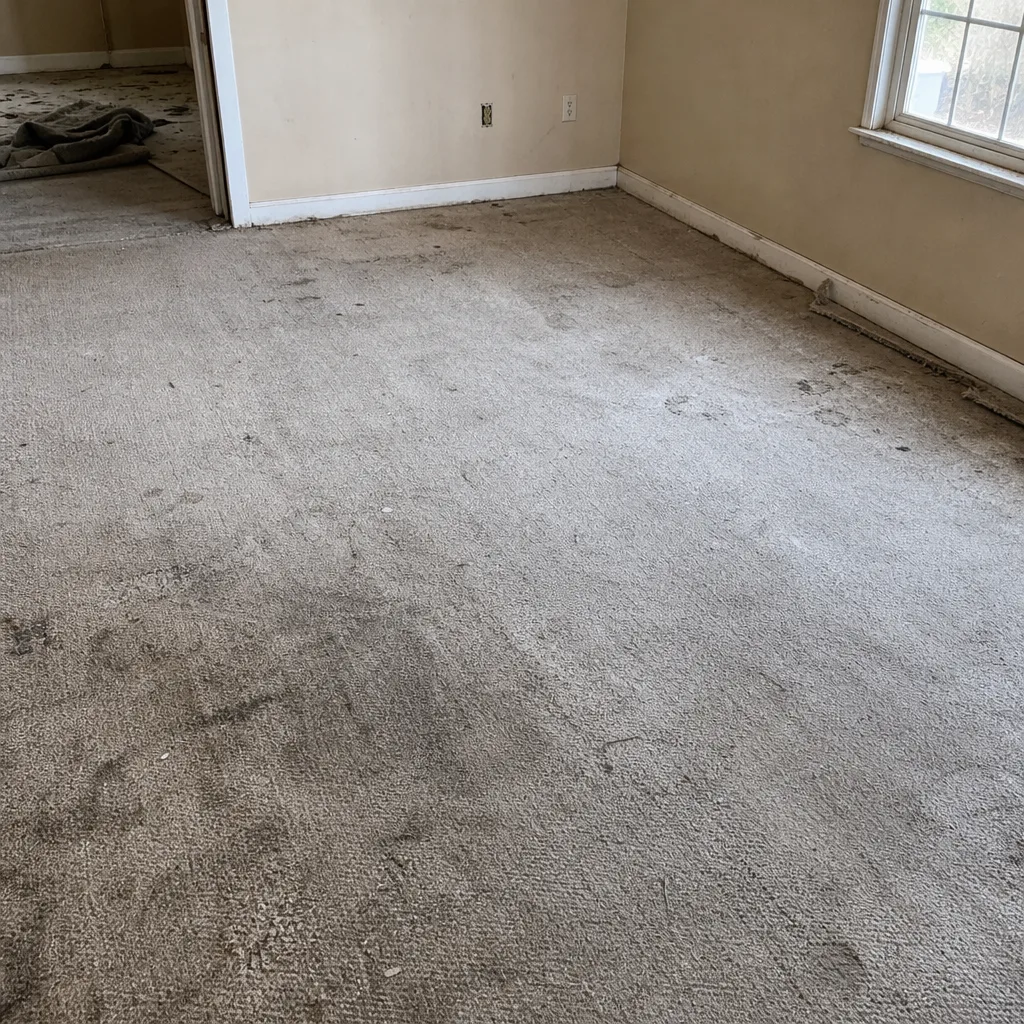 Before
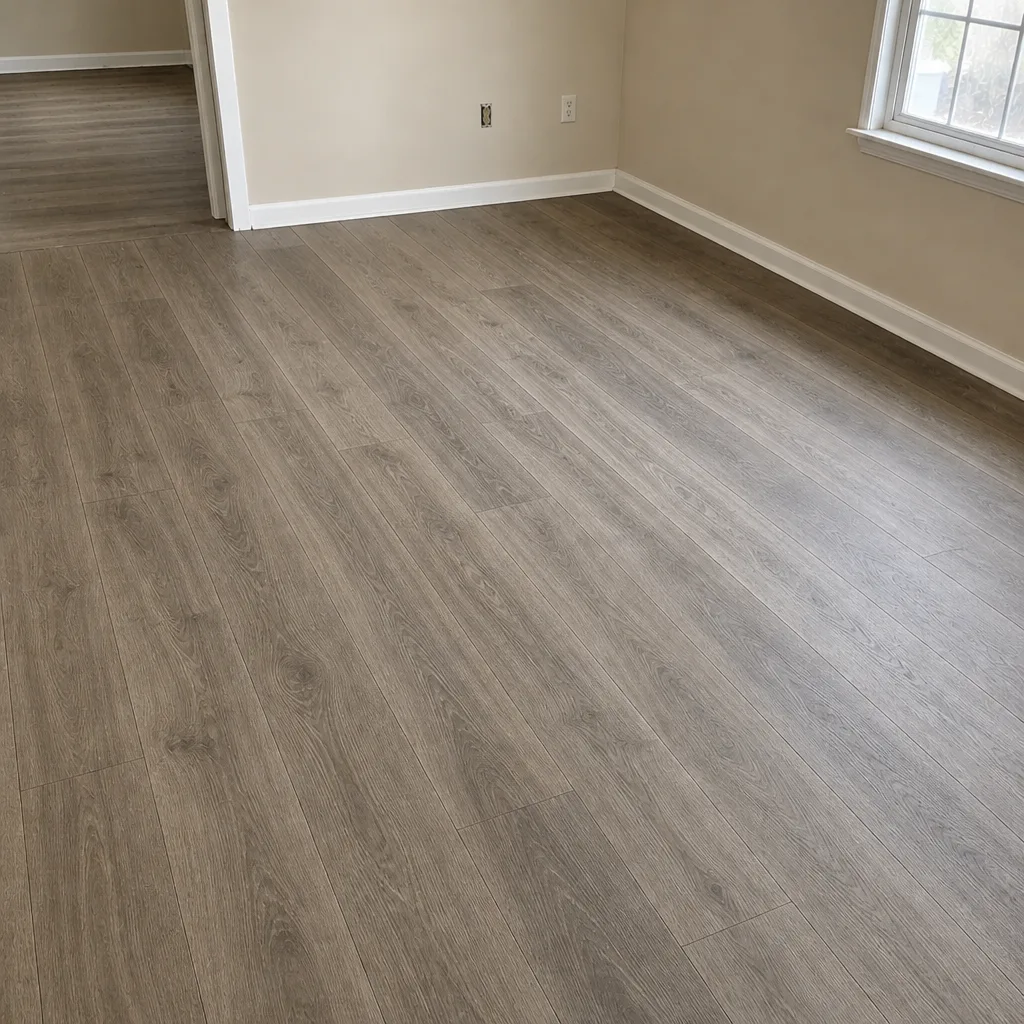 After
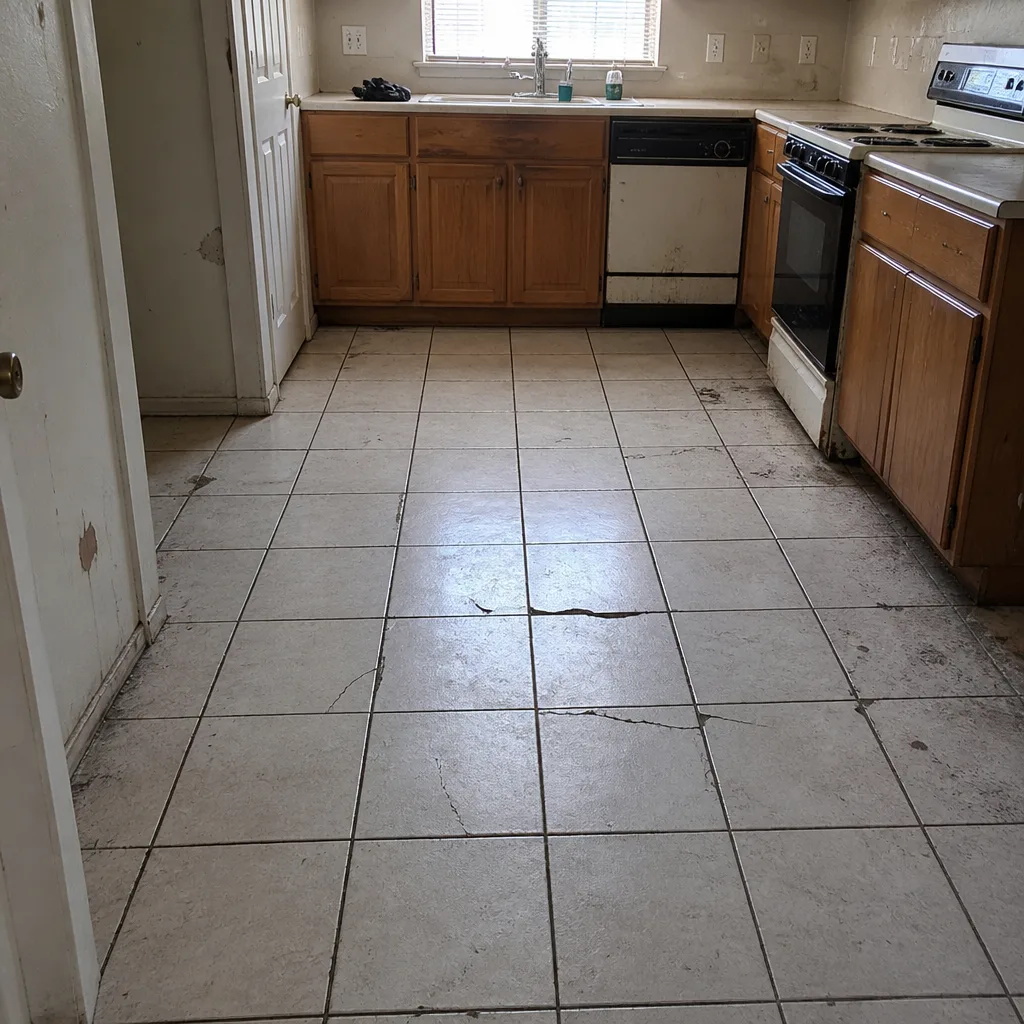 Before
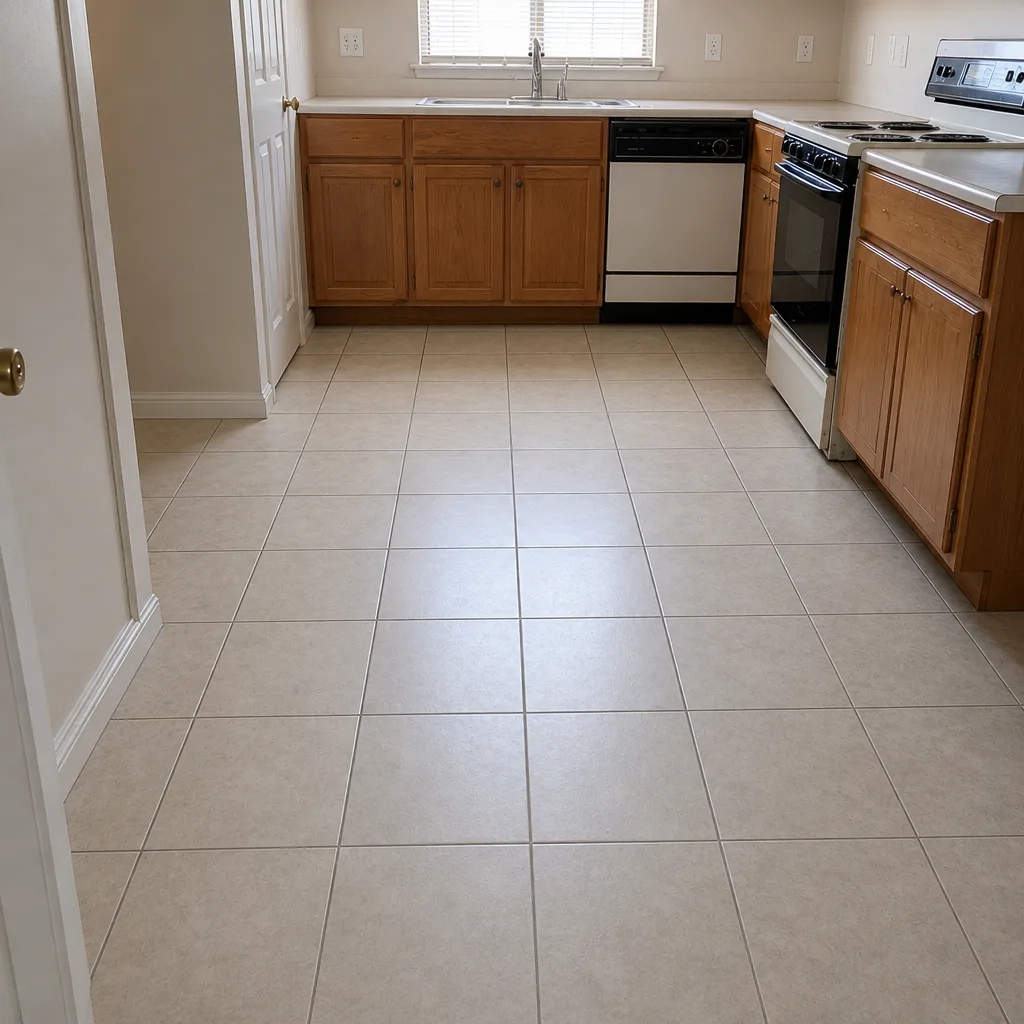 After
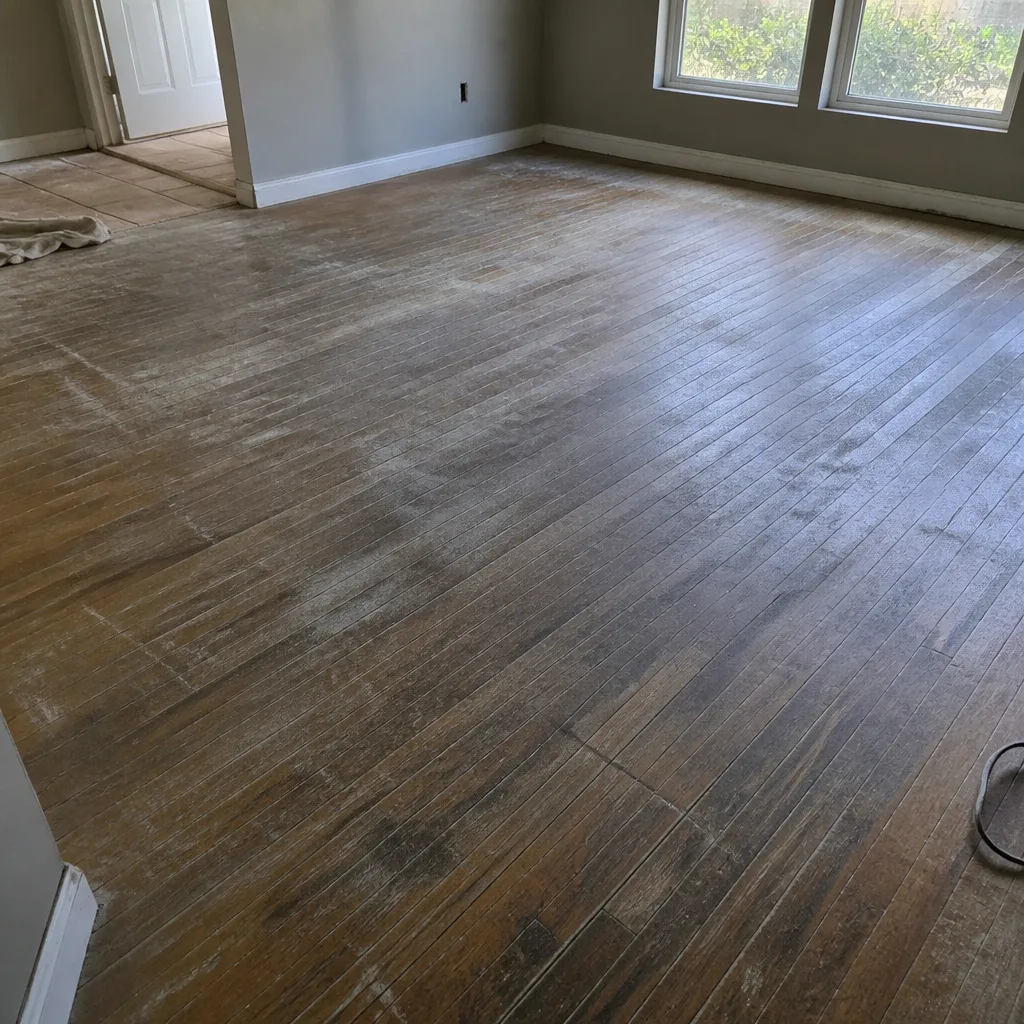 Before
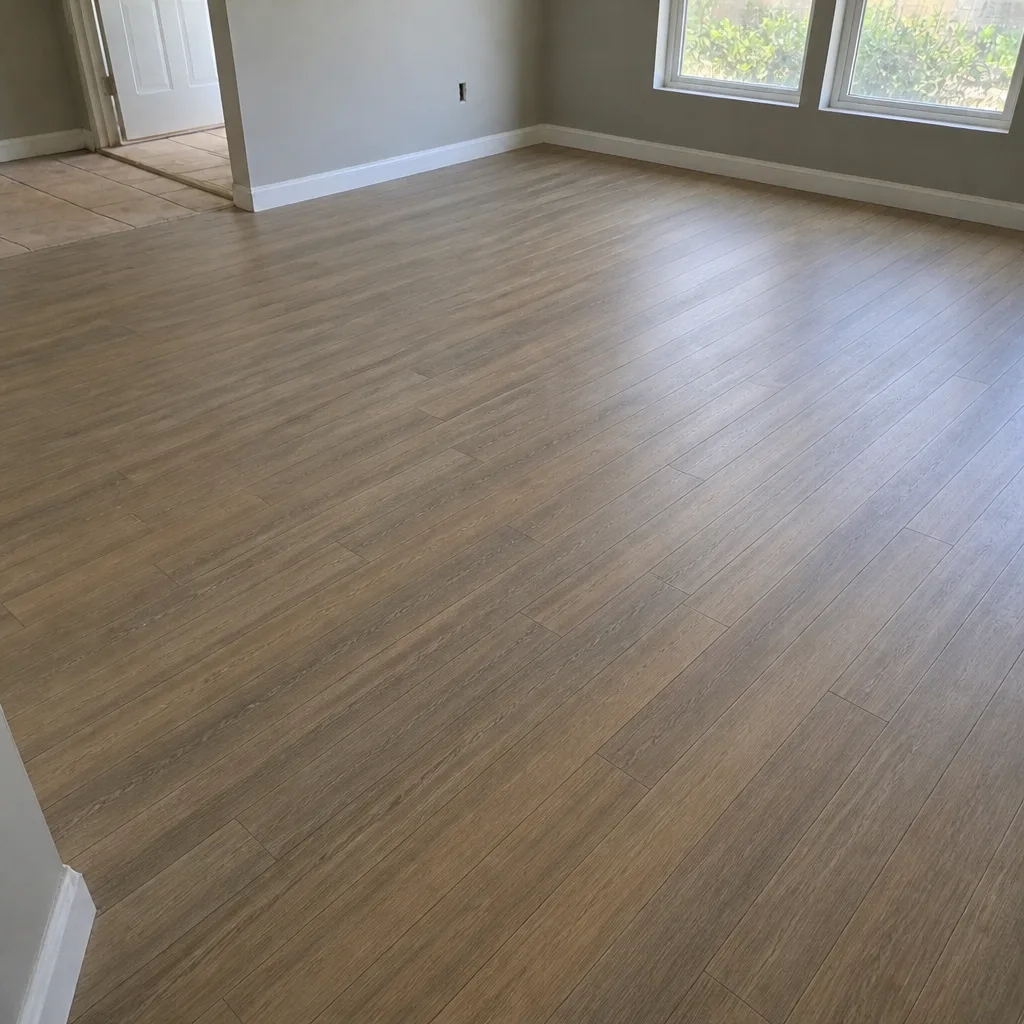 After
When to Call a Professional
Some jobs are genuinely DIY-friendly. Most of the installs we get called about after a failed attempt are not. Call a professional if: your slab hasn’t been moisture-tested, the room gets heavy afternoon sun and you’re considering a wood-based product, the existing floor is buckling or gapping and you don’t know why, or you want to refinish existing hardwood and don’t know whether the wood’s thickness allows it. If you’re thinking about a whole-home re-floor with mixed materials, a single specialist company handling carpet, tile, and refinishing under one roof beats juggling three subcontractors. Floors Henderson offers free estimates in Henderson. Call (844) 972-2185. We answer 24/7. Fast dispatch from 7am to 7pm, Sunday through Friday.
Frequently Asked Questions
Luxury vinyl plank and engineered hardwood are the best fits for Henderson’s climate because both tolerate the 20-30% humidity swing and the daily thermal cycle far better than solid hardwood. Tile is the most climate-neutral choice for wet rooms, and carpet works well in bedrooms with a slab-rated cushion. The product matters, but slab prep and moisture testing matter more. Call (844) 972-2185 for an exact recommendation – estimates are free.
Solid hardwood will gap in Henderson because the desert air pulls moisture out of the wood and it shrinks. Engineered hardwood gaps far less because its cross-plied core limits movement. If you want to minimize gapping, choose engineered and keep indoor humidity in the 35-55% range. Call (844) 972-2185 to walk through your specific situation – estimates are free.
Refinishing costs vary based on square footage, the wood’s condition, and the finish selected, so the written estimate sets the final price. Refinishing is often cheaper than a full replacement and preserves existing character, but whether it’s an option depends on the wood’s thickness and condition, checked at the estimate visit. Call (844) 972-2185 to schedule a free estimate.
No. Luxury vinyl plank is water-resistant, not waterproof – standing water and moisture from below still have to be dealt with. Brands we carry like COREtec and LifeProof are water-resistant and handle spills well, but they still need proper slab prep and vapor management. Call (844) 972-2185 to discuss a specific product – estimates are free.
Often yes, depending on the slab’s moisture vapor emission reading and the product’s requirements. The desert doesn’t eliminate slab moisture, and skipping the test is the most common reason floors fail early in Henderson. The reading and the product instructions together dictate the barrier. Call (844) 972-2185 to schedule a slab assessment as part of a free estimate.
Installation timing depends on the square footage, the product, the subfloor condition, and the schedule set at the estimate. We don’t promise a fixed number of days before we’ve seen the room and tested the slab, and the written estimate sets the timeline. Call (844) 972-2185 to book a free in-home measure and estimate.
The Bottom Line
Henderson’s climate isn’t “hot and dry” in the abstract. It’s a daily 30-degree thermal swing, 20-30% relative humidity, concrete slabs that act as thermal batteries, and a UV load that punishes finishes. Solid hardwood struggles in that environment without humidity management. Engineered hardwood, LVP, and tile hold up dramatically better. The subfloor prep and moisture test matter more than any product choice, and the indoor climate you maintain with your HVAC and a hygrometer matters as much as the desert outside. Match the product to the room, prep the slab properly, and the floor you choose will perform. Skip the prep, and no product will save it. If you’d like a specialist walkthrough, get in touch with Henderson‘s flooring category specialists. Call (844) 972-2185 for a free estimate. We answer 24/7, and we dispatch from 7am to 7pm, Sunday through Friday.
Written by the team at Floors Henderson.