
Last updated November 18, 2026
 Hardwood
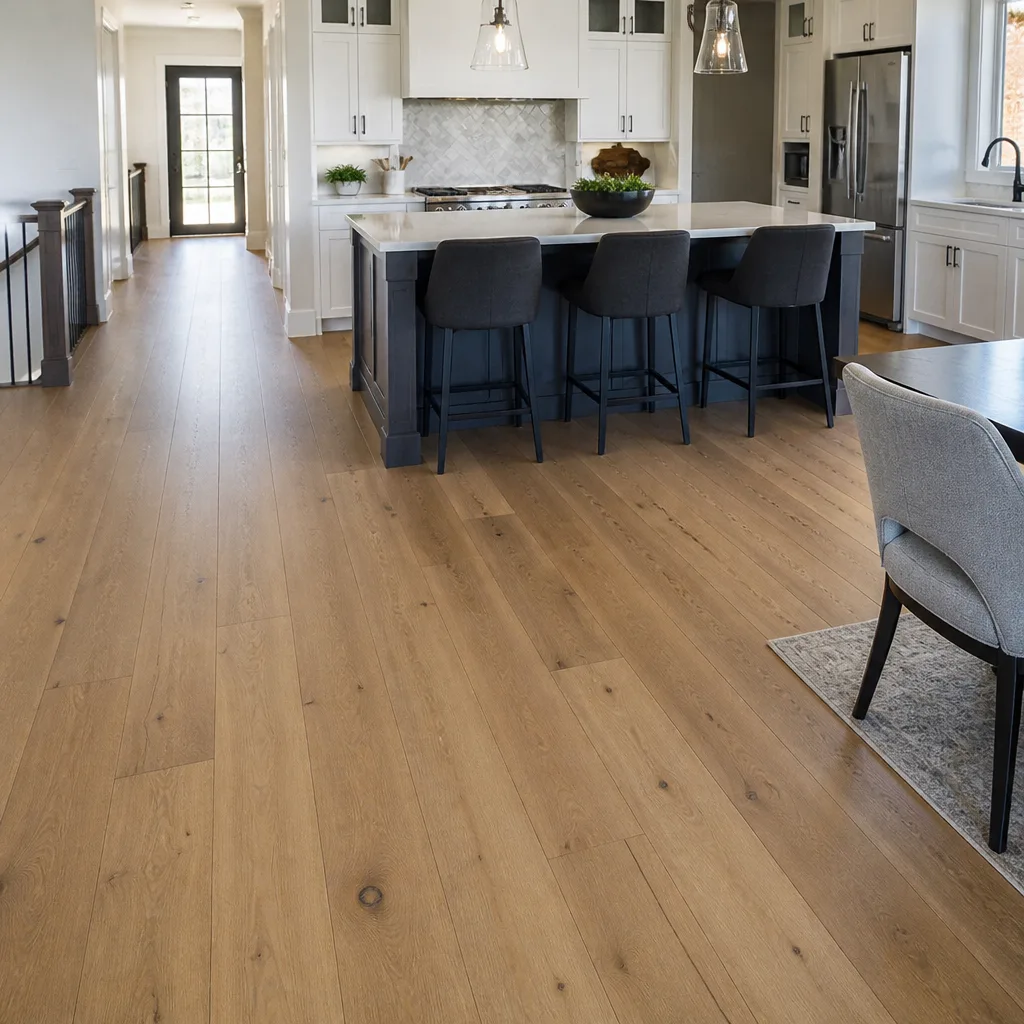 Engineered hardwood
 Luxury vinyl plank
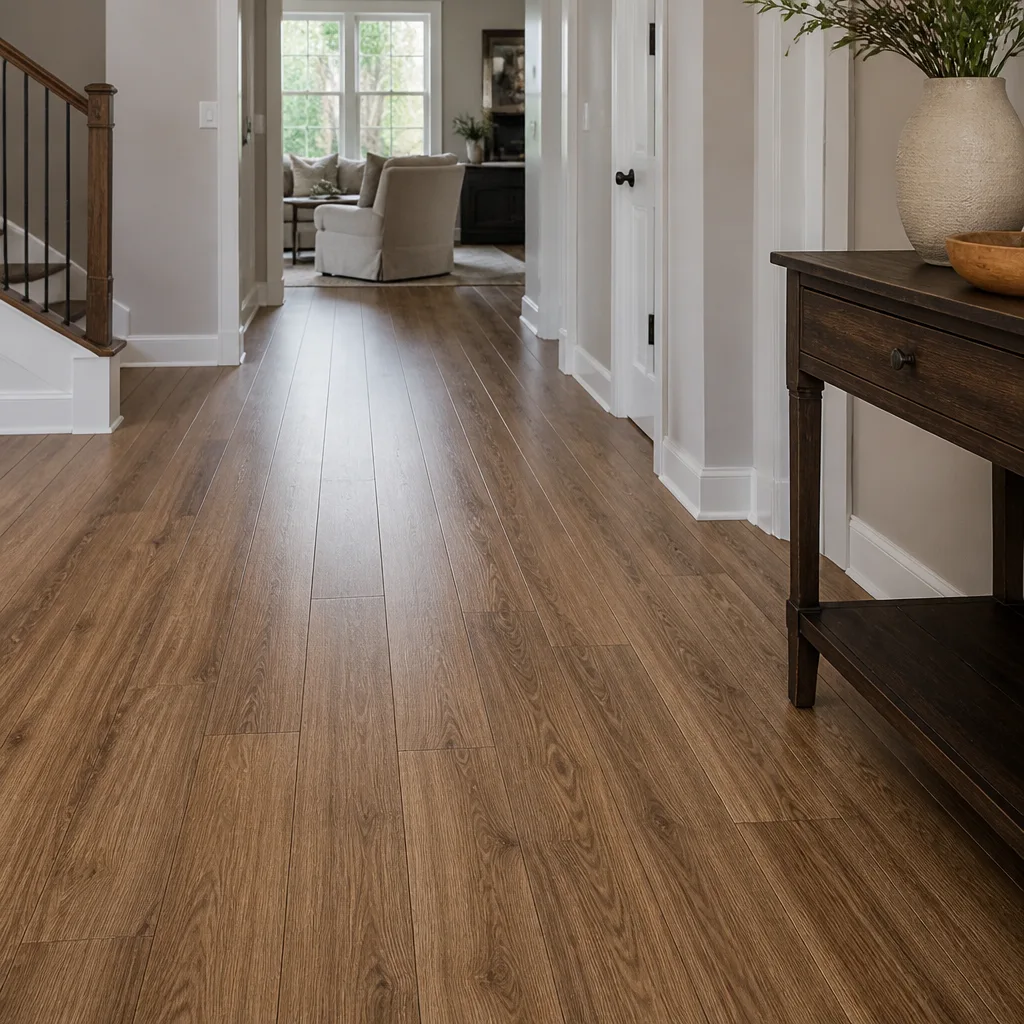 Laminate
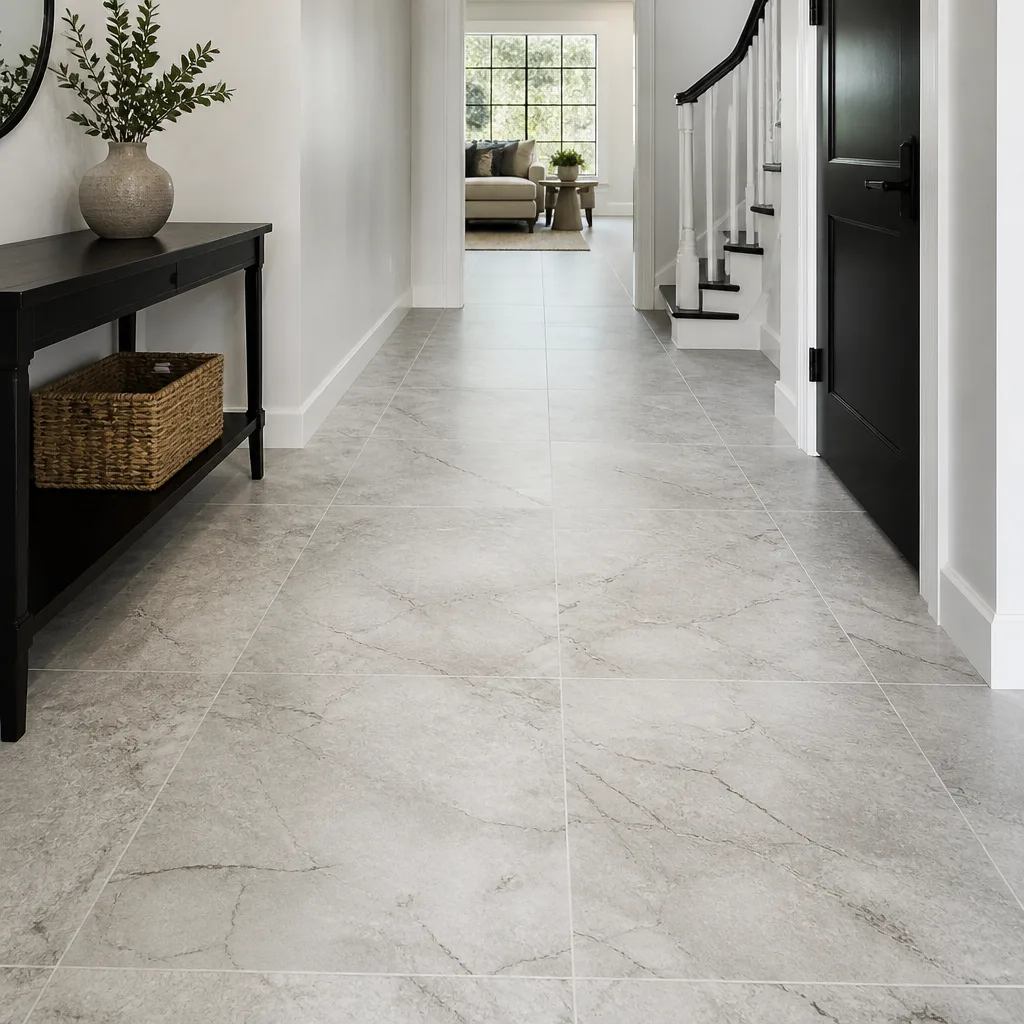 Porcelain tile
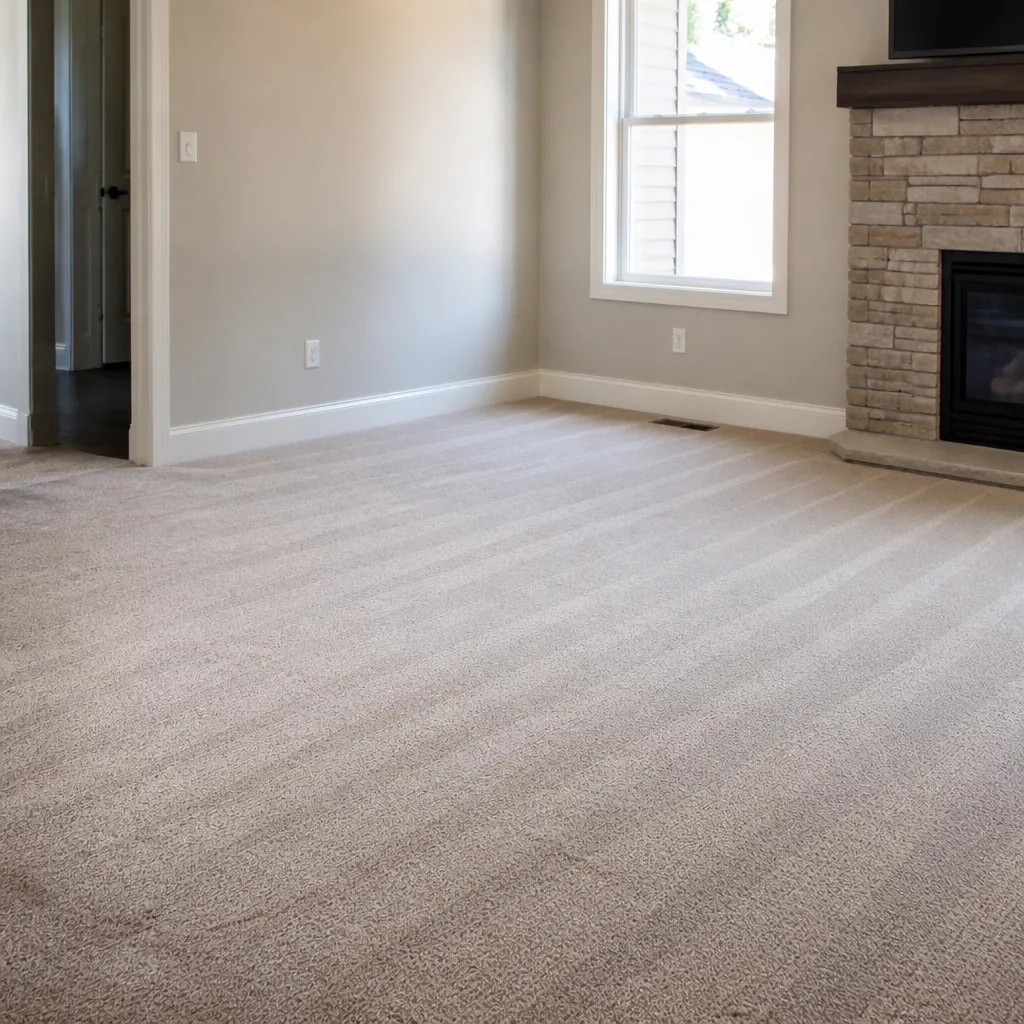 Carpet
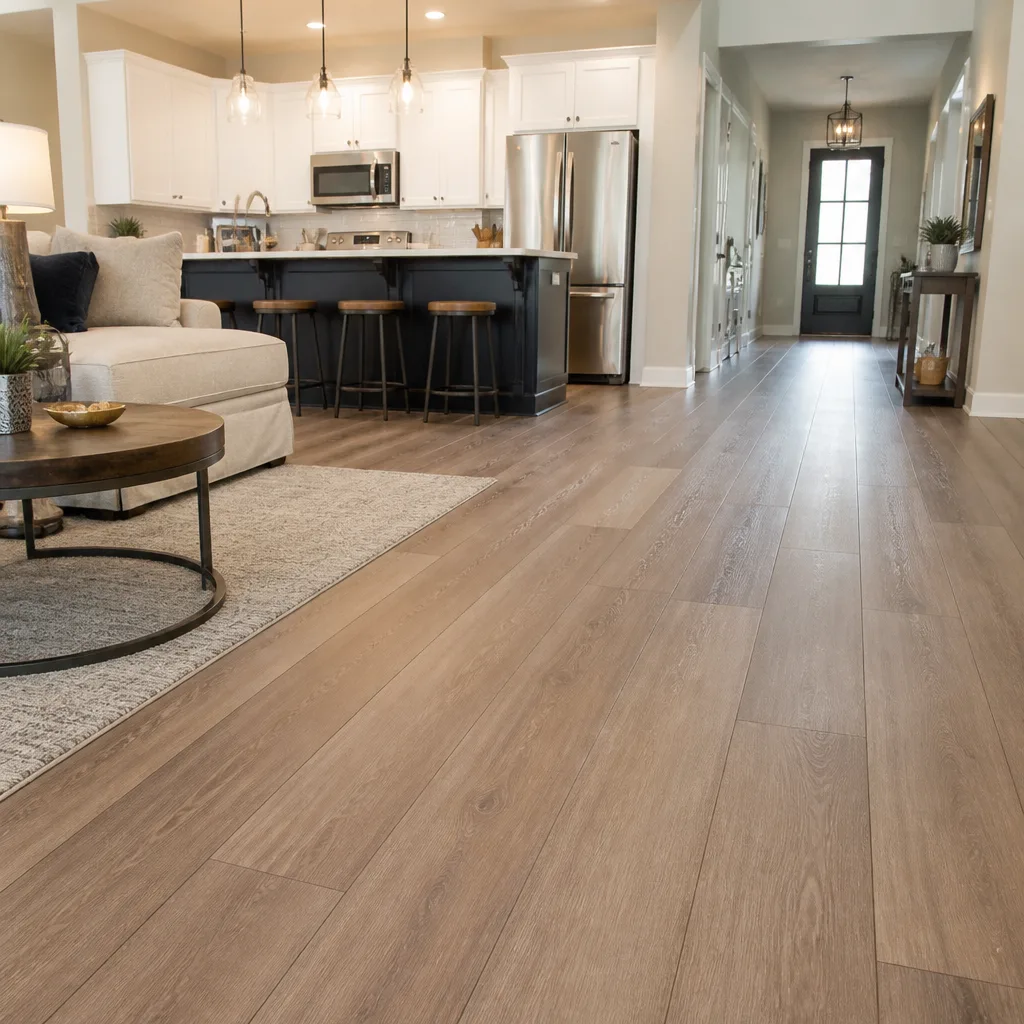 Shaw
 Mohawk
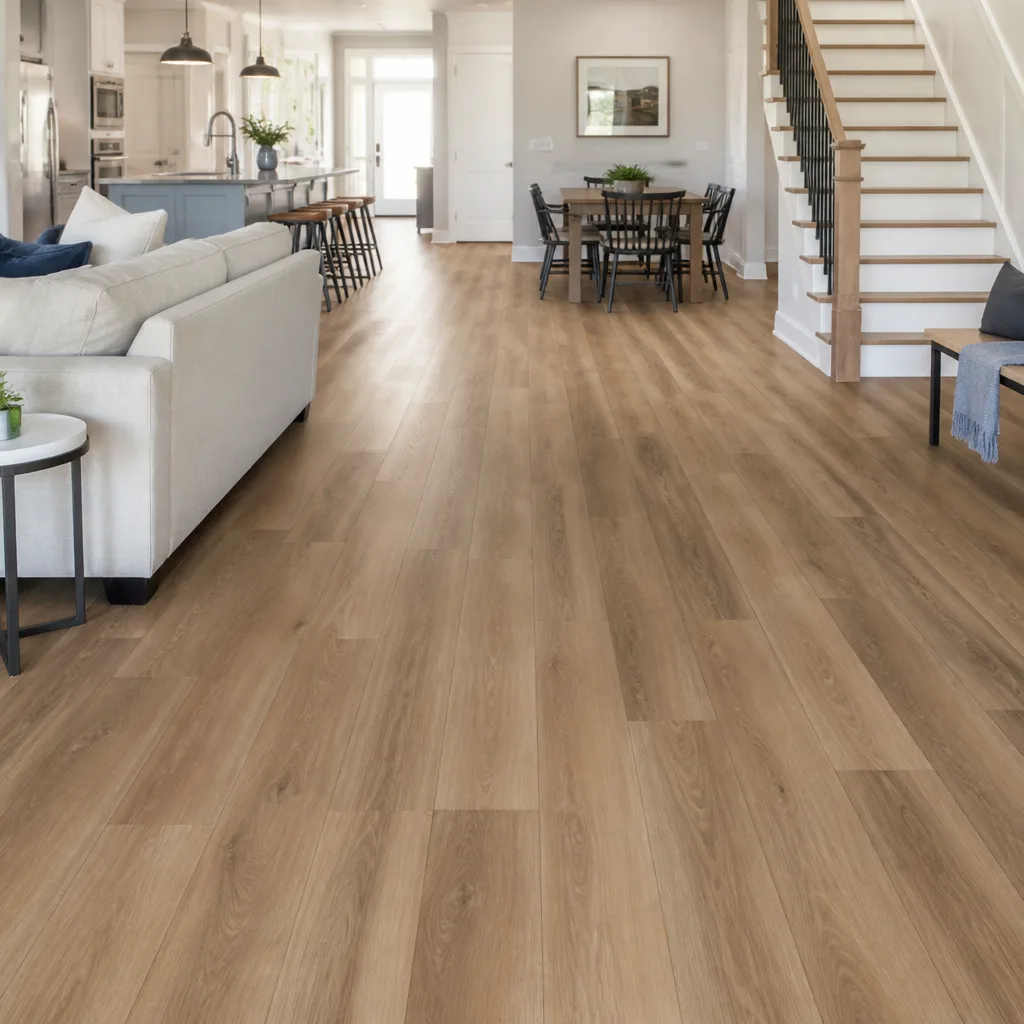 COREtec
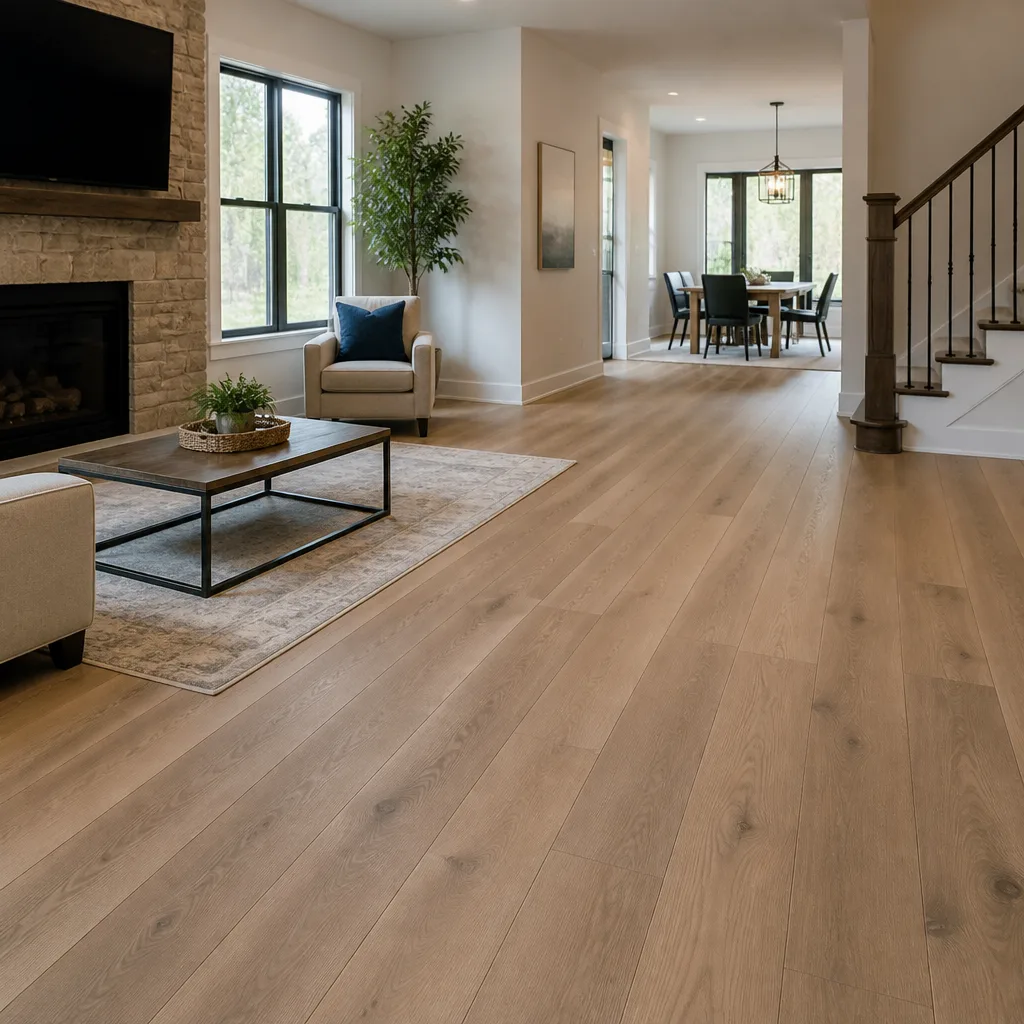 Pergo
Free in-home measure and written estimate: Shaw, Mohawk, COREtec and Pergo lines compared on your own rooms, with carpet, tile, vinyl plank, laminate and hardwood laid out side by side
Get your free estimateHow to Care for New Flooring: Hardwood, Vinyl, Laminate, Tile and Carpet
Most care guides tell you to sweep often and mop with a gentle cleaner, then stop. That advice was written for a house with soft water, mild sun, and a lawn between the front door and the street. Henderson doesn’t work that way. The water here tests at roughly 290 to 320 parts per million hardness, close to eight times what a lab would call soft, so every wet mop leaves a mineral film behind on your finish. Add relentless desert sun through west- and south-facing glass and blown-in grit with no grass to trap it, and floor care becomes a different job than the one on the bottle. We wrote this guide to show you what actually protects new hardwood, luxury vinyl plank, laminate, tile, and carpet in Henderson, room by room and season by season.
Quick Answer
Care for new flooring in Henderson by managing three desert-specific pressures: hard water on wet cleaning, UV exposure on sun-facing rooms, and abrasive grit tracked in from outside. Sweep or vacuum grit daily, damp-mop with distilled water or a properly diluted cleaner matched to each material, keep window film on high-sun glass where fading is a risk, and never steam-mop hardwood, laminate, or luxury vinyl plank. The product instructions and the written estimate set the specifics of what any individual floor can take.
Styles & brands we work with
- Hardwood
- Engineered hardwood
- Luxury vinyl plank
- Laminate
- Porcelain tile
- Carpet
- Shaw
- Mohawk
- COREtec
- Pergo
Table of Contents
- Hard Water: The Care Problem Henderson Homeowners Underestimate
- The Right Mop Protocol for Each Floor Type
- UV Fade, Sun-Facing Rooms, and Window Film
- Desert Grit and the Entry Mat Strategy
- Seasonal Care: Summer AC and Winter Rain
- What Preserves a Warranty and What Voids It
- Material-by-Material Care at a Glance
- When It’s Time to Call a Specialist
Hard Water: The Care Problem Henderson Homeowners Underestimate
Water hardness is measured in parts per million of dissolved calcium and magnesium, and Henderson sits in a range most of the country never sees. At 290 to 320 ppm, the minerals in your tap water bind to wet surfaces when the water evaporates. On a bathroom fixture you call it scale. On a floor finish, it’s the same mineral deposit, spread thin across thousands of square feet.
The practical result: the dulling film you notice on hardwood, luxury vinyl plank, or Daltile tile a few months after installation likely isn’t wear from foot traffic. It’s mineral residue, layered one mop at a time. Standard pH-neutral floor cleaners are formulated to lift soil, not to dissolve scale, so a hard-water film resists them and builds every week.
What actually works depends on the material underneath:
- Tile and stone: a dilute white vinegar solution (roughly one part vinegar to four parts water) does lift light mineral film on glazed ceramic and porcelain. Rinse with clean water and dry. Never leave vinegar to sit.
- Hardwood: vinegar is a mild acid, and acid on a wood finish is a bad idea over time. Use distilled water for damp mopping, or a cleaner the finish manufacturer specifies.
- Luxury vinyl plank: check the plank maker’s care instructions before any acid. Some luxury vinyl from Karndean and COREtec tolerates a light dilute vinegar cut, and some doesn’t. The product instructions decide, not a forum post.
- Laminate: treat it like wood. Distilled water, minimal moisture, no acid brighteners.
- Carpet: hard water affects carpet cleaning deeper than the surface. A dilution of the carpet cleaner specified by the fiber maker is the safe path.
The single biggest upgrade is mechanical, not chemical. A water softener or a fill-from-the-fridge jug of deionized water for mop buckets removes the mineral load before it reaches the floor. It costs less than refinishing a Henderson hardwood floor you’ve been scrubbing into dullness.
The Right Mop Protocol for Each Floor Type
Most floor damage in Henderson homes happens at the sink and the mop bucket, not under the furniture. Here’s the sequence we recommend to every homeowner we install for, and the short version of what each material can take.
- Dry first, every time. Microfiber dry mop or a vacuum with the beater bar off for hard surfaces, on for carpet. Grit removed dry can’t be ground into the finish wet.
- Damp, not wet. A damp mop leaves a fine haze that evaporates in seconds. A wet mop leaves standing water that wicks into seams.
- Match the cleaner to the material. pH-neutral on hardwood and laminate. The manufacturer’s own cleaner on luxury vinyl plank. A dilute vinegar cut only on glazed tile.
- Rinse and dry on hard water. If you use a wet cleaner on Henderson water, follow with a clean-water pass and a dry microfiber cloth so the minerals come up with it.
- Skip steam on wood-derived floors. Steam mops push moisture and heat into plank seams and under finish edges. On hardwood, laminate, and most LVP, that’s a warranty and finish problem.
A quick note on frequency: light sweeping or vacuuming every day and a true damp mop once a week is a better pattern than a heavy mop once a month. The hard water math works in your favor when you mop lightly and often, because there’s less mineral load per pass and less water to leave scale behind.
If your floor is a little past the point of a good mop routine, our team at Floors Henderson can look at it and tell you whether refinishing is the right move before you spend anything on replacement.
UV Fade, Sun-Facing Rooms, and Window Film
Henderson gets more than 290 days of sun a year, and a west- or south-facing window in a Henderson great room works like a magnifying glass on the floor in front of it. Ultraviolet light breaks down the chemical bonds in a wood finish, in carpet dye, and in vinyl and laminate wear layers. The visible result is a light patch where the rug used to be, or a “ghost” of a piece of furniture after you move it.
Not every floor fades at the same rate. Hardwood UV-cured finishes and Daltile porcelain tile are far more resistant than most carpet dyes. Mannington and Armstrong laminate finishes are engineered to resist fade too. But no finish is immune, and the difference between a sun-facing Henderson room and a shaded hallway can be years of appearance.
Window film is the highest-leverage defense, and it’s cheaper than refinishing a faded floor. Here’s the practical math:
- A quality UV-blocking window film on a large west-facing window runs a fraction of the cost of a single room’s worth of refinishing, and it protects every floor, every rug, and every piece of furniture in the room.
- Refinishing a hardwood floor that’s faded unevenly means sanding past the discoloration. On thin-wear floors that may not be possible, in which case the options shrink to replacement or living with it.
- Even a mid-tier film that blocks the bulk of UV light keeps the floor’s finish intact longer than any cleaning product can undo.
The film doesn’t have to be dark. Modern clear films block UV without changing the light in the room. If you’re in a Henderson home with big glass and a wood floor, it’s the cheapest floor insurance you can buy.
Desert Grit and the Entry Mat Strategy
In a lawn-heavy climate, grass traps a lot of soil before it reaches the door. Henderson doesn’t have that filter. The wind-blown silt, decomposed granite from landscape beds, and fine sand that ends up on every walkway here is abrasive. Fine quartz grit in a shoe sole is hard enough to scratch a wood finish and dull a luxury vinyl wear layer, and the damage happens silently, one swipe at a time.
The single most useful thing you can do is build a two-mat system at every exterior door:
- Outside: a coarse scraped mat (the ridged rubber or bristle kind) that removes the bulk of the grit before anyone steps in.
- Inside: a washable fabric runner, long enough for at least three strides, that catches what the outside mat missed.
- Wash weekly, vacuum every other day. A “clean” mat that’s packed with silt stops trapping and starts spreading.
Inside the entry, run a vacuum with a hard-floor setting or a microfiber dry mop every day during windy stretches. If you live near the Henderson foothills or on a corner lot with an open landscape bed, expect twice the grit load of a shaded interior lot. In our experience, the entry mat and dry-mop routine buys more floor life in Henderson than any single cleaning product on the shelf, and it costs almost nothing to keep going.
Seasonal Care: Summer AC and Winter Rain
New flooring in Henderson lives through two moisture swings a year, and most care guides ignore both.
Summer: the humidity drop
An air conditioner in Henderson runs essentially every day from May through September, and it pulls moisture out of the air as a side effect. Indoor relative humidity can drop into the teens and twenties without help. That’s the condition that makes hardwood planks shrink slightly at the seams, hairline gaps open, and laminate edges cup or lift. The fix is a cheap hygrometer and a whole-house or room humidifier set to keep indoor RH in a moderate range. If your hardwood was installed at higher humidity and then dries out, the gaps may close again when the rains return; if they don’t, a professional can assess whether the floor has moved too far to relax on its own.
Winter: the rare moisture spike
Henderson’s winter rain events are infrequent but intense, and a wet week is the opposite problem. Wood absorbs moisture through seams, laminate and LVP can trap moisture underneath if the slab is holding it, and carpet near a leaking door will soak it up fast. During a wet stretch:
- Wipe up entry moisture the same day, before it tracks further.
- Keep indoor RH under control with ventilation, not with extra heat, which dries the air further in summer.
- Watch for a swollen door-jamb or a plank edge that lifts within a day or two of a storm. That’s a moisture-location problem, not a cleaning problem, and it needs a technician to look at it.
Caution on a serious-moisture issue: standing water under a floor is a drying-and-repair job, not a mop-and-wait job. If a floor has taken on water, stop the cleaning routine and call a professional to check the subfloor and the material.
What Preserves a Warranty and What Voids It
Every flooring manufacturer ties warranty coverage to a care routine. In Henderson, the two shortcuts we hear about most are the ones that void coverage fastest.
The shortcuts that void coverage:
- Steam mops on hardwood, laminate, and most luxury vinyl plank. The heat and moisture push into seams and under finish layers. Nearly every manufacturer names steam as a voiding practice for these categories.
- All-purpose spray cleaners. Ammonia, bleach, and heavy-surfactant sprays leave a residue that dulls finish, streaks LVP, and in some cases chemically reacts with a floor’s wear layer. The carpet aisle cleaner isn’t a floor cleaner either unless the fiber maker specifies it.
- Waxing or polishing a floor that doesn’t call for it. Wax on a modern poly-finished hardwood or a factory-finished plank creates a dull film that can’t be removed without stripping. That’s a refinish, not a clean.
- Flood-mopping. Standing water in a seam is a moisture event, and moisture events are excluded from most warranties regardless of cause.
What preserves coverage: the manufacturer’s own care sheet (which came with the product), the cleaner the maker specifies, and keeping purchase records and installation documentation in one folder. If your floor came from Mannington, Armstrong, Daltile, Karndean, or COREtec, the care sheet is a single page and it’s the document that matters when something goes wrong. Keep it with your written estimate.
Material-by-Material Care at a Glance
Here’s the quick-reference version, one line per floor type. Product instructions always override the general rule.
- Hardwood refinished or installed: dry mop daily, damp mop weekly with distilled water or the specified cleaner, humidifier in summer, no steam, no vinegar, no wax on modern finishes.
- Luxury vinyl plank (Karndean, COREtec): sweep daily, damp mop with the maker’s cleaner, avoid abrasive pads and steam, blot standing water quickly. It’s water-resistant, not waterproof against standing water.
- Laminate (Mannington, Armstrong, Pergo, LifeProof): dry mop or vacuum without the beater, damp mop with minimal water, never steam, blot spills immediately because moisture at the seams is the failure point.
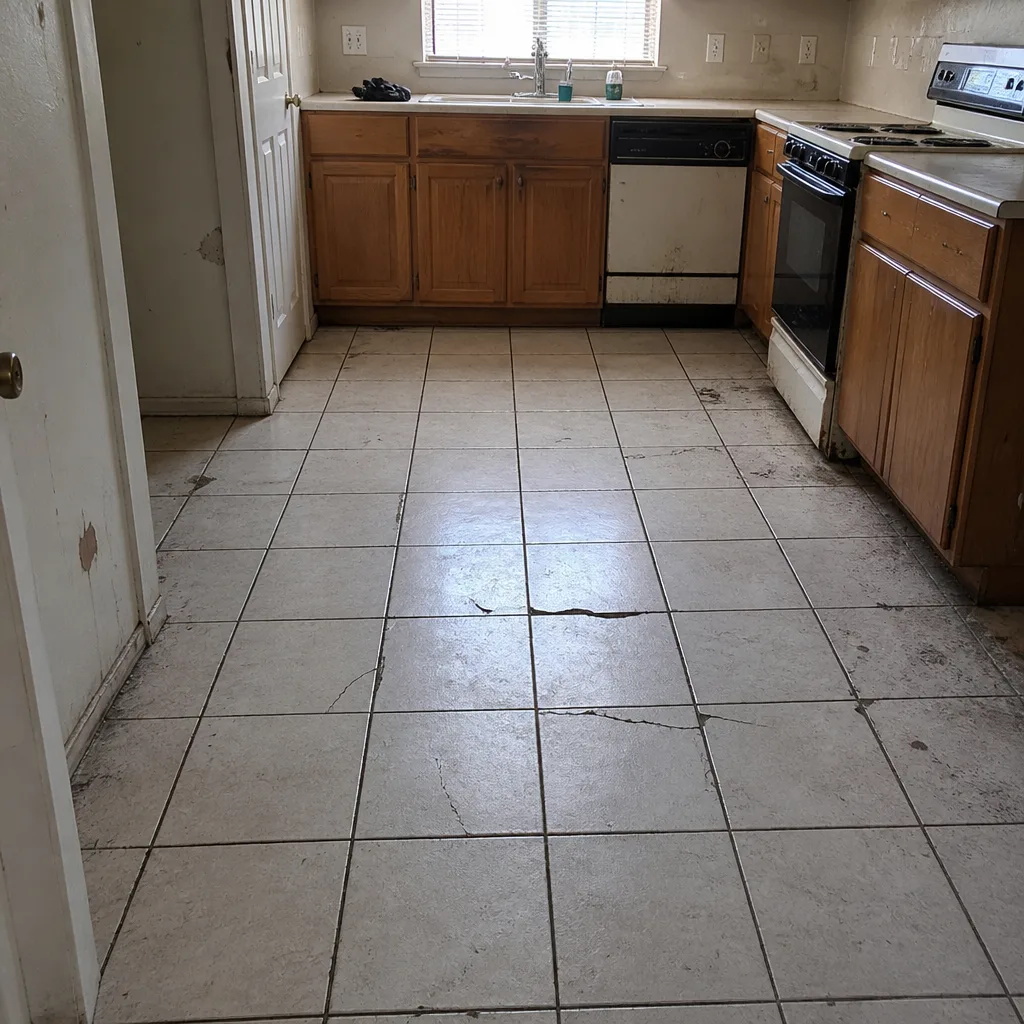
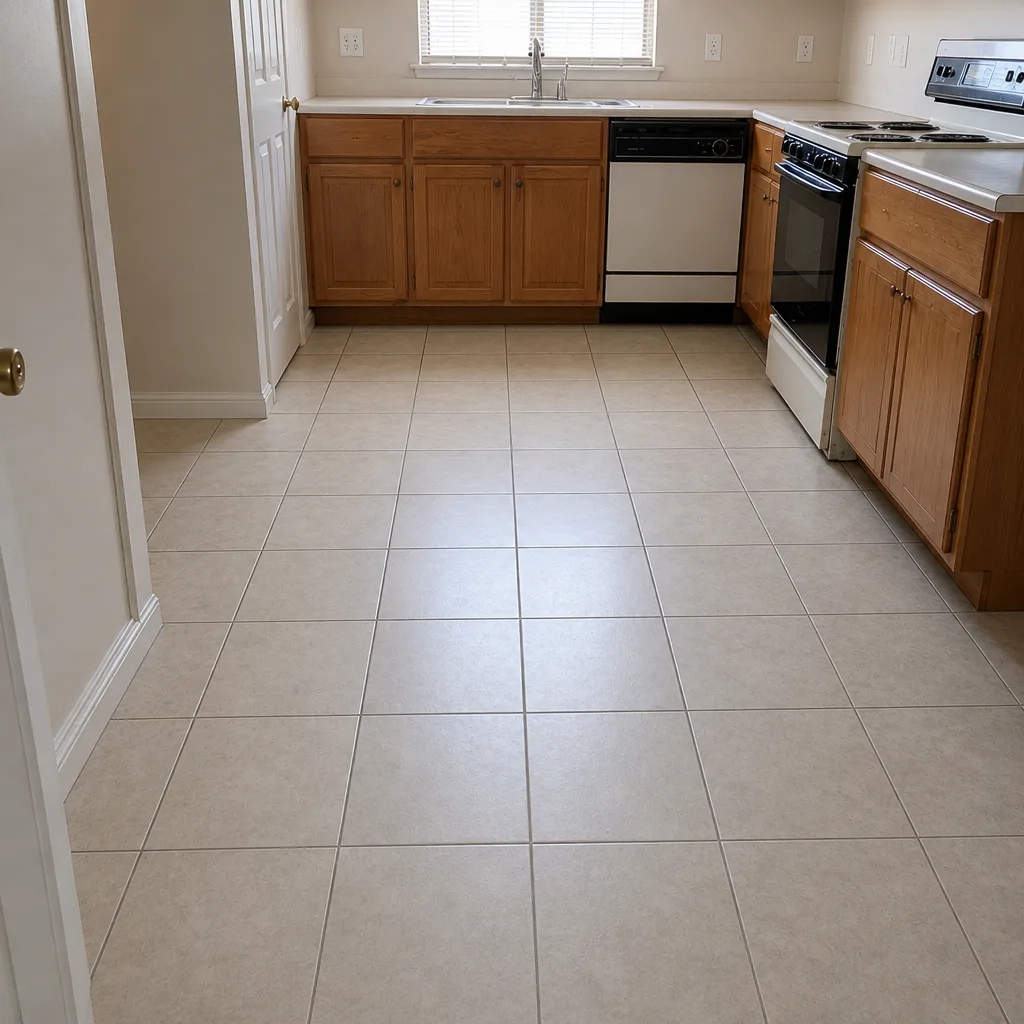
- Tile (Daltile): sweep or vacuum, dilute-vinegar damp mop on glazed tile, grout needs a separate routine and a soft brush, dry the floor if hard-water film shows up.
- Carpet (Mohawk, Shaw): vacuum high-traffic areas several times a week, blot spills (don’t rub), use the fiber maker’s spot cleaner, schedule a professional clean based on the fiber’s own recommendations, not a fixed number of months.
One thing we’re careful about with every brand we carry, from the value-driven Pergo line to the design-forward Karndean and COREtec products, is making sure the care sheet matches the specific product you bought. A general “LVP care” page isn’t the same as your plank’s instructions.
Matching the Floor to the Room, Before You Clean It
Some of the care frustration Henderson homeowners bring to us started at the selection stage. A hardwood floor in a mudroom with two dogs is going to need more maintenance than the same floor in a formal living room. A Daltile porcelain tile in an entry hall that gets tracked with desert grit every day handles a decade of it, and the same tile in a bedroom barely notices. Matching material to traffic is the most durable floor-care choice available, and it’s a conversation, not a product.
You don’t need one material throughout the house, either. A whole-home re-floor in Henderson frequently mixes categories: tile in the bathrooms and kitchen, luxury vinyl plank from COREtec in a laundry or a kid’s room, Mohawk carpet in bedrooms, and a real hardwood in the main rooms. Different rooms, different care routines, and each one simpler than trying to force a single material to do every job. If you’re planning that mix, our guide to Henderson flooring work covers what happens when the install is scheduled room by room instead of all at once.
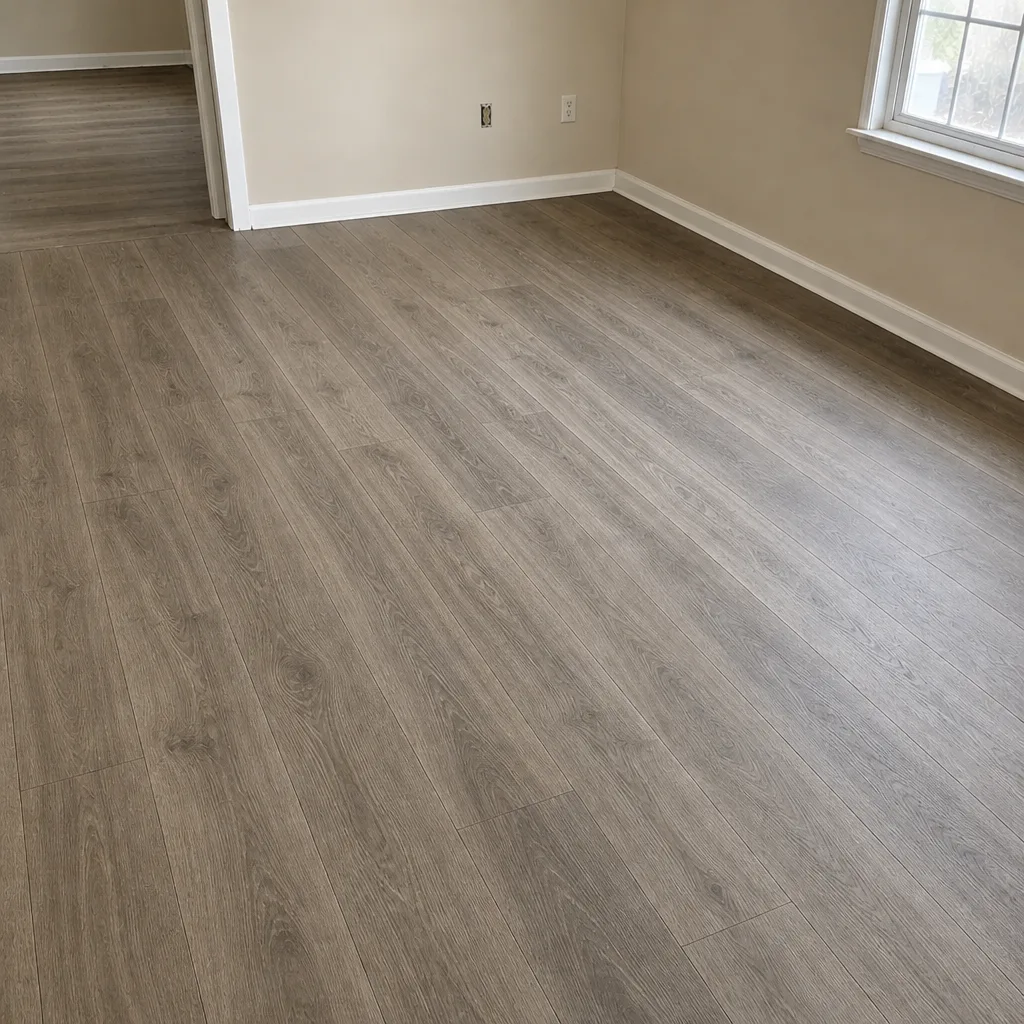
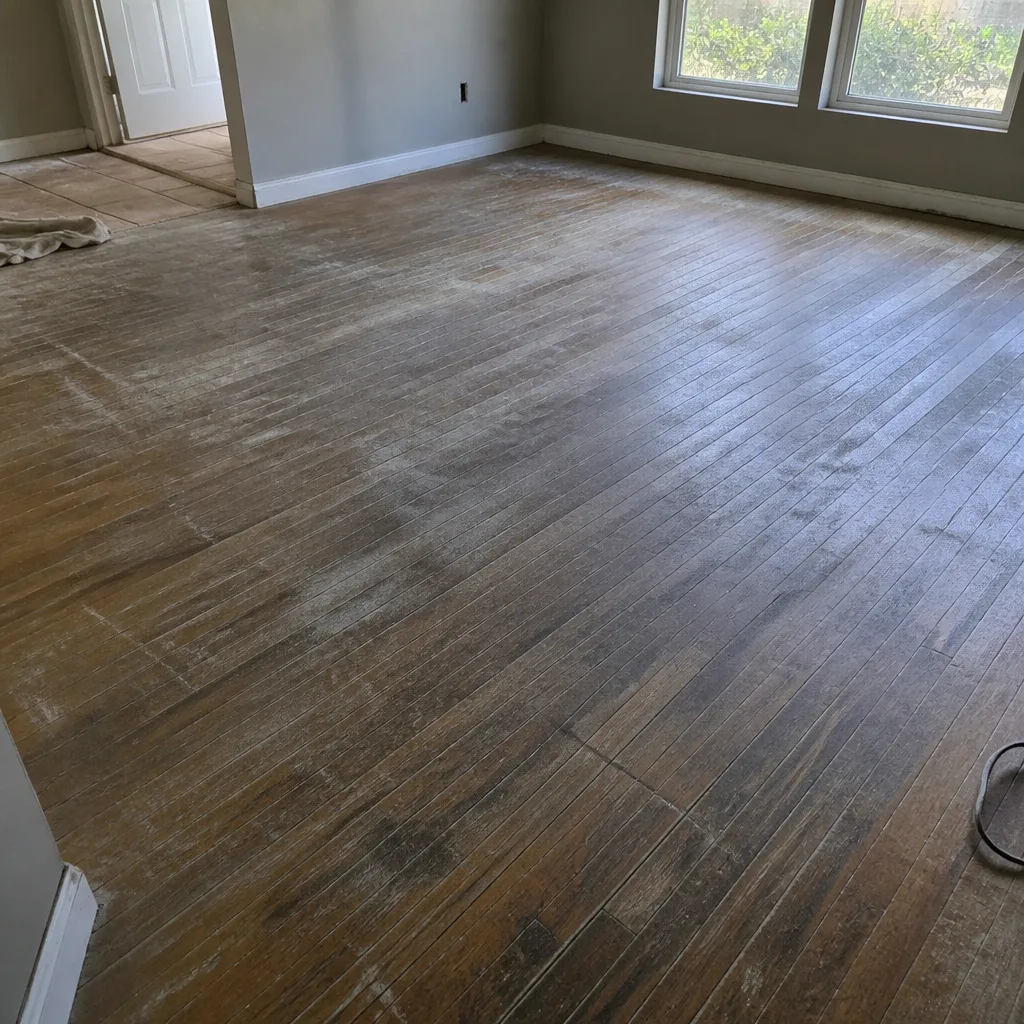
Refinishing vs. Replacing Worn Hardwood: Which Makes Sense?
Before a hardwood floor gets pulled out, it’s worth knowing whether it can be refinished. Refinishing sands down the existing surface and applies a new finish, restoring the wood underneath rather than replacing it. It’s a real option for most solid hardwood floors and a smarter financial move than replacement in a lot of Henderson homes.
Two things decide whether it’s viable:
- Wood thickness. Refinishing removes a thin layer of the board each time. If the floor has been refinished before and the top layer is thin, there may not be enough material left to sand. That’s checked at the estimate visit.
- Condition. Deep gouges, water damage, or cupping from an unresolved moisture problem sometimes can’t be sanded out with the available wood.
Stain matching is another place we’re honest: no refinisher can guarantee a perfect color match to an existing sample, because the wood grain varies and the finish chemistry on a new floor isn’t identical to the old one. Refinishing restores the existing wood and keeps its character, and the result is often beautiful, just not a spot-for-spot match to a faded sample. This is the alternative to replacement we go through with every customer considering it, because pulling out a sound hardwood floor that could have been refinished is money thrown away.
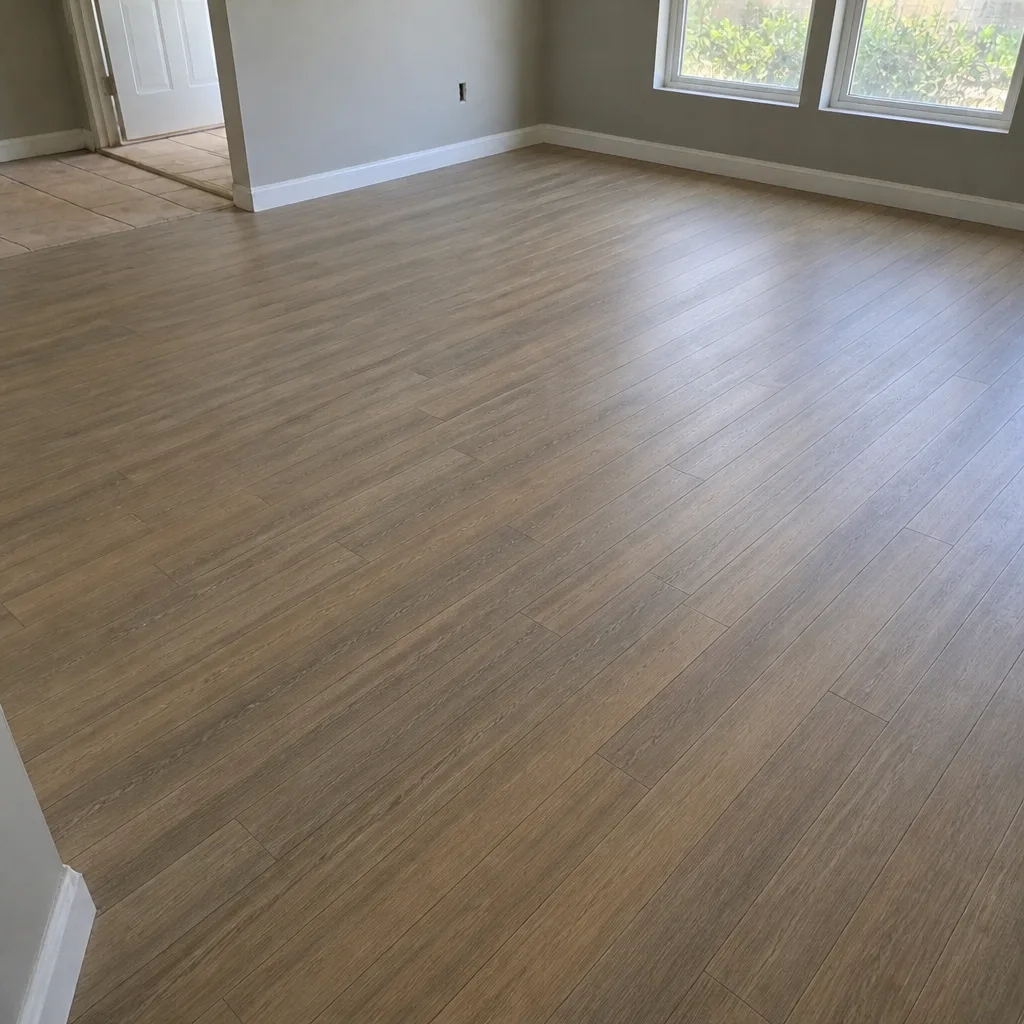
See the difference
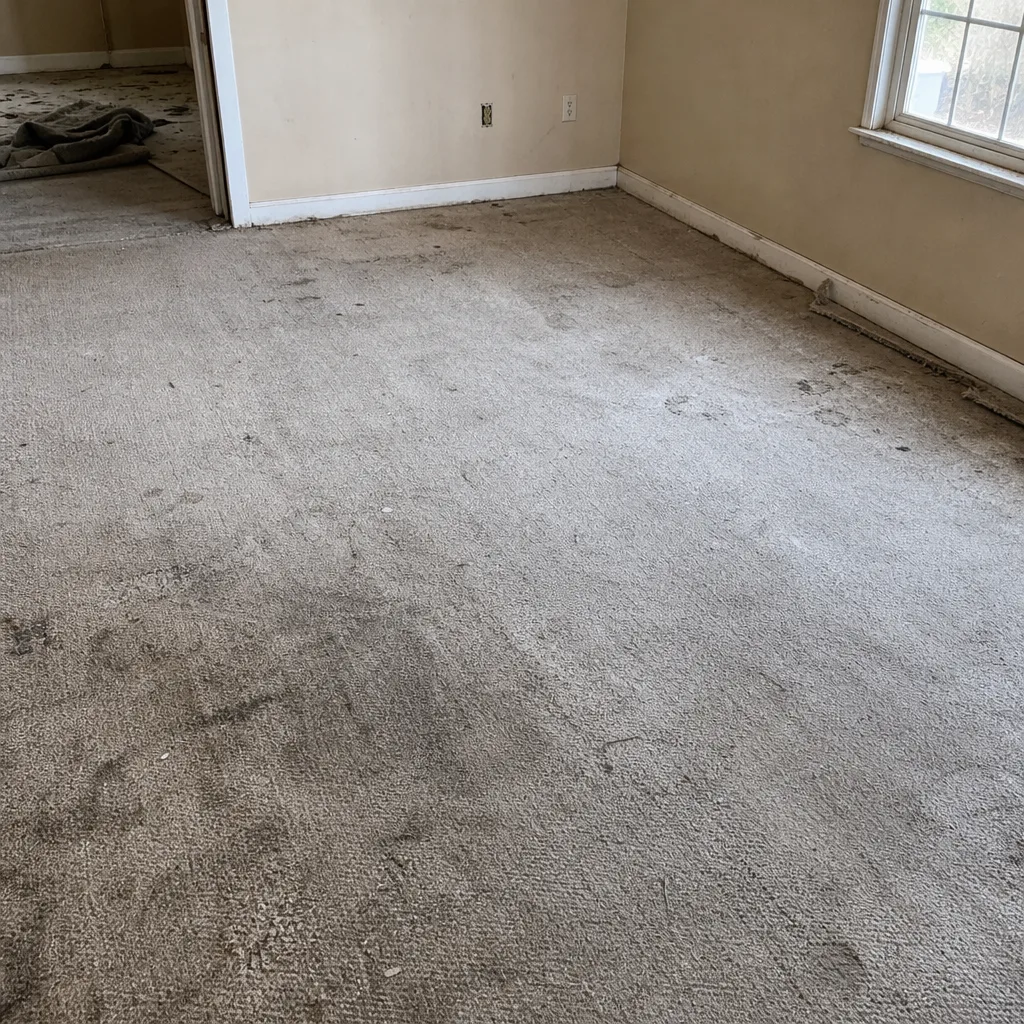 Before
 After
 Before
 After
 Before
 After
Common Mistakes to Avoid
- Mop with tap water and no rinse. In a Henderson home, that leaves mineral film that dulls the finish. Use distilled water or follow with a clean dry pass.
- Steam mop a wood, laminate, or LVP floor. Heat and moisture into the seams is the number one voiding shortcut, and it’s the one that shows up in the finish before it shows up anywhere else.
- Use all-purpose spray cleaner on the floor. Ammonia, bleach, and heavy surfactants either streak a wear layer or eat into a finish. The correct cleaner is the one the maker specifies.
- Skip the entry mat. Desert grit is abrasive, and every footstep over a bare entry scratches the finish. Two mats, one outside and one inside, cost less than a refinish.
- Ignore summer humidity. AC-driven humidity drop opens hardwood seams and cups laminate edges. A hygrometer and a humidifier prevent the problem.
- Assume the label on the bottle applies to your floor. “For hard floors” is not the same as “for your specific luxury vinyl plank.” The product instruction sheet wins every time.
- Wax a modern poly-finished hardwood. It creates a film you can’t remove, and the fix is a full refinish.
When to Call a Professional
Routine care will keep a well-chosen floor in good shape for a long time. Some issues need a trained eye and a proper tool, and it’s cheaper to catch them early than to replace flooring. Call a specialist when you see water damage from a leak or rain event, a plank edge that’s lifted or a hardwood seam that’s opened and won’t settle, a finish that’s failing across a full room (deep scratches, worn-through spots, cupping), or a floor that’s just lost its appearance and you’re weighing refinishing against replacement. Our technicians have up to 10 years of experience, and we can walk you through refinishing versus replacement before you commit to either. Call (844) 972-2185 for a free estimate. We answer 24/7, with fast dispatch from 7am to 7pm, Sunday through Friday, and we’re closed on Saturday. A call outside dispatch hours is booked into the next opening.
Frequently Asked Questions
On glazed tile, a dilute white vinegar solution lifts light mineral film and should be rinsed and dried. On hardwood and most luxury vinyl plank, skip the vinegar and use the cleaner the finish maker specifies, plus a clean-water rinse and a dry pass. If the film is heavy, it’s a finish-care job worth having a professional look at rather than scrubbing harder.
No, and it’s one of the most common ways a floor warranty gets voided. Steam pushes heat and moisture into plank seams and under finish layers, and most manufacturers name it as a voiding practice. Use a damp mop with the specified cleaner instead. If you’re not sure what your specific plank can take, call (844) 972-2185 and we’ll go through the care sheet for your product.
Dry mop or vacuum high-traffic rooms daily, damp mop once a week with the right cleaner, and clean carpet more often in high-traffic weeks with a good vacuum. The desert grit load in Henderson is higher than in a lawn-heavy climate, so daily dry cleaning matters more than a hard mop less often.
Yes, and it’s the cheapest defense against UV fade. Film blocks most of the UV light before it reaches the floor, which slows the fading of wood finishes, carpet dyes, and vinyl wear layers. It’s far less expensive than refinishing a faded hardwood floor in a west- or south-facing Henderson room.
Often yes, if the wood is thick enough and in sound condition. Refinishing sands and re-finishes the existing wood, which costs less than replacement and preserves the character of the floor. Whether your specific floor can be refinished is checked at the estimate visit. Call (844) 972-2185 for a free estimate.
Yes, and a flooring specialist is set up for it. We handle carpet installation, tile flooring installation, and hardwood refinishing, so a single project can mix materials by room without coordinating separate trades. The schedule and pricing are set in the written estimate, so call (844) 972-2185 for a free one.
The Bottom Line
The care routine that keeps new flooring beautiful in Henderson looks different from what the bottle’s label assumes. Hard water loading at 290 to 320 ppm means distilled water, damp mops, and a rinse pass on hard surfaces. Desert grit means a two-mat entry and a daily dry clean. Intense UV through west- and south-facing glass means window film is worth the spend long before a refinish is. Seasonally, the summer AC dry-down and the rare winter soaking rain each need attention. Match the cleaner and the mop method to the material, keep the care sheet and the written estimate with your purchase records, and most Henderson floors will hold up for a very long time. When a floor crosses the line from “needs care” to “needs a professional,” we’re the team to call.
Call (844) 972-2185 for a free estimate. We answer 24/7. Fast dispatch from 7am to 7pm, Sunday through Friday.
Written by the team at Floors Henderson.