
Last updated November 18, 2026
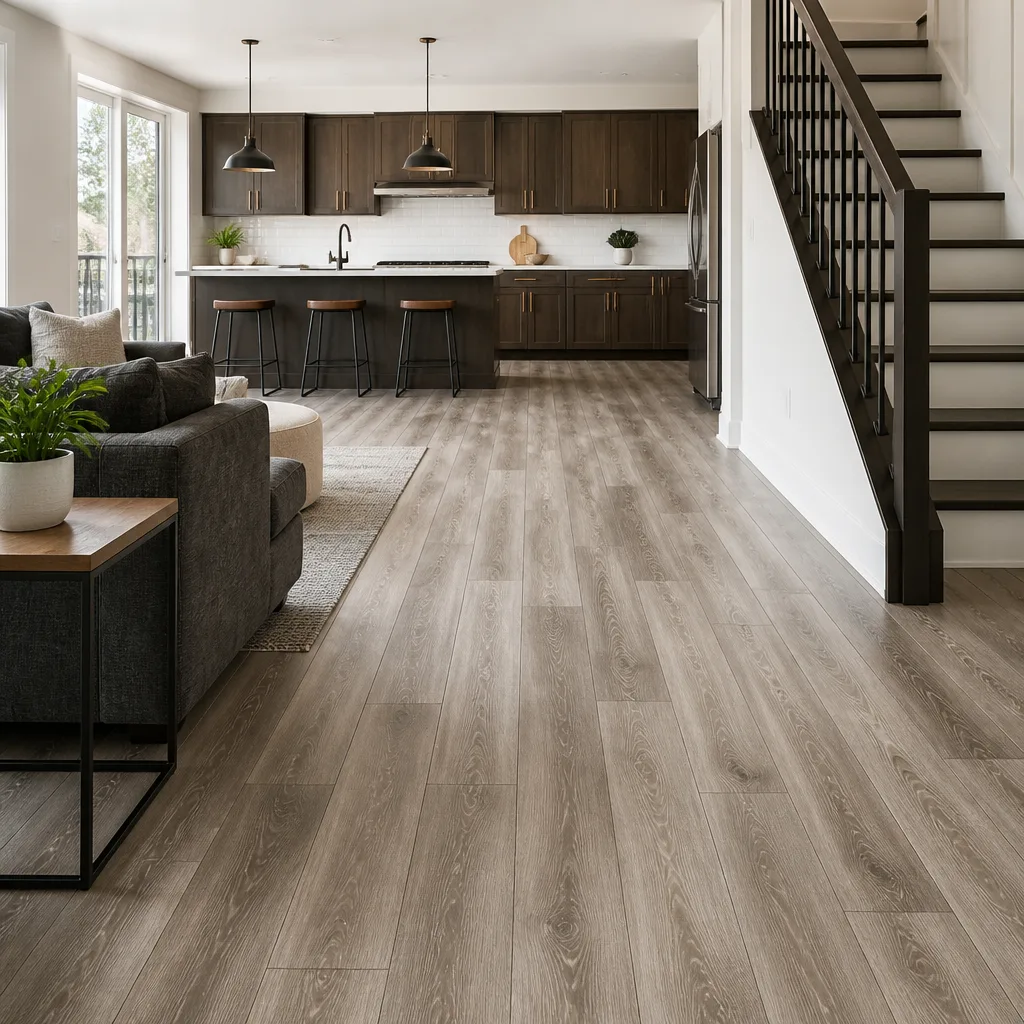 Luxury vinyl plank
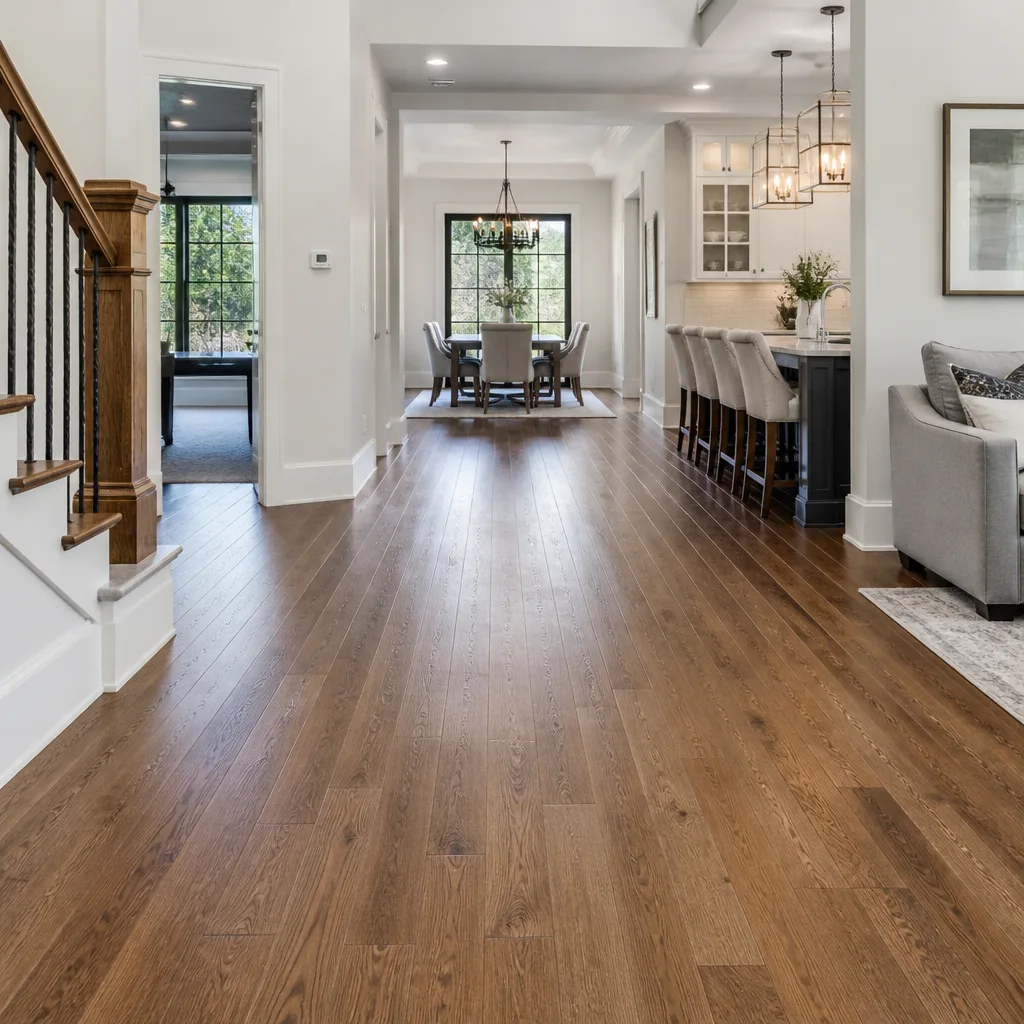 Hardwood
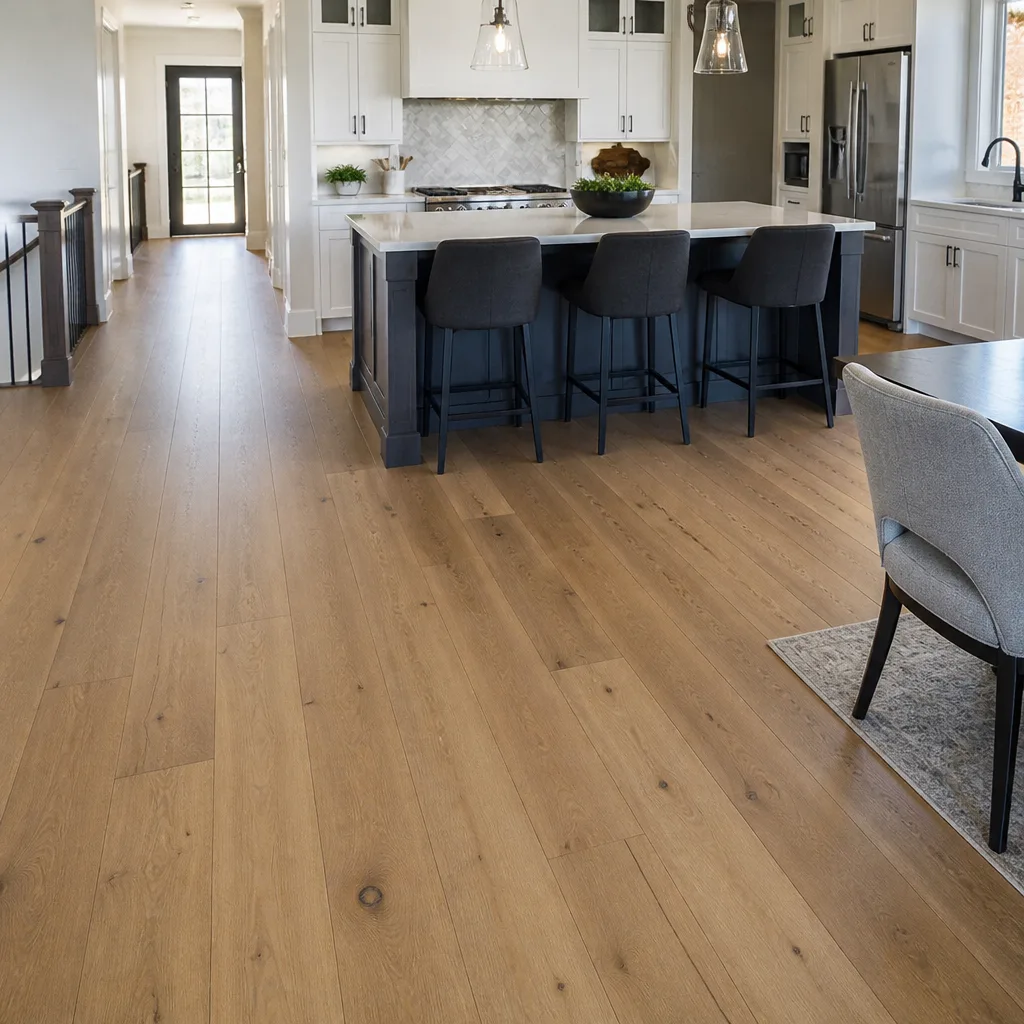 Engineered hardwood
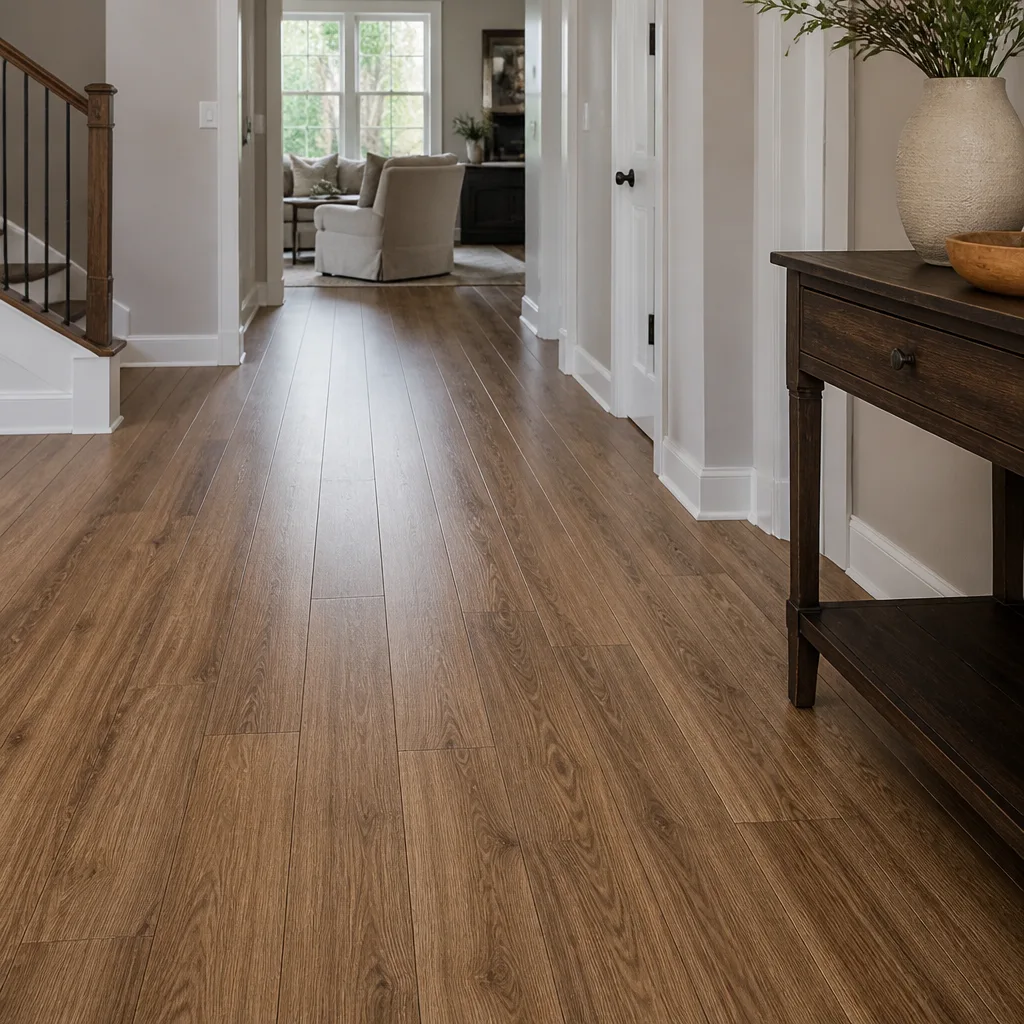 Laminate
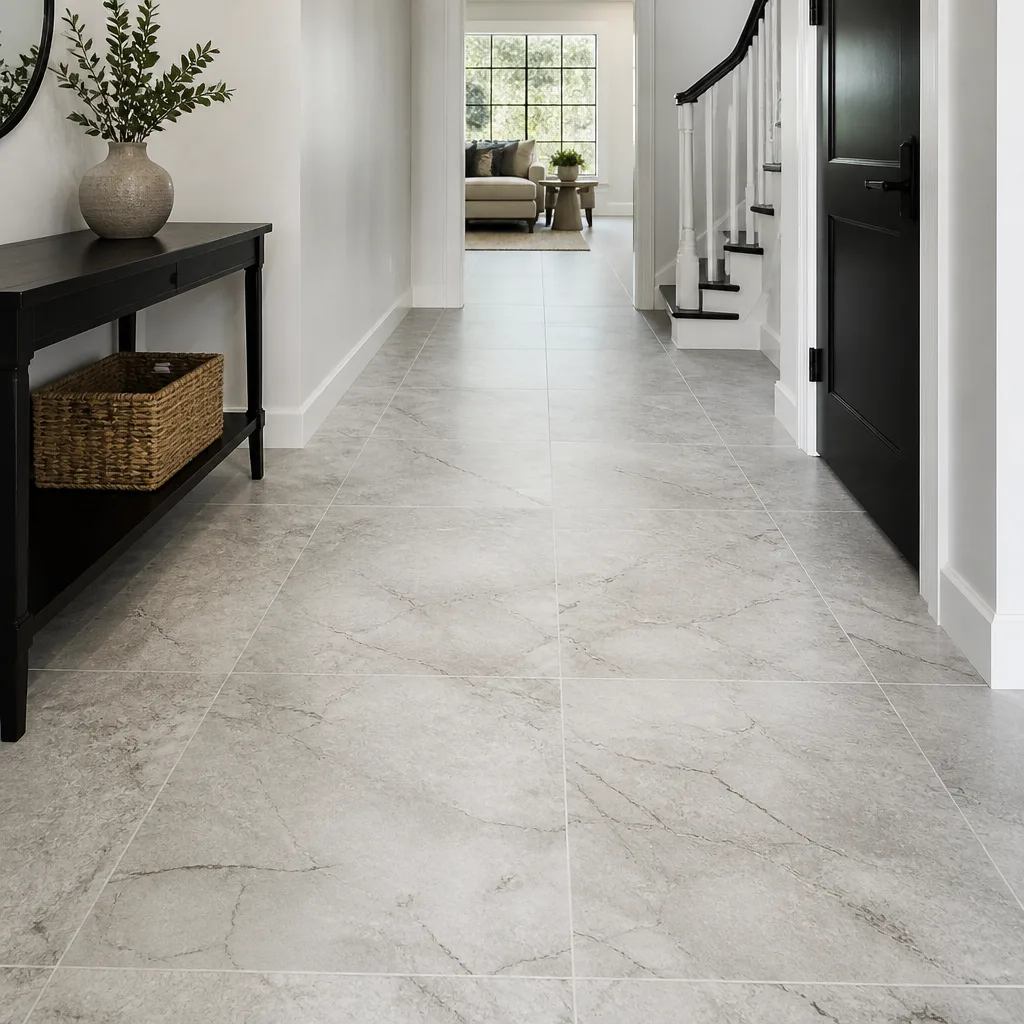 Porcelain tile
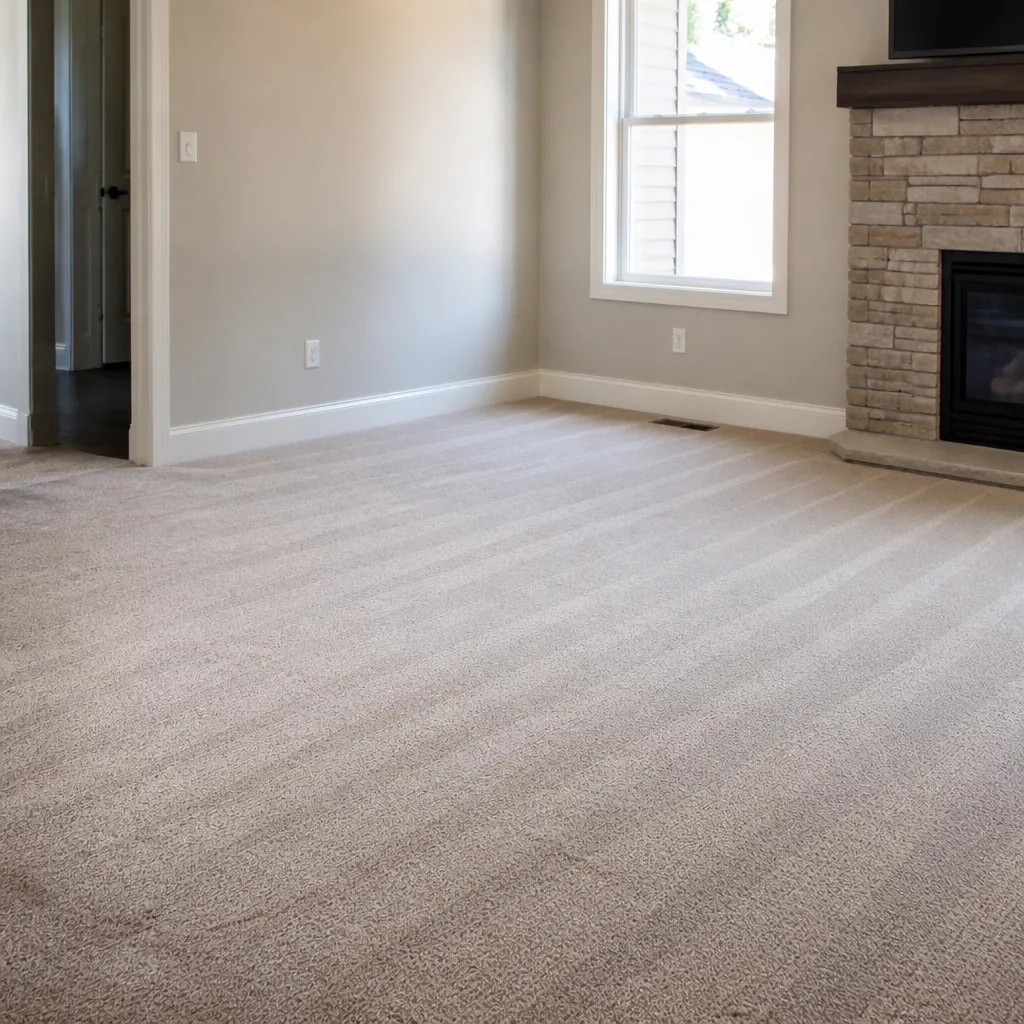 Carpet
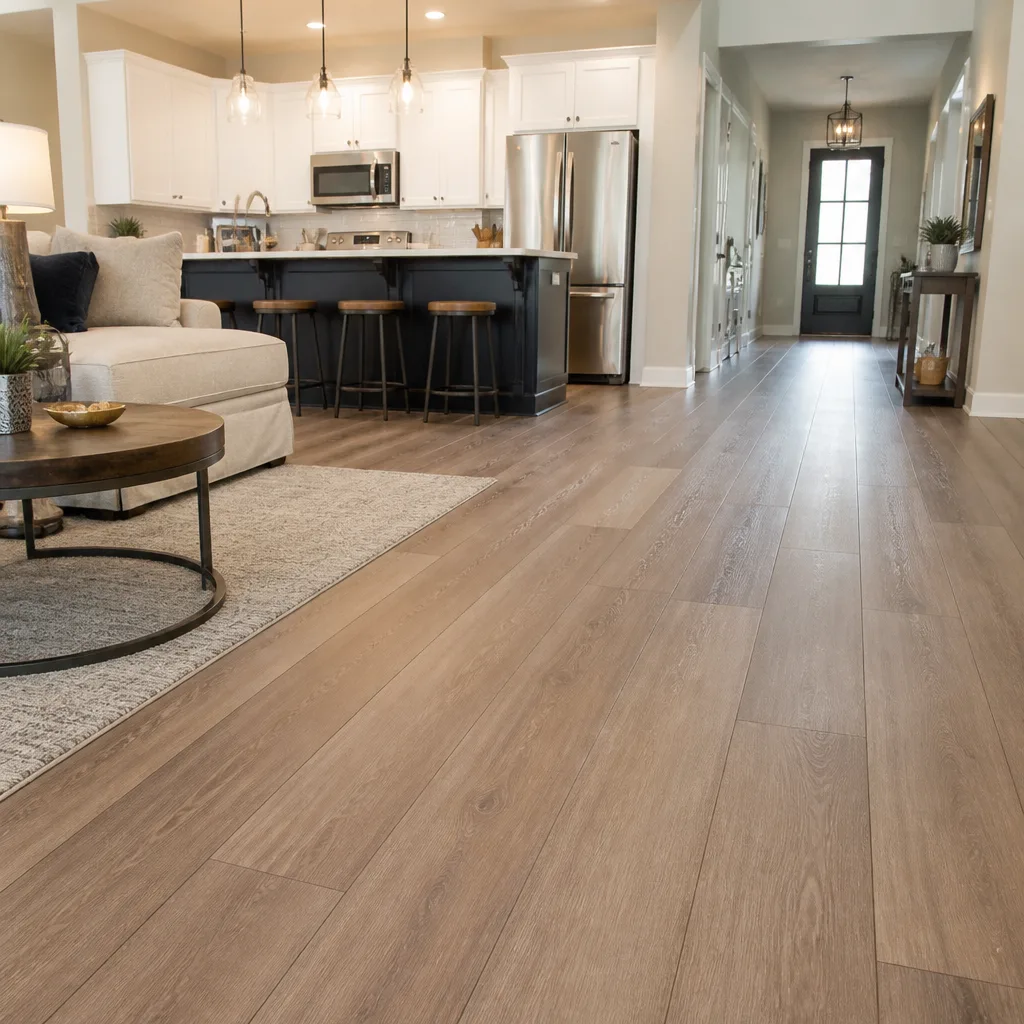 Shaw
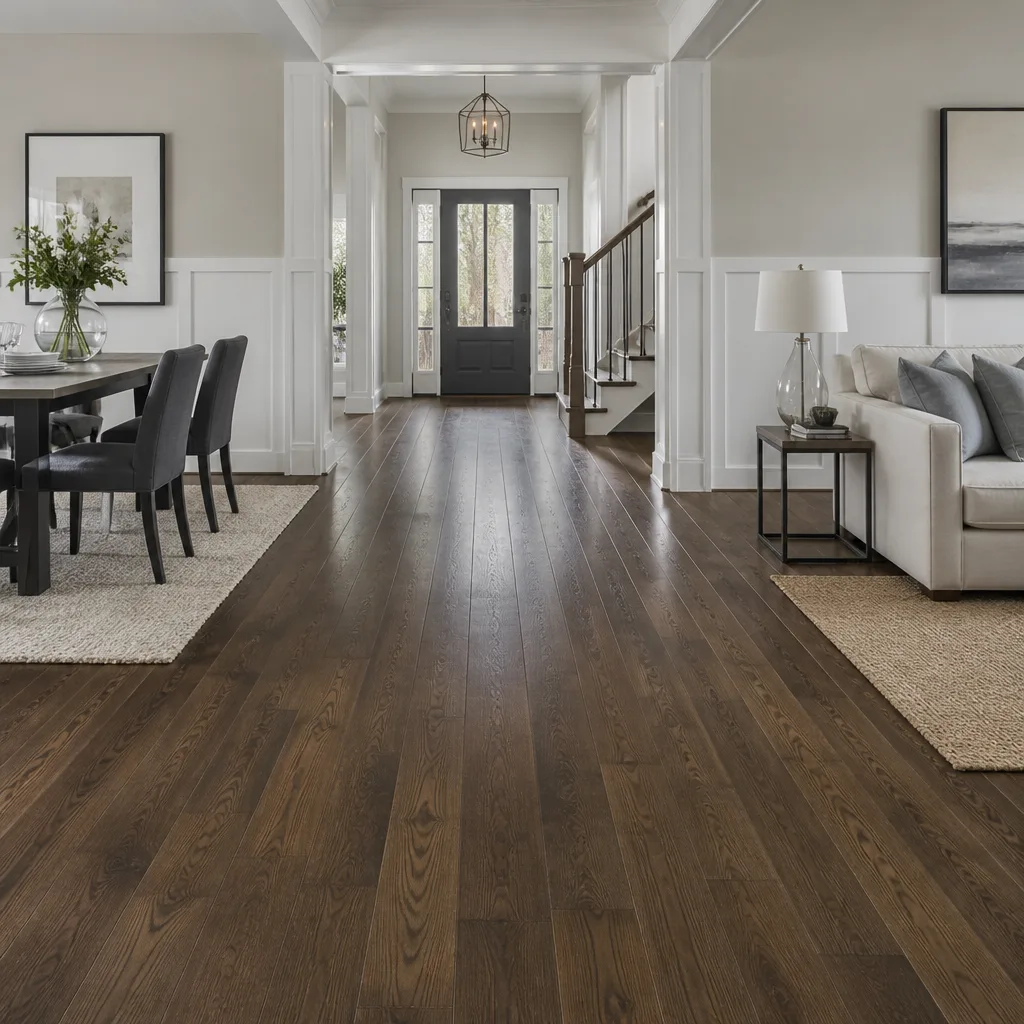 Mohawk
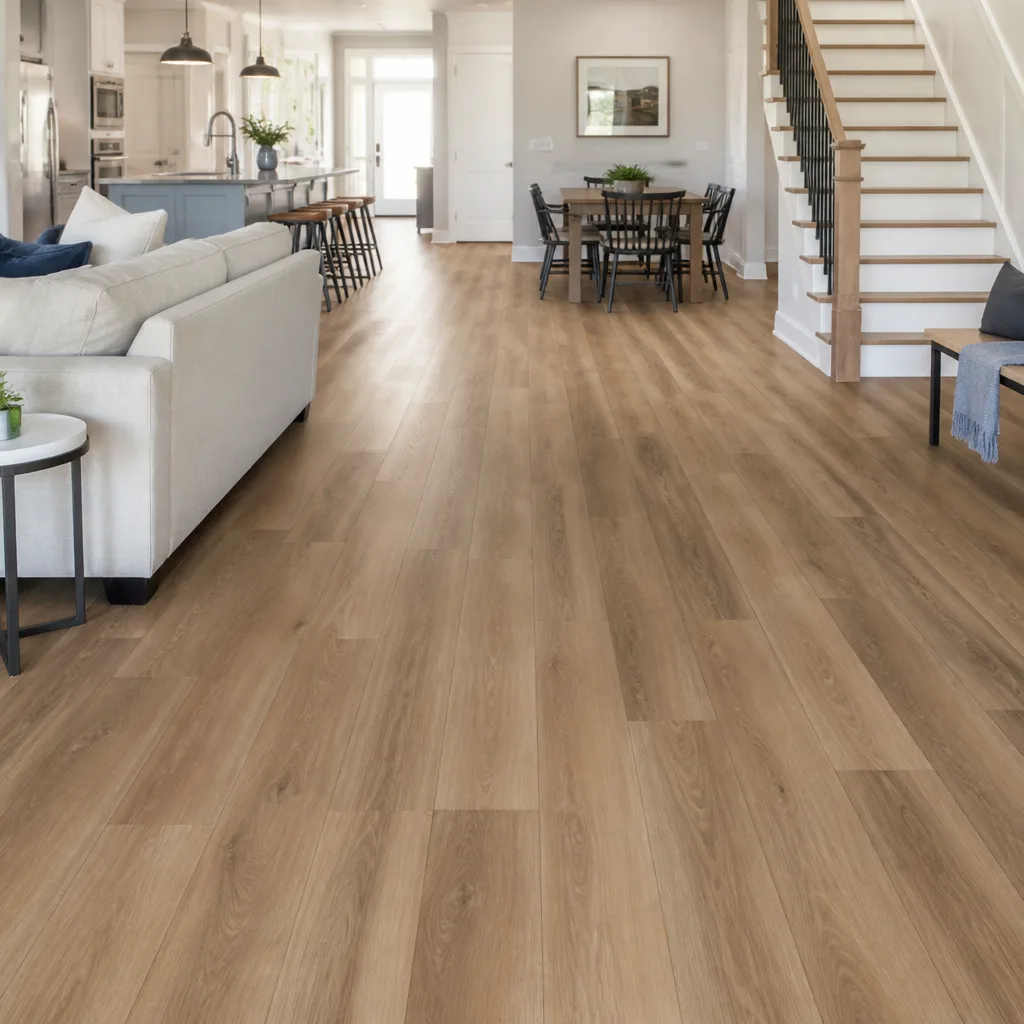 COREtec
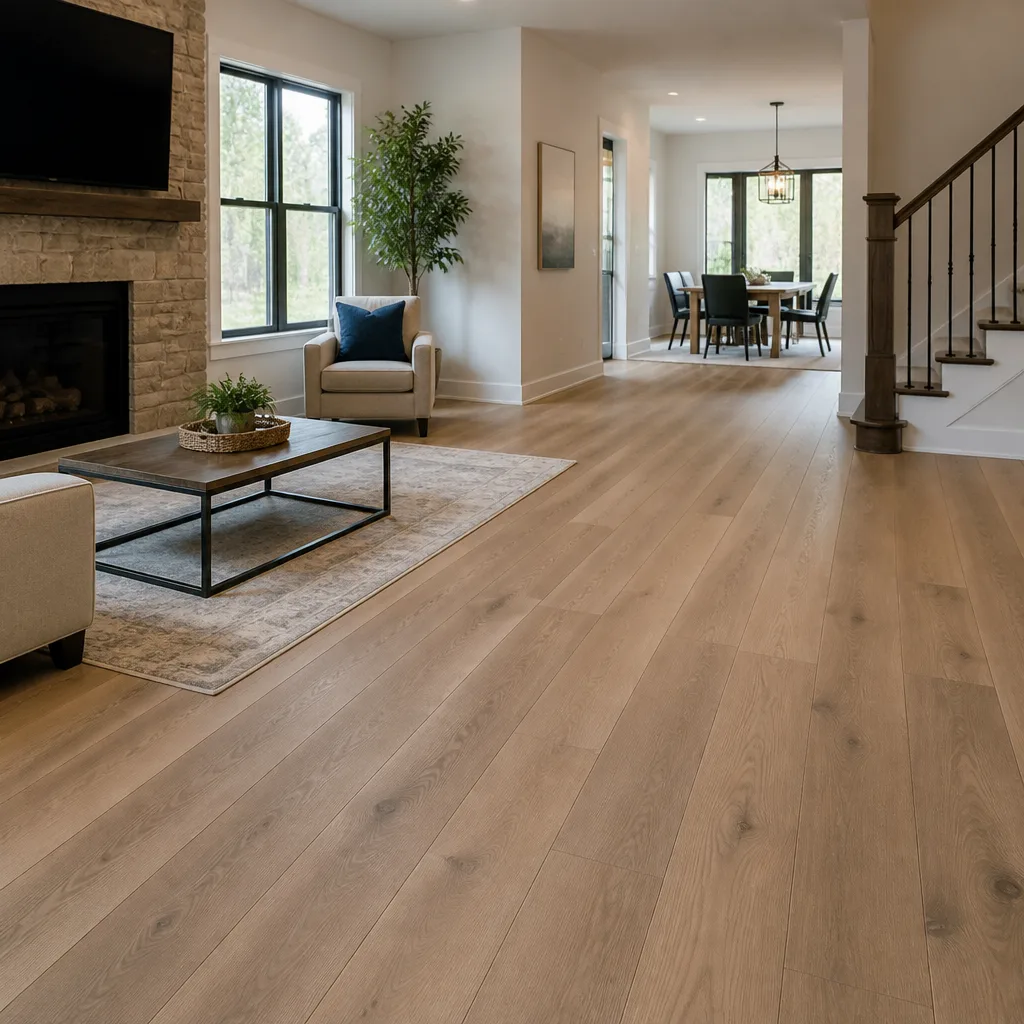 Pergo
Free in-home measure and written estimate: Shaw, Mohawk, COREtec and Pergo lines compared on your own rooms, with carpet, tile, vinyl plank, laminate and hardwood laid out side by side
Get your free estimateHardwood, Vinyl Plank, Laminate or Tile: How Henderson Homeowners Decide
Most Henderson homeowners walk into a flooring decision asking which material is best. That question has no answer, because there is no best. There is only the material that fails last in your particular house, with your particular pets, sun exposure and foundation. Henderson is a desert city built largely on slab, and that single fact reshapes the whole comparison. Solid hardwood, the most desired floor in the country, is also the one most likely to let you down here. What follows is a guide built around failure modes rather than feature lists, so you can match a floor to how your home actually behaves instead of how a brochure says it will.
Quick Answer
There’s no single best floor for every Henderson home. Tile handles slab movement and desert heat with the fewest surprises, luxury vinyl plank is the most forgiving hard surface for busy households, laminate works well in dry rooms away from moisture, and solid hardwood is best avoided on slab unless it’s engineered or you’re refinishing existing wood. The right pick comes down to foundation type, pets, sun exposure and whether you want the option to refinish later. A free in-home measure and written estimate is where that decision gets settled.
Styles & brands we work with
- Hardwood
- Engineered hardwood
- Luxury vinyl plank
- Laminate
- Porcelain tile
- Carpet
- Shaw
- Mohawk
- COREtec
- Pergo
Table of Contents
- Why Failure Modes Beat Feature Lists
- The Four Materials and How Each One Fails in Henderson
- Where Engineered Hardwood Changes the Math
- The Resale Reality in Henderson’s Market
- Side-by-Side: Pets, Slab, Sun and Refinishing
- When Your Priorities Conflict
- Choosing Among Brands Without Getting Lost
- What the Install Actually Involves
Why Failure Modes Beat Feature Lists
Every flooring page on the internet will tell you that luxury vinyl plank is water-resistant, tile is durable and hardwood is timeless. All true, and all useless without context. The better question is: what does this material do when your house pushes back?
Henderson pushes back in specific ways. The air here is dry. Indoor relative humidity swings with the seasons and with how hard your air conditioning runs, and that swing moves wood. A solid wood floor that was flat on install day will cup, crown or gap as the moisture content of the boards chases the room. Homes on slab foundations add a second pressure, because concrete and wood expand and contract at different rates. Slab movement also works on tile grout lines. Desert dust is abrasive underfoot, which wears at any surface finish. And western sun through a big window bakes whatever it lands on, day after day, at full intensity.
None of that means hardwood is a bad floor. It means hardwood is a demanding floor, and in Henderson a demanding floor needs the right installation, the right product spec and a homeowner who understands what they’ve signed up for. Vinyl plank, laminate and tile each answer some of these pressures and ignore others.
A failure-mode framework does two things for you. It stops you from buying a beautiful floor that quietly disappoints you in two winters, and it tells you which rooms in your house can carry which material. A hallway with west-facing glass is a different job from a guest bedroom with the blinds drawn. A house with two dogs and a pool door is a different job again. When you start from failure, the material choice usually narrows itself to one or two honest candidates.
This is also where a flooring-only specialist earns their keep. A general contractor bids the job and moves on; someone who works in floor categories every day has watched the same products age in the same climate and can tell you which ones hold up. We spec floors for Henderson homes and we refinish the hardwood that’s already in them, so we’ve seen the long tail on both sides.
The Four Materials and How Each One Fails in Henderson
Each material has one signature failure mode in this climate. Know it before you buy, and you’ll know whether you can live with the risk.
Solid Hardwood: Cupping and Gapping
Solid hardwood is a hygroscopic material, meaning it takes on and gives off moisture from the air. In a desert home, indoor humidity can move several points across a year, and solid boards respond by swelling at the edges or shrinking and opening gaps between planks. On a slab, the wood has nowhere to move downward, so the stress shows up as cupping, where board edges lift and the center dips. Installation method matters here: nailing over a wood subfloor gives the boards room to work, while glue-down over slab on a solid board is a much tighter tolerance situation. None of this makes hardwood wrong. It makes hardwood a floor you install with a moisture plan in mind, and one you should not put in a bathroom, laundry or any room that sees standing water.
Laminate: Swelling at Air Vents and Wet Zones
Laminate is a wood-composite core with a printed and wear-layered top. Its core is sensitive to moisture, and in a Henderson home the moisture usually shows up in one of two ways. The first is at air conditioning vents, where condensation can form and drip onto or under the floor. The second is at thresholds, doors and any spot where a spill sits. Because laminate swells at its core edges, the damage often appears as a raised seam before the surface itself looks worn. The fix is straightforward: ventilate well, wipe spills promptly, and keep laminate out of bathrooms. In dry, climate-controlled rooms, laminate is a genuinely stable and durable floor. We carry both Mannington and Armstrong laminate, and modern laminate is a long way from the 1990s version.
Luxury Vinyl Plank: Indentation Under Load
Luxury vinyl plank, or LVP, is a vinyl core with a printed design layer and a clear wear layer, and it is the most forgiving hard surface for most Henderson families. It handles incidental moisture far better than laminate and wood, and it doesn’t care about humidity swings the way wood does. Its characteristic failure is not water but load. Vinyl is a softer material than tile or wood, and in high heat it can indent under heavy, narrow-legged furniture that sits in one place for a long stretch. A piano, a loaded bookshelf, a metal bed frame with small feet: those are the pressure points. Protective pads, furniture cups and occasionally shifting a heavy item’s position solve most of it. Say “water-resistant” for LVP, not waterproof. Standing water and moisture from below still have to be dealt with, and no floor product overrides a hidden leak.
Tile: Grout Cracks From Slab Movement
Tile is the most dimensionally stable floor on this list. It doesn’t care about humidity. It doesn’t indent, it doesn’t swell, and it handles heat without complaint. Its failure mode is mechanical, not climatic: grout lines crack when the slab beneath them moves. Henderson slab-on-grade construction experiences normal soil movement, and tile set over a slab needs an install that accounts for it. A crack isolation membrane, proper spacing and a flexible setting material are the usual answers, and those are decisions made at the estimate, not after the fact. The other thing to know about tile in Henderson is that it stays cool and stays hard. That’s a benefit in summer and a consideration in a playroom or a room where small children crawl. Ceramic and porcelain tile from Daltile covers everything from residential aesthetics to commercial-grade durability.
Where Engineered Hardwood Changes the Math
Engineered hardwood is a real wood top layer over a plywood core, and for Henderson slab homes it often changes the whole decision. Solid wood is one piece that expands and contracts as a unit, so on a slab it fights the foundation. Engineered wood is built in cross-ply layers that hold their shape better under humidity swings, and many engineered products can be glued or floated over a slab rather than fastened over a wood subfloor. You still get a real wood surface, with a real wood species and grain, but a far more stable board.
The catch is the wear layer. Engineered hardwood is specified by the thickness of its top wood veneer, and that veneer is your entire refinishing budget. In Henderson’s abrasive dust environment, a floor that goes years without a trim or a recoat wears faster at traffic lanes, so a thinner wear layer shortens how much life you can get back out of the floor. When you’re comparing engineered products, ask for the wear layer thickness in writing and think about whether you want the option to refinish more than once. If you want a floor you can sand and refinish many times, you’re back to solid wood over a wood subfloor, and that’s a conversation to have with your installer, not your salesperson. Engineered gives you a broader range of install options and greater stability, at the cost of some refinishing headroom. For a lot of Henderson homes, that’s a trade worth making.
Worth saying plainly: engineered hardwood is not new hardwood installation on our side. What we do with wood is restore the floors already in the home. If you’re considering a new wood floor, we’ll help you spec and install it. If you have hardwood that’s worn and grey, refinishing it is often the smarter path, and we’ll tell you honestly whether the wood has the thickness to take a sand.
The Resale Reality in Henderson’s Market
Here’s the part HGTV skips: buyers notice flooring, appraisers notice condition, and the two don’t credit the same things. A well-maintained floor of almost any material reads as “well-kept house.” A beautiful new floor of an unusual material can actually raise questions. What appraisers and buyers actually respond to in a Henderson resale is more boring and more useful.
- Condition beats novelty. Freshly refinished existing hardwood tends to photograph and show better than a brand-new floor of a material buyers don’t expect. Restoring character reads as care.
- Consistency across a room helps. A mismatched floor transition is a visible question mark. Whole-home re-flooring, even with different materials per room, solves that when it’s planned together.
- Pet owners and families read durability. Buyers with dogs look at the wear lanes. Flooring that shows obvious wear lowers their confidence in everything else.
- Water resistance is a selling point in wet rooms. LVP or tile in bathrooms and laundry removes a buyer worry, especially in a household with kids.
The honest summary of resale value is this: flooring almost never pays for itself the way a kitchen renovation can, and it’s not something to count on as an investment. What it does is protect the value you already have. A chipped or cupped floor tells a buyer the rest of the house may be neglected. A sound floor tells them it isn’t. If you’re planning to sell in the next few years, refinishing hardwood you already own is often the highest-return flooring move available, because the material cost is close to zero and the labor is straightforward. If you’re staying put, buy the floor that fails last for your household and stop worrying about the spreadsheet.
We’re happy to talk through what makes sense for a specific home in Henderson, whether you’re prepping a sale or planning to stay.
Side-by-Side: Pets, Slab, Sun and Refinishing
These are the four variables that decide most real flooring choices in Henderson homes. Here’s how each material handles them.
Pet Urine Tolerance
Pet accidents are the great equalizer among floors. Tile is the easiest: urine sits on the surface, and you clean it up. Grout can stain if it’s not sealed, but the tile itself is fine. Luxury vinyl plank is close behind, because its core doesn’t swell, though standing liquid can still reach seams and underlayment if it isn’t cleaned promptly. Laminate is the weakest here, because urine reaches the core and swells it, and the swelling doesn’t reverse. Solid hardwood is also vulnerable: the surface finish protects against spills but not against liquid sitting on seams, and refinishing doesn’t always fix a deep stain. If your household includes young pets or older dogs, tile and LVP should be at the top of your list for the rooms where the pets spend their time.
Slab Compatibility
Henderson homes on slab narrows the field. Tile is ideal over slab with a proper membrane. LVP and laminate can float or glue over slab when the slab is prepped correctly. Engineered hardwood can be glued or floated over slab. Solid hardwood is the one product that generally wants a wood subfloor, which often means adding one, and that’s a cost and height conversation. Ask at the estimate whether your slab needs flatness prep. It’s a common step on older Henderson homes.
UV Fade Resistance
West-facing rooms in Henderson take intense sun. Tile is essentially immune. LVP and laminate vary by product; better lines hold color well, but any printed surface can fade over years in direct sun. Hardwood changes color with light too, sometimes dramatically, and it can’t be avoided. The practical answer in every case: window coverings, a UV film, or accepting a gradual change over time. This is one place where the product matters less than the window.
Refinishability
Only wood refinishes. Solid hardwood can usually be sanded and refinished multiple times if it has the thickness, which is why a refinish can get decades of additional life from a floor you already own. Engineered hardwood can be refinished if the wear layer is thick enough, and that’s a question to answer at the estimate. LVP, laminate and tile are wear-and-replace products. That gives wood a real long-term advantage on a lifetime cost basis, and it’s why we keep a dedicated hardwood refinishing service rather than treating it as a sideline.
The single most useful next step is a free in-home measure. Call (844) 972-2185 to schedule one for your Henderson home. We answer 24/7. Fast dispatch from 7am to 7pm, Sunday through Friday.
When Your Priorities Conflict
Most Henderson households land here: they want hardwood aesthetics, they have dogs, and they have a direct west-facing window. That combination is genuinely hard to satisfy with a single material, so stop trying. Here’s the framework we walk through at the estimate.
- Separate the house into zones. Entry, kitchen, laundry and the rooms the dogs live in are the high-traffic, high-moisture, high-sun zones. Bedrooms and offices are low-impact. Different zones can carry different materials, and that’s a legitimate plan, not a compromise.
- Put the hero material in the rooms you’ll see most. If the wood look matters most to you, put it in the living room and let the utility rooms go to tile or LVP. You’ll enjoy the floor you see most and the rest of the home carries on without drama.
- Decide which failure you can live with. If you can tolerate some fade and indentation, LVP gives you a wood look in a low-maintenance product. If you want to refinish forever and can manage moisture and sun with a subfloor and window film, go engineered or solid.
- Check what’s under your feet before you fall in love. If the room is over a slab that’s out of tolerance, the solid-wood option is often more cost than it’s worth. That’s a fact to know early, before you’ve picked a species.
- Get one written estimate for the whole plan. A flooring-only specialist can bid a whole home, different rooms, different products, one schedule. That’s the difference between a project and a series of separate contractors.
For a lot of households, the answer we land on is stone-look tile in the wet and high-traffic rooms, a luxury vinyl plank from COREtec or Karndean where wood aesthetics matter but durability matters more, and a refinish of existing hardwood where it exists. Nine brands, one specialist, one schedule. That’s the point of a full-category portfolio: you can choose per room instead of forcing one decision across the whole house. And if carpet installation is part of the plan for bedrooms, it can go on the same schedule.
Choosing Among Brands Without Getting Lost
The brand conversation is less about which brand is best and more about which brand has a product that covers your tier and your style. We carry nine brands across every major category so you don’t have to fit your home into one company’s line card.
- Value-driven lines. Pergo and Armstrong cover budget-friendly, dependable product. If you’re doing a large area on a modest budget, these tiers matter.
- Design-forward luxury vinyl. COREtec and Karndean are the premium players in LVP, and a lot of general contractors underserve this category. If you want a wood look in a durable product and you want it to look like real wood, these are the brands to look at.
- Tile aesthetics and durability. Daltile covers both residential looks and commercial-grade options, so you can pick a tile that matches the room rather than settling for what’s in stock.
- Carpet and soft surfaces. Shaw and Mohawk anchor the carpet side, and LifeProof is worth including in the budget conversation.
What you should not do is buy from a brand because a salesperson told you it’s the best. Every one of these brands makes good product and every one sells a cheaper line you might regret. What matters is which specific product, at which wear layer and spec, suits your particular room. That’s the conversation to have at the estimate. Ask for the product spec in writing, ask for the wear layer or core construction, and match the brand to the room. Our role is to help you fit the floor to the space, not to sell you the most expensive option on the wall.
If you’d like the full picture of what we carry and what we install, have a look at Floors Henderson.
What the Install Actually Involves
The install is a booked job, not a same-day surprise. The schedule is set at the estimate after we’ve seen the space. Here’s how the whole job typically runs, and what to expect at each step.
- Free in-home measure and estimate. We come out, measure every room, check the subfloor or slab, note any flatness issues, look at thresholds, door clearances, vents and sun exposure. You get a written quote that sets the final price.
- Product selection. We walk through brands and categories with the room in mind. That’s where the failure-mode conversation from this guide becomes a specific product.
- Scheduled install day. Furniture moved, old floor removed where required, subfloor or slab prepped as needed, then the new floor installed to the product’s specified method.
- Trim and finish. Baseboards, transitions, thresholds and any final details specific to your home.
- Walkthrough. We walk the finished floor with you, cover care instructions, and answer questions about moving heavy furniture back in. Every product has care requirements; we’ll make sure you know yours.
For tile work, the prep and the membrane choice are often the biggest part of a good job. For tile flooring installation, the questions to ask are about the substrate, not the tile. For wood, the conversation is about thickness, current condition and whether the floor can take a sand and a refinish. For LVP and laminate, it’s about the subfloor tolerance and the transition details.
Our technicians have up to 10 years of experience across the categories we install. What we don’t do is pretend every room of every home wants the same floor. We’ll tell you when a job is a bad fit for a product, even if it’s a product we carry.
The install is scheduled after the estimate; no same-day install and no fixed arrival time. Once you have a written quote, you can decide on your own timeline.
Common Mistakes to Avoid
- Putting solid hardwood on a slab without a plan. It’s the single most common regret in Henderson. If you want wood on a slab, engineered hardwood usually carries the day. Get the slab checked before you choose.
- Buying laminate for a wet room. Laminate swells at the core and the swelling doesn’t reverse. Bathrooms, laundry rooms and kitchens with dishwashers are the rooms to keep it out of.
- Ignoring the west-facing window. A room with a west-facing wall of glass in Henderson takes intense sun all afternoon. Any printed surface, and even natural wood, changes over time. Plan for a window covering or choose a product you can live with as it ages.
- Skipping slab flatness prep on an older Henderson home. A floor installed over an out-of-tolerance slab will show every dip through the first summer. Flatness prep is a step, not a placeholder.
- Buying engineered hardwood on looks alone. The wear layer determines how many times you can refinish, or whether you can at all. If you want a long-life wood floor, ask for the wear layer thickness in writing.
- Buying LVP without considering heavy furniture. A piano, a loaded bookshelf or a metal bed frame can indent vinyl in the heat. Furniture pads and, occasionally, repositioning heavy items handle it. Know before you choose.
- Judging a floor on the sample alone. A sample board tells you the color and the surface; it tells you nothing about slab compatibility, moisture behavior or the substrate prep the room will need. Those come out at the measure.
See the difference
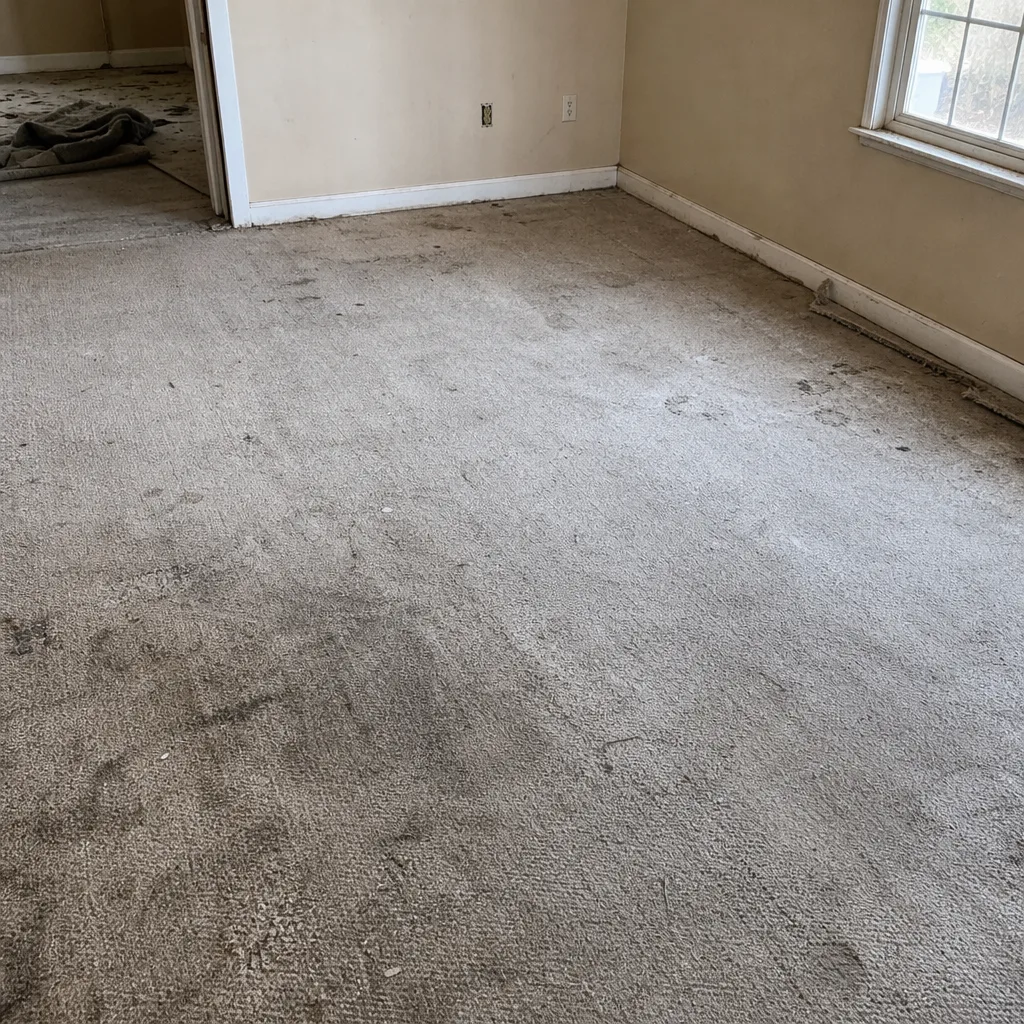 Before
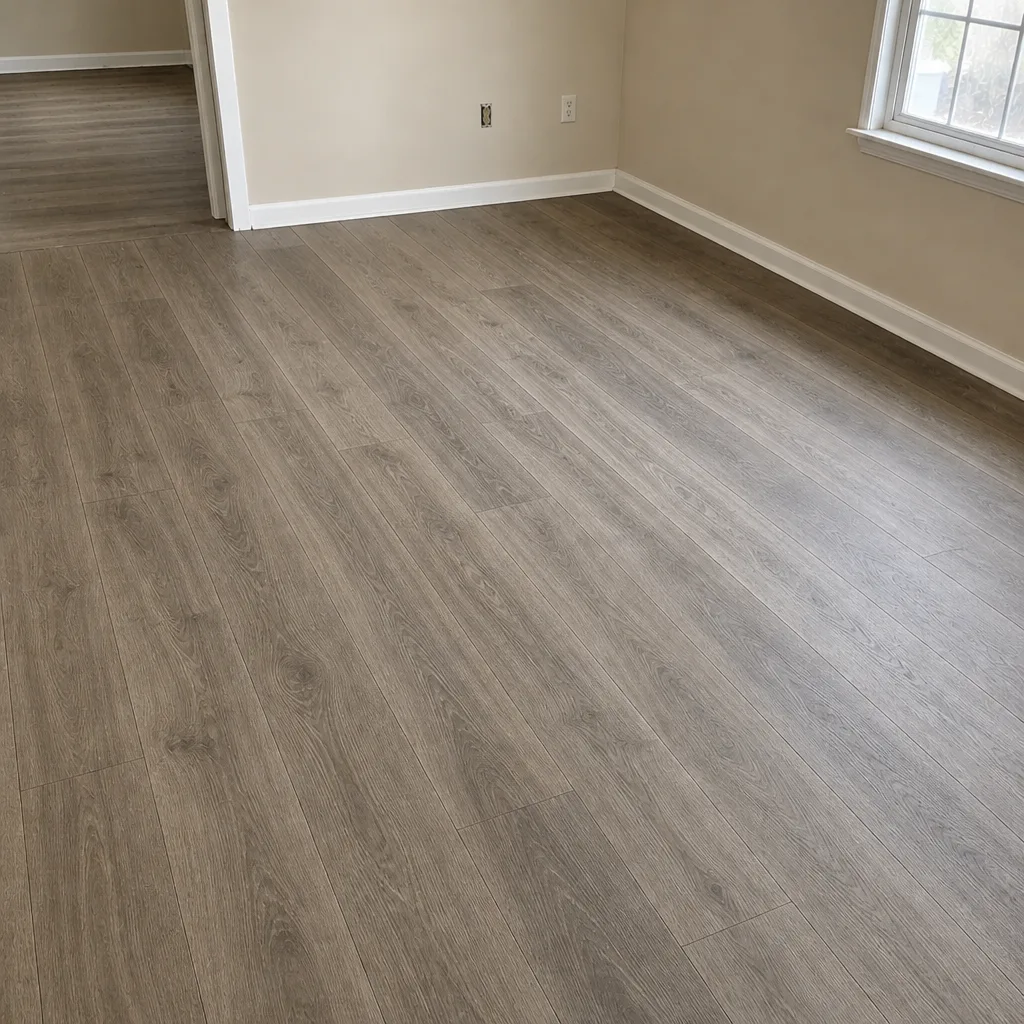 After
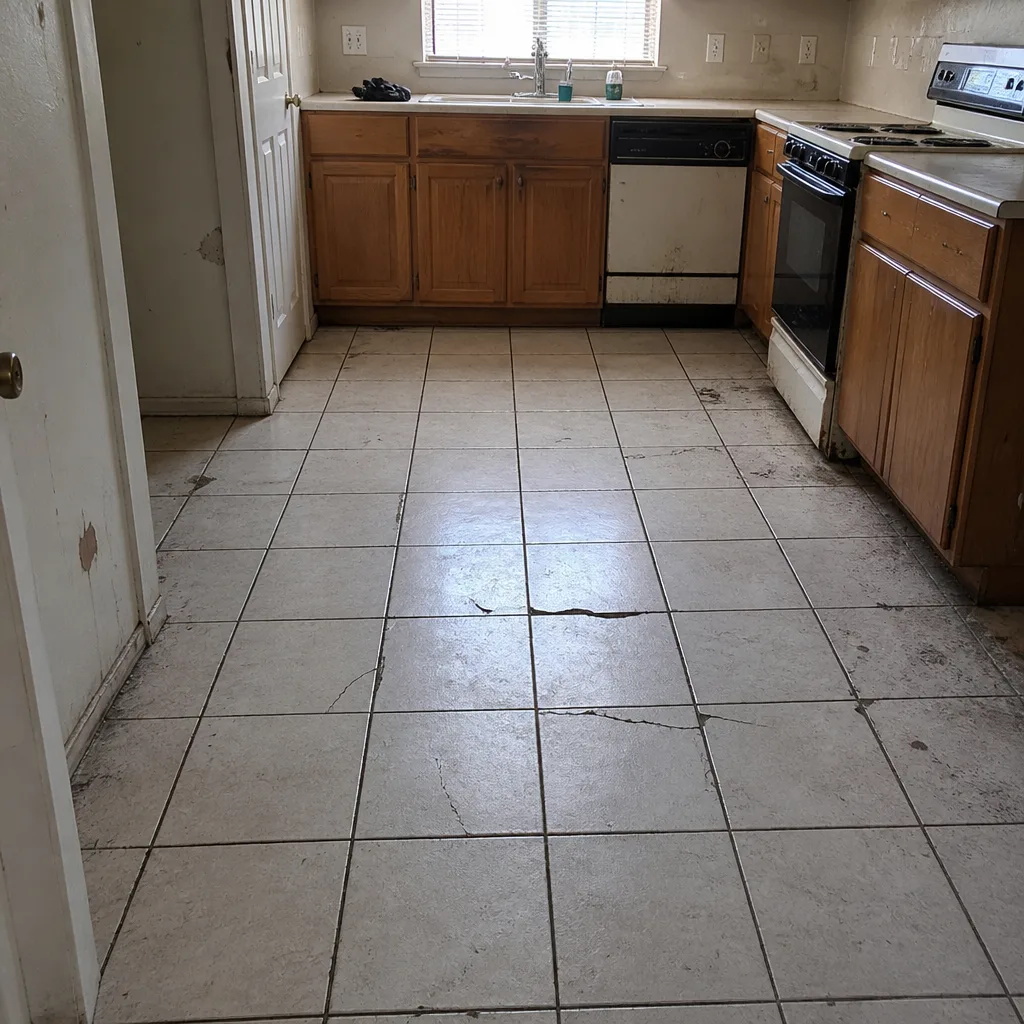 Before
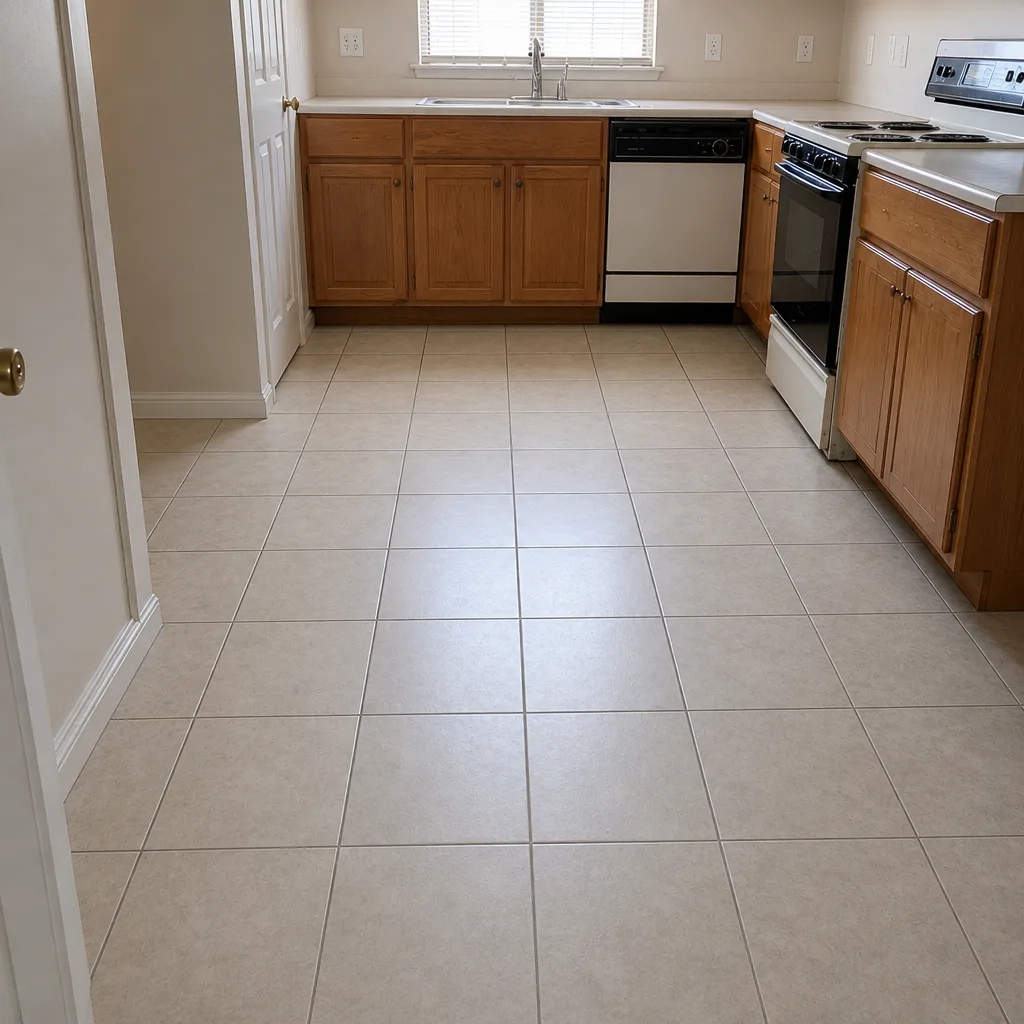 After
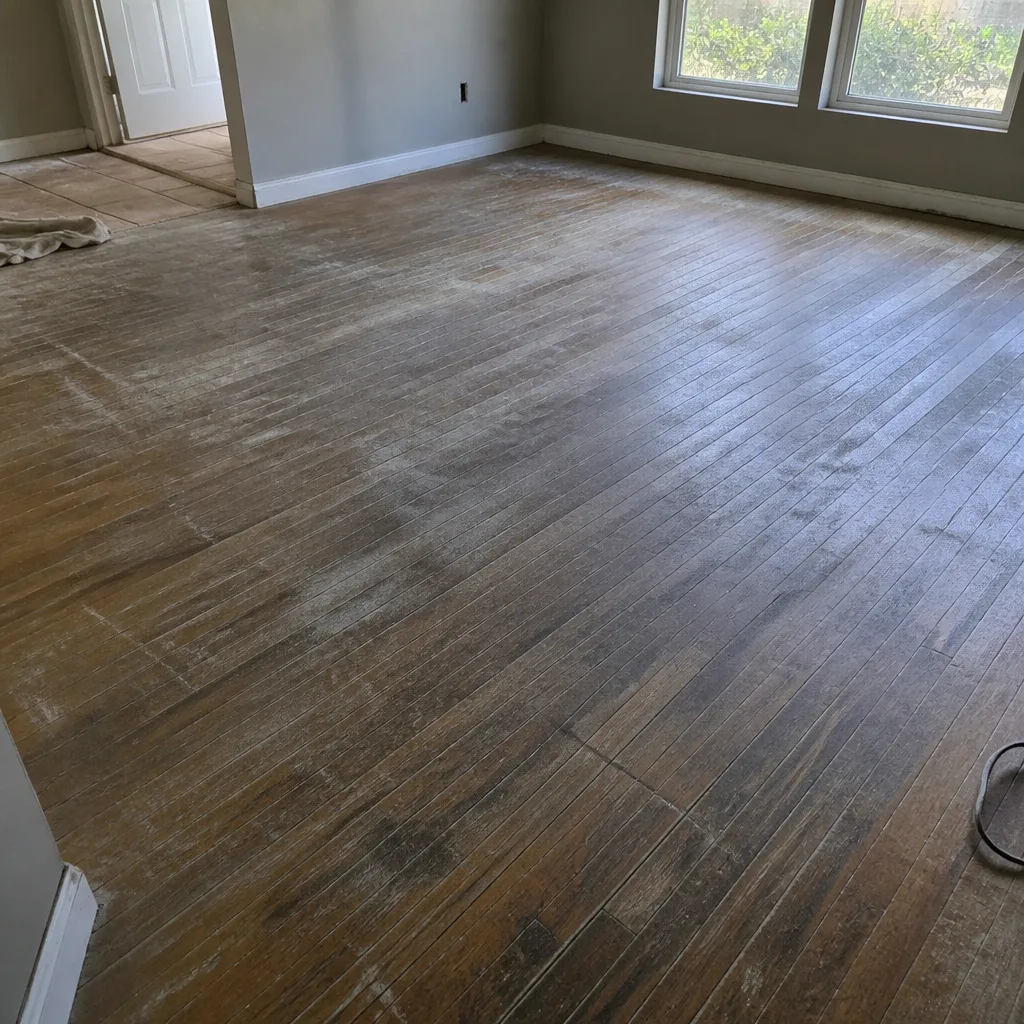 Before
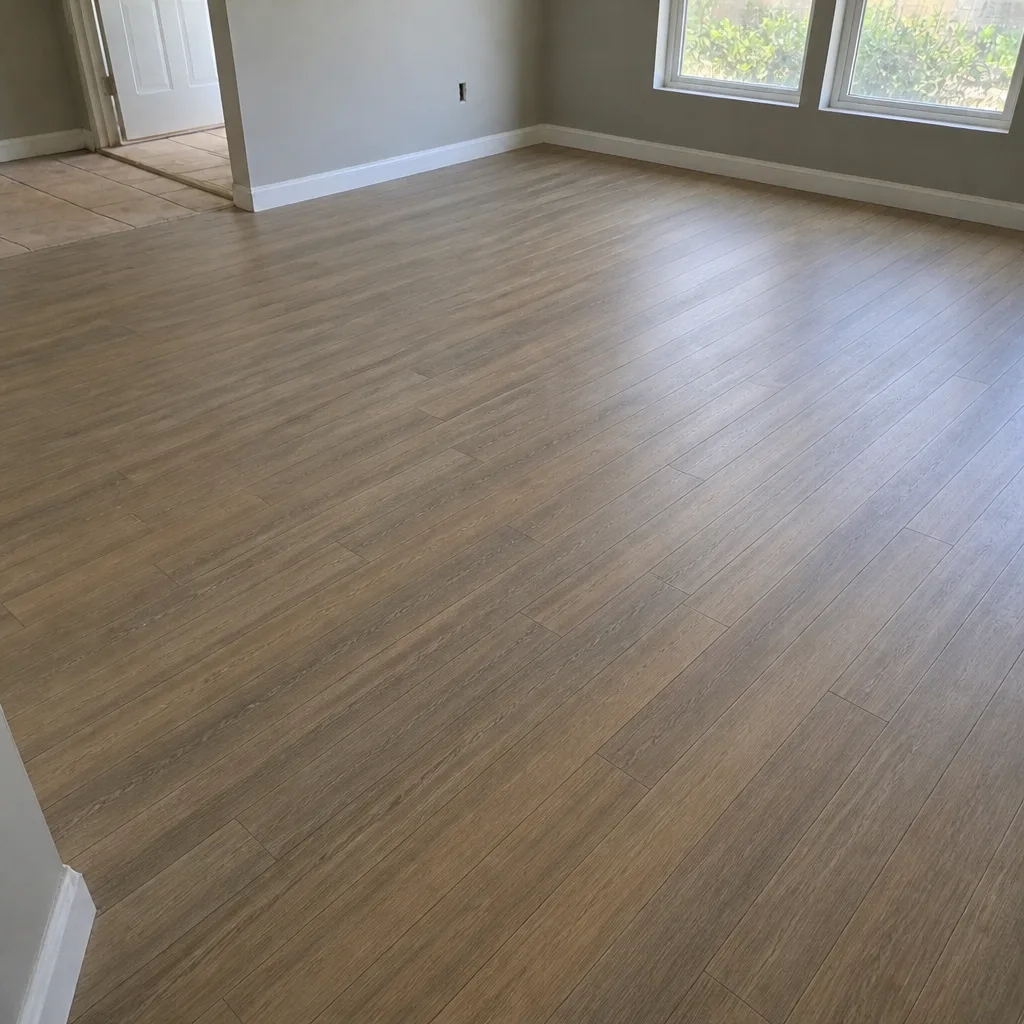 After
When to Call a Professional
Some flooring decisions can be made in a showroom. Others need eyes on the actual room. Call us when the room is over a slab you don’t know the condition of yet, when the floor is in a home with heavy pets or a pool door, or when you have a west-facing wall of glass and the sun is a real factor. Call when the existing hardwood is cupped, grey or scratched and you don’t know whether refinishing is an option, and when the wood might be too thin to take a sand. Call before you’ve committed to a material, because correcting a choice is expensive and choosing the right one up front isn’t.
Floors Henderson offers free estimates in Henderson. Call (844) 972-2185 to schedule one. We answer 24/7. Fast dispatch from 7am to 7pm, Sunday through Friday.
Frequently Asked Questions
For most Henderson homes, luxury vinyl plank is the more forgiving hard surface and engineered hardwood is the better wood option. Solid hardwood’s humidity sensitivity and slab incompatibility make it the riskier pick on a slab foundation. If you want a wood look with minimal maintenance, LVP from COREtec or Karndean is the practical choice; if you want real wood you can refinish, go engineered with a thick wear layer and check the slab at the estimate. Call (844) 972-2185 to schedule a free measurement.
Yes. The in-home measure and the written estimate are both free. We measure every room, check the floor’s substrate and note anything that will affect the install, and you’ll have a written quote in hand to compare against other bids. The price is set per job by that written estimate. Call (844) 972-2185 for your free estimate.
The install date is scheduled at the estimate and the schedule is set there, not over the phone. The length of the job depends on square footage, whether old flooring is removed, and whether the slab needs prep. You’ll have a firm timeline with your written quote. Call (844) 972-2185 to schedule your estimate and get a schedule in writing.
Often yes, if the floor has enough thickness and the boards are in sound condition. Refinishing is the alternative to full replacement and preserves the original character of the wood at a lower cost than a new floor. Whether yours can take a sand and what species it is get checked at the estimate, not over the phone. Call (844) 972-2185 for a free evaluation.
Porcelain is the most durable choice for Henderson slab homes, and Daltile covers everything from residential looks to commercial-grade options. The tile itself is only part of the answer: the install needs the right substrate prep, a crack isolation membrane where appropriate and the right setting material. The tile handles heat and moisture; the install handles slab movement. Call (844) 972-2185 for a free measurement.
No, and we usually recommend against forcing it. Different rooms in a Henderson home have different demands: pets, sun, moisture and traffic all vary. A flooring-only specialist can plan a whole-home re-floor with different products per room on one schedule, so the transitions line up and the job runs as one project. Call (844) 972-2185 to talk through a room-by-room plan.
The Bottom Line
Stop looking for the best floor and start looking for the floor that fails last in your Henderson house. Solid hardwood is beautiful and demanding; it wants a wood subfloor and a moisture plan. Engineered hardwood gets you real wood with much better slab compatibility, provided the wear layer is thick enough to refinish. Laminate is a good, dry-room floor that swells at the core when it gets wet. LVP is the most forgiving hard surface and tolerates what the desert and the dogs throw at it, while tile is the most stable and the most grout-fragile. The right call depends on your slab, your sun and your household, and it gets settled at a free in-home measure.
Written by the team at Floors Henderson.