
Last updated November 18, 2026
 Hardwood
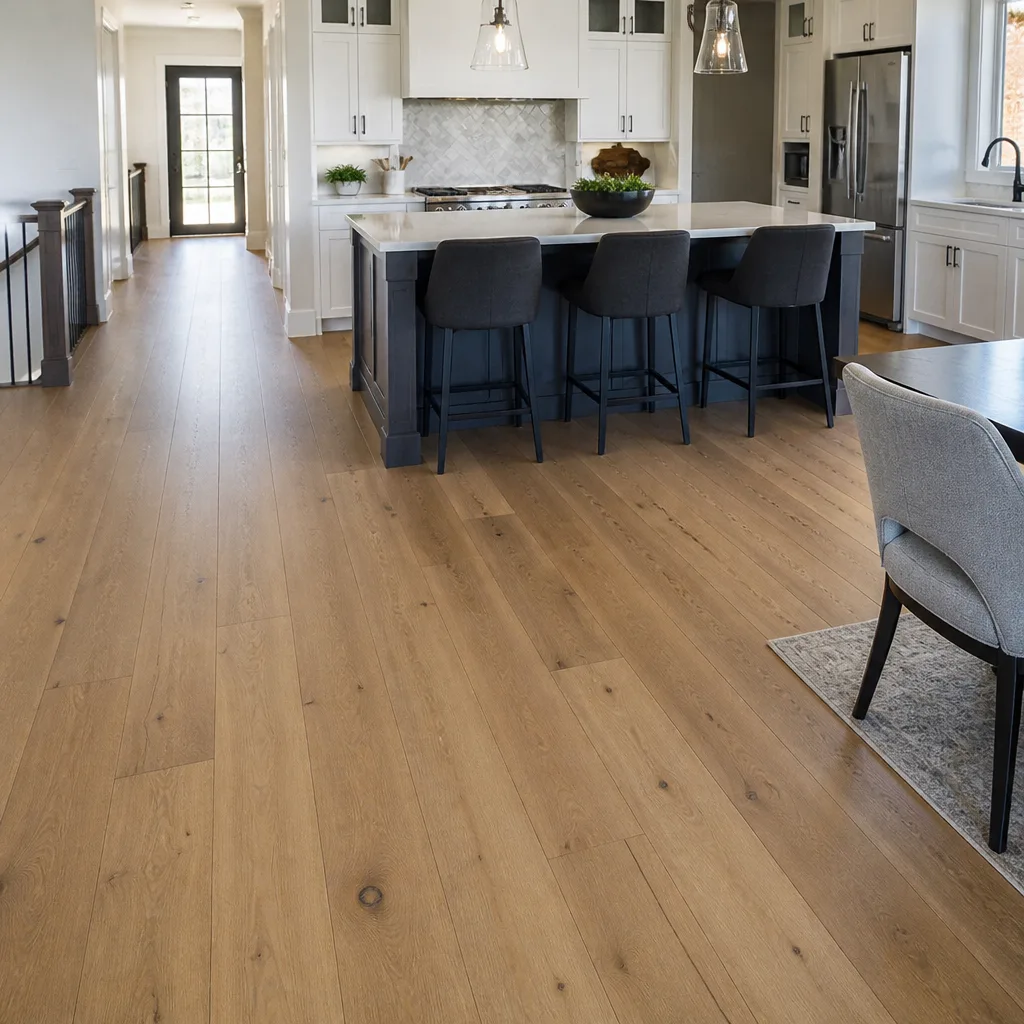 Engineered hardwood
 Luxury vinyl plank
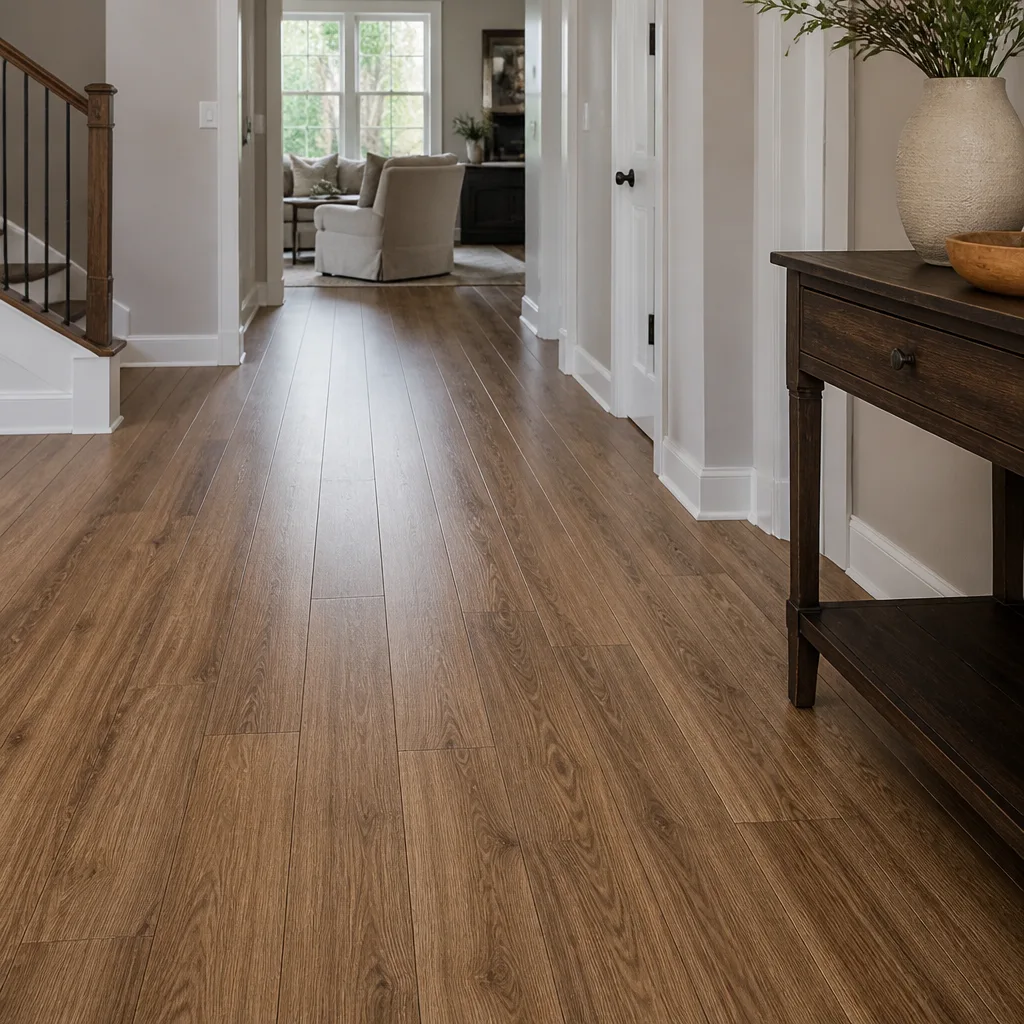 Laminate
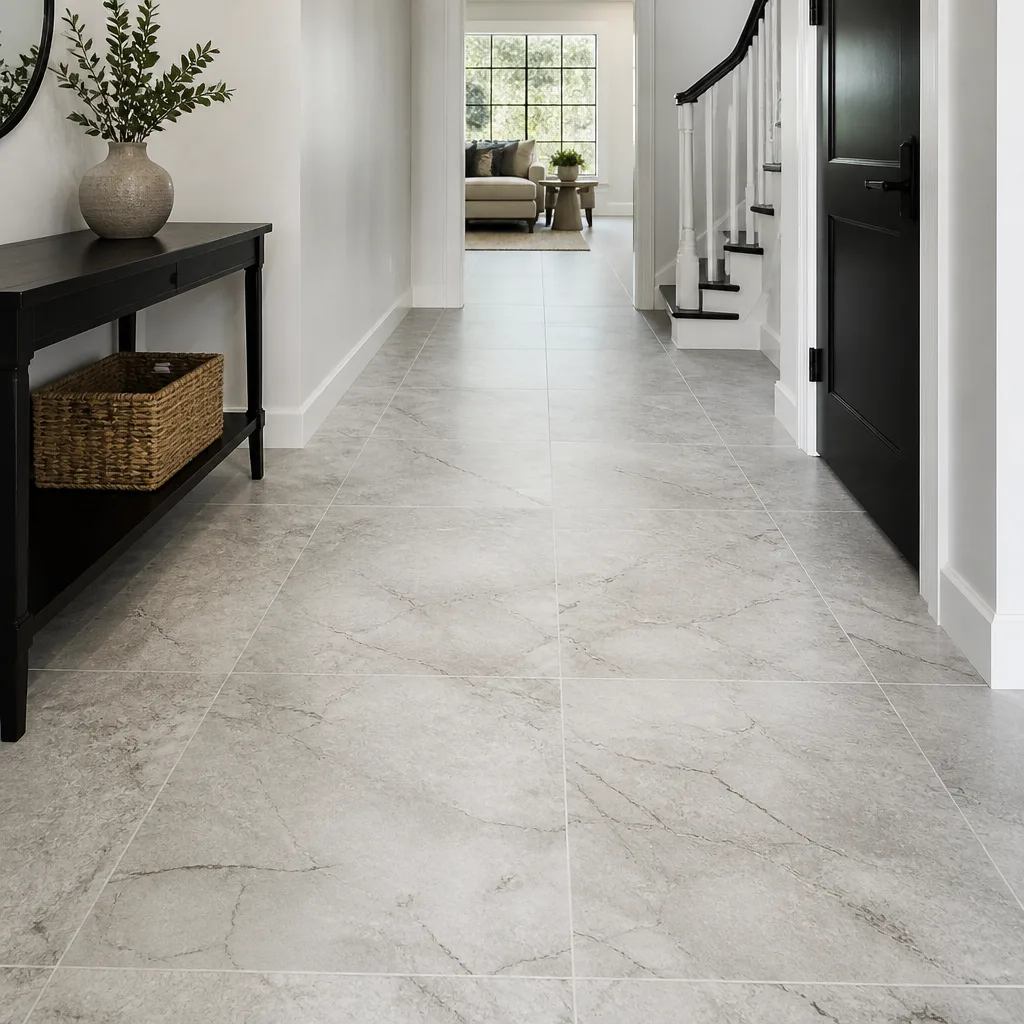 Porcelain tile
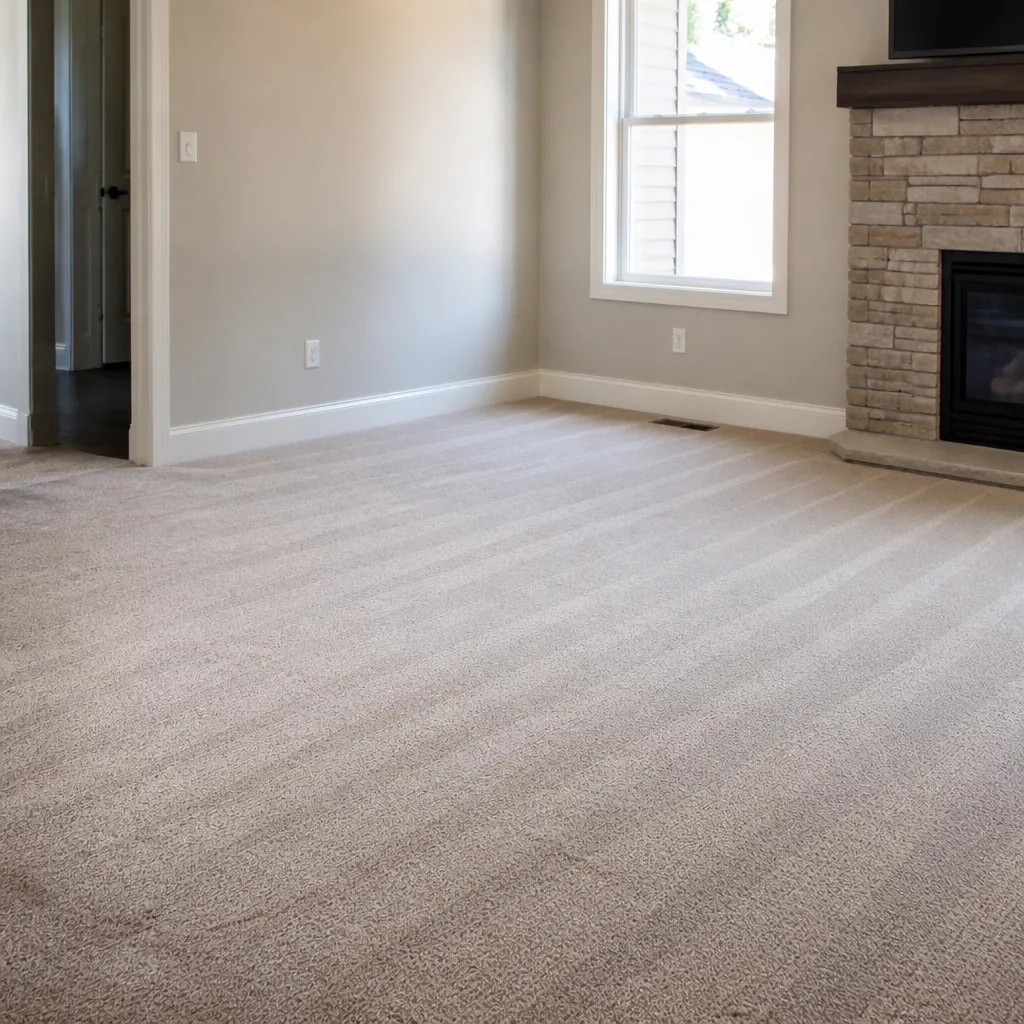 Carpet
 Shaw
 Mohawk
 COREtec
 Pergo
Free in-home measure and written estimate: Shaw, Mohawk, COREtec and Pergo lines compared on your own rooms, with carpet, tile, vinyl plank, laminate and hardwood laid out side by side
Get your free estimateHow to Hire a Flooring Contractor in Henderson: A Step-by-Step Guide
Henderson has no shortage of people who will lay your floors. Open any local group or search page and you’ll find them, license number and all. But licensing tells you almost nothing about whether a contractor can handle the job you’re actually planning, especially when that job spans more than one floor type. The most expensive mistake we see in Henderson isn’t choosing the wrong material. It’s hiring a handyman or a tile-only sub for a project that touches carpet, tile, and wood, then discovering halfway through that nobody owns the transitions, the subfloor, or the schedule. This guide walks you through how to hire right the first time, from reading a Nevada license to structuring a contract that protects you.
Quick Answer
To hire a flooring contractor in Henderson, verify their Nevada C-15 flooring license, ask what happens if your subfloor is out of tolerance, confirm which flooring categories they actually specialize in, and get a written contract that names transitions and subfloor repairs. A flooring-only specialist will handle a multi-material project without subcontracting it out, which is where most schedules fall apart. If a bid is dramatically lower than the others, find out which line items were quietly dropped before you sign.
Styles & brands we work with
- Hardwood
- Engineered hardwood
- Luxury vinyl plank
- Laminate
- Porcelain tile
- Carpet
- Shaw
- Mohawk
- COREtec
- Pergo
Table of Contents
- What Nevada’s C-15 Flooring License Actually Covers
- How to Tell a Flooring Specialist From a Generalist
- The Questions That Reveal What a Contractor Really Knows
- Henderson-Specific Red Flags in the Local Market
- How to Structure a Flooring Contract So Nothing Is Assumed
- Why the Lowest Bid in Henderson Is Often the Most Expensive Outcome
- Hiring for a Whole-Home, Multi-Material Project
- Common Mistakes to Avoid
- When to Call a Professional
- Frequently Asked Questions
What Nevada’s C-15 Flooring License Actually Covers
The Nevada State Contractors Board issues the C-15 license specifically for flooring and floor covering work. Getting one isn’t trivial, which is a good thing, and it’s the first thing you should verify before you let anyone talk you into a material. But here’s the part people miss: a C-15 license confirms the contractor is properly licensed to do flooring work in this state. It does not tell you which flooring categories they’re actually skilled at, how long they’ve been installing them, or whether they’ll subcontract your tile to someone you’ve never met.
How to Verify a License Properly
- Ask for the license number in writing, not just a badge on a truck.
- Look it up on the Nevada State Contractors Board site yourself. Confirm the license is active and the class is C-15.
- Check that the name on the license matches the name on your contract and your bid.
- Ask who will physically perform each phase of the work and whether any of it is subcontracted.
Why Manufacturer Knowledge Matters More Than the License Alone
Some flooring products have installation requirements set by the manufacturer, and how a floor is prepped and installed can affect whether any product coverage applies. Ask your contractor whether they’re familiar with the specific product you’re considering, whether they’ve installed it before, and whether they’ll follow the manufacturer’s written installation instructions. A C-15 license and current knowledge of brands like Shaw or Mohawk are two different things. A good contractor is comfortable saying which products they know well and which they don’t. For product-specific guidance on brand and category fit, our team at Floors Henderson can help you compare options before you ever sign anything.
How to Tell a Flooring Specialist From a Generalist
A flooring specialist does flooring and nothing else. A generalist does flooring among many other things. That distinction sounds small on paper and becomes enormous in practice, especially on a multi-room project. When your job involves three materials, a generalist is either going to coordinate three separate trades for you or do all three himself at a lower level of fluency in each. The specialist has seen enough of each material category to anticipate problems before they become change orders.
- Ask what percentage of their work is flooring. A flooring-only contractor answers this in seconds. A generalist has to think about it.
- Ask about their last five projects in each category. A specialist in carpet, tile, and wood should be able to describe recent categories of work fluently. If they mostly do bathrooms, their tile will be sharp and their carpet tentative. We’ve found that category focus matters more than the number of services offered.
- Ask who handles the substrate and prep. A specialist owns the prep as part of the job. A generalist may hand it off.
- Ask about product lines. Someone who works with a deep brand portfolio, spanning both value tiers and premium lines, can explain why one product fits your household better than another. Someone who carries one brand will fit every household to that brand.
Why Product Breadth Signals Real Expertise
A company that installs and services many brands across multiple categories can’t rely on a single pitch. They have to actually guide you toward the right fit. That’s the difference between a specialist and a salesperson. When we talk to Henderson homeowners, we ask about pets, kids, sun exposure on west-facing windows, and how the room is used before we talk about materials. Luxury vinyl plank from COREtec answers a different question than a Shaw carpet or a Daltile tile floor.
The Questions That Reveal What a Contractor Really Knows
You don’t need to know flooring to ask good questions. You need to know which questions separate the pros from the poseurs, and then watch how the answers come back. The confident contractor answers with specifics. The nervous one pivots to price.
- “What’s the deflection limit for this subfloor, and how will you check it?” Subfloor flatness and stiffness matter for hard surfaces, and the thresholds depend on the specific product. You don’t need the exact numbers. You need to see whether the contractor has a process for checking. If they wave their hand at this, they’ll find out the hard way after your floor is installed.
- “What happens if you pull up the old flooring and find moisture or damage?” Every job has surprises. A pro explains how they’ll document it, tell you the cost before proceeding, and get your sign-off. A weaker contractor “figures it out” and puts it on the final bill.
- “Who’s doing the transitions between floors, and how?” This is where multi-material projects break. Ask specifically whether thresholds, reducers, and doorway transitions are included in the bid or billed separately.
- “Can I see a written scope before I sign?” The estimate should name rooms, materials, square footage, prep work, and transitions. If the bid is one sentence, walk.
- “Are you familiar with the manufacturer’s install instructions for this product?” Any product coverage hinges on proper installation. A contractor who says “we install everything the same way” is telling you they ignore instructions.
- “What’s your schedule for acclimating materials to the house?” Wood and some vinyl products need time to adjust to the indoor environment. The specific timing depends on the product and the home conditions. A pro will tell you they check the manufacturer’s requirements.
- “What does your cleanup and disposal look like?” Old carpet, tile debris, and packaging don’t walk themselves out. Included disposal is a real cost that cheap bids often drop.
Watch the Answer, Not the Resume
The subfloor deflection question is the tell. A flooring specialist will start describing how they check flatness, how they deal with low spots, and what they’d recommend if the concrete or wood underlayment is out of tolerance. A generalist will say something vague about “making sure it’s level.” Same words, completely different depth.
Henderson-Specific Red Flags in the Local Market
Henderson is a fast-moving market, and fast-moving markets attract a certain kind of contractor. Some of these issues you’ll spot in the first phone call. Others only surface after the contract is signed, which is why you want to ask now.
Out-of-Town Crews Chasing the Construction Boom
Contractors who travel in from out of state to work the regional building boom show up, do the job, and leave. When a floor fails six months later, you have no local relationship to fall back on. Ask where the crew is based and where they’ll be when the job is done. It’s a fair question and a professional won’t be offended by it.
Bait-and-Switch on Material Grades
You approve a sample or a product line, and a lower grade of the same material category shows up on install day. Always confirm the exact product name and grade in writing on the contract, not just “carpet” or “vinyl plank.” If you can’t match the name on the invoice to the name on the bid, that’s a problem.
Verbal-Only Scope Changes
Any change to the original plan should be documented before work continues. A handshake and a “don’t worry, we’ll take care of it” is how disputed invoices happen. Insist on a written, priced addendum for any additional work. That includes subfloor repairs that only get discovered once the old flooring is up.
Pushy Scheduling Without a Written Estimate First
Any pressure to book or start the job without a written estimate is a red flag. Flooring is a scheduled job, and the right order is free estimate, then written price, then a booked install day. If a contractor wants to start tomorrow based on a phone conversation, they’re not scheduling a job, they’re claiming yours.
How to Structure a Flooring Contract So Nothing Is Assumed
Most flooring disputes in Henderson don’t come from bad installation. They come from scope gaps. The contract didn’t say who was paying for subfloor repair, or whether the threshold strips were included, or how the job site would be cleaned up. Get these written down before anyone starts.
The Contract Checklist
- Rooms and square footage, listed individually. Not “approximately 1,200 square feet” for the whole house. Each room gets its own line with its own quantity.
- Exact product name and grade for each material, not just a category label. If you’re using Shaw carpet in bedrooms and Daltile tile in the hallway, both names should appear.
- Subfloor prep and repair allowance. Specify what’s included and how unknown conditions are priced. A per-square-foot allowance for prep and repairs, to be documented before work begins, is reasonable.
- Transitions, thresholds, and doorway trims. Name them explicitly. These are the line items that get dropped from low bids.
- Furniture moving, demo, and disposal. Who moves the sofa, who pulls the old flooring, who hauls it away. All three should be in writing.
- Material acclimation timing. Confirmed against the manufacturer’s instructions, not estimated by habit.
- Payment schedule. A deposit up front and the balance on completion is normal. Anything requiring full payment before installation starts is not.
- Change-order process. How a surprise gets documented, priced, and approved before work continues.
Why Transitions Deserve Their Own Line
When carpet meets tile, or luxury vinyl plank meets hardwood, the doorway transition is where installation quality shows. The material spans, the threshold height, and the finish all matter. A single transition strip done wrong can wreck the look of two rooms. Insist that transitions are named on the contract with a quantity, not implied by “miscellaneous trim.”
Why the Lowest Bid in Henderson Is Often the Most Expensive Outcome
A very low bid isn’t a bargain. It’s a bid with something missing. The question is what. In our experience across Henderson projects, the same line items get dropped again and again by contractors trying to make a number look competitive. Here’s what to look for.
- Subfloor prep excluded. The bid says installation only. Prep and repairs become change orders later, priced at whatever rate the contractor decides.
- Transitions and trim excluded. The bid shows the material and labor for flooring only. Thresholds and door casing are “extras.”
- Demo and disposal excluded. The old flooring comes up, but who hauls it to the transfer station? Frequently becomes an add-on.
- Furniture moving excluded. You find out on install morning that you need to clear every room yourself.
- Lower material grade substituted. Same category, different product line, cheaper product. If the bid doesn’t specify the product by name, you may get the budget tier of the category.
- Fewer installation steps. Underlayment, moisture barrier, or edge seaming cut to save time. Sometimes you don’t see this until the floor fails.
- Prep omitted entirely. On a floor that was flat enough for tile, it may not be flat enough for a rigid plank. A bid that skips prep entirely is trusting luck.
The Real Comparison
Compare two bids on what’s included, not on the bottom-line number. Ask each contractor to list everything in their bid as line items and match those lists up. The higher bid that includes prep, transitions, and disposal is usually the honest one. The lower bid becomes the higher bid as soon as the change orders land.
Hiring for a Whole-Home, Multi-Material Project
A whole-home re-floor is a different animal than a single-room job. Now you’re coordinating multiple materials, maintaining a schedule across rooms that have to be usable before the next phase, and making sure transitions between materials look intentional. This is where the flooring specialist really separates from the generalist.
Why Single-Contractor Discipline Wins
- One point of accountability. One contract, one schedule, one point of contact. If carpet and tile are coordinated through separate subs, a delay in one room cascades into another with nobody owning the fix.
- Consistent prep standards. The subfloor under the tile and the subfloor under the wood need different treatments. A specialist knows this and plans for it.
- Sharper transitions. When the same team handles all the floors, the doorway from carpet to tile is designed, not improvised.
- Cleaner schedule. Rooms are phased so the household can keep living in the home while work is underway. When three contractors, three schedules, and three trucks show up, the sequencing gets messy.
The Material Conversation
Once you’ve picked the right contractor, the fun part starts: choosing materials. We carry nine brands across carpet, luxury vinyl plank, hardwood, tile, and stone, including Shaw, Mohawk, COREtec, Karndean, and Daltile. That range lets us match the floor to the room. Carpet in a bedroom. Tile in a high-traffic entryway. Luxury vinyl plank in a basement or laundry room. And if you already have hardwood, refinishing that existing floor is often a better answer than ripping it out. We approach it as restoring what you have before committing to replacement, which preserves original character and saves money over new installation. You can see how we handle carpet installation or tile flooring installation as a starting point, but we’re glad to walk through the whole-home plan first.
Common Mistakes to Avoid
- Hiring on price alone. The cheapest bid almost always gets more expensive after the change orders land. Compare line items, not bottom-line numbers.
- Not verifying the license yourself. A license number on a truck isn’t verification. Look up the C-15 license on the Nevada State Contractors Board site and confirm it’s active before you sign.
- Never asking about subfloor prep. Every floor has a subfloor, and every subfloor has surprises. Ask specifically how prep and repairs are handled and priced before work begins.
- Leaving transitions out of the contract. Doorway transitions between materials are where multi-material projects fail. Get them named and priced in writing.
- Accepting verbal scope changes. Any change in scope should be a written, priced addendum. Handshakes and “we’ll sort it out” turn into disputed invoices.
- Choosing a contractor who carries one brand. If every room in your home gets fit to one product, the product wasn’t chosen for the room. Product breadth is a real signal of expertise.
- Ignoring the local market’s fly-by-night crews. Ask where the crew will be after installation day. A local relationship matters if something needs attention later.
- Not asking about acclimation. Flooring materials need time to adjust to your home’s indoor environment. The specific timing depends on the product and the home. A pro checks the manufacturer’s guidance instead of guessing.
- Skipping the free in-home measure. A number from a website or a phone call is not a real estimate. Get somebody in the room with a tape measure and a moisture reader before you commit.
When to Call a Professional
Some flooring work is a genuine do-it-yourself project. A single bathroom tile floor with a level substrate and no plumbing to move is within reach for a careful homeowner. But several situations call for a pro, and calling one sooner saves money. When your subfloor shows unexplained movement, moisture readings that seem off, or a visible dip under the old flooring, don’t guess. When you’re dealing with multiple rooms or multiple materials, when you have hardwood that might be refinishable instead of replaceable, or when the current floor was installed over a problem that was never fixed, it’s time to call. We’ve seen enough Henderson homes to know that the surprises live under the floor you’re about to cover up. If you’re unsure whether a job is a pro job, it probably is.
Floors Henderson offers free estimates in Henderson. Call (844) 972-2185. We answer 24/7. Fast dispatch from 7am to 7pm, Sunday through Friday.
Frequently Asked Questions
Yes. Flooring work in Nevada falls under the C-15 license classification, and you should confirm the license is active before you sign. Look up the contractor’s license number yourself on the Nevada State Contractors Board site. Beyond the license, ask which flooring categories they actually specialize in. Call (844) 972-2185 for a free estimate.
Flooring pricing in Henderson depends on material, square footage, prep work, and whether demo and disposal are included. There’s no flat number, because a whole-home project and a single-room refresh aren’t the same job. What you should expect is a free in-home measure followed by a written estimate that names every line item. Call (844) 972-2185 for an exact quote. Estimates are free.
Yes. The in-home measure and the written estimate are free, with no obligation to book. You’ll get a written price you can take home and compare against other bids. Call (844) 972-2185 to schedule yours.
Installation time depends on the material, the square footage, the number of rooms, and how much subfloor prep the job needs. The schedule is set at the estimate, when the scope is defined. You’ll know the install window before you commit. Call (844) 972-2185 for a free estimate.
For a project that touches multiple floor types, hire a flooring specialist. A generalist either coordinates multiple subs or does everything at a lower level of fluency, and multi-material jobs are where that gap shows up in schedule and transitions. One contractor, one contract, one point of accountability is a much better plan. Our team at Floors Henderson is based in Henderson and works on carpet, tile, and hardwood refinishing. Call (844) 972-2185.
Often, yes, but it depends on the thickness of the wood and its condition, which is checked at the estimate visit. Refinishing is the smart alternative to replacement when the wood has enough material left to sand. Restoring what you have preserves original character and saves money over new installation. Call (844) 972-2185 for a free estimate.
Ask how the contractor checks flatness and stiffness for the specific product you’re considering, and what happens if the substrate is out of tolerance. A pro will have a process. A generalist will wave their hand. The thresholds depend on the product; what you want to see is that the contractor knows the question matters. Call (844) 972-2185 for a free estimate.
See the difference
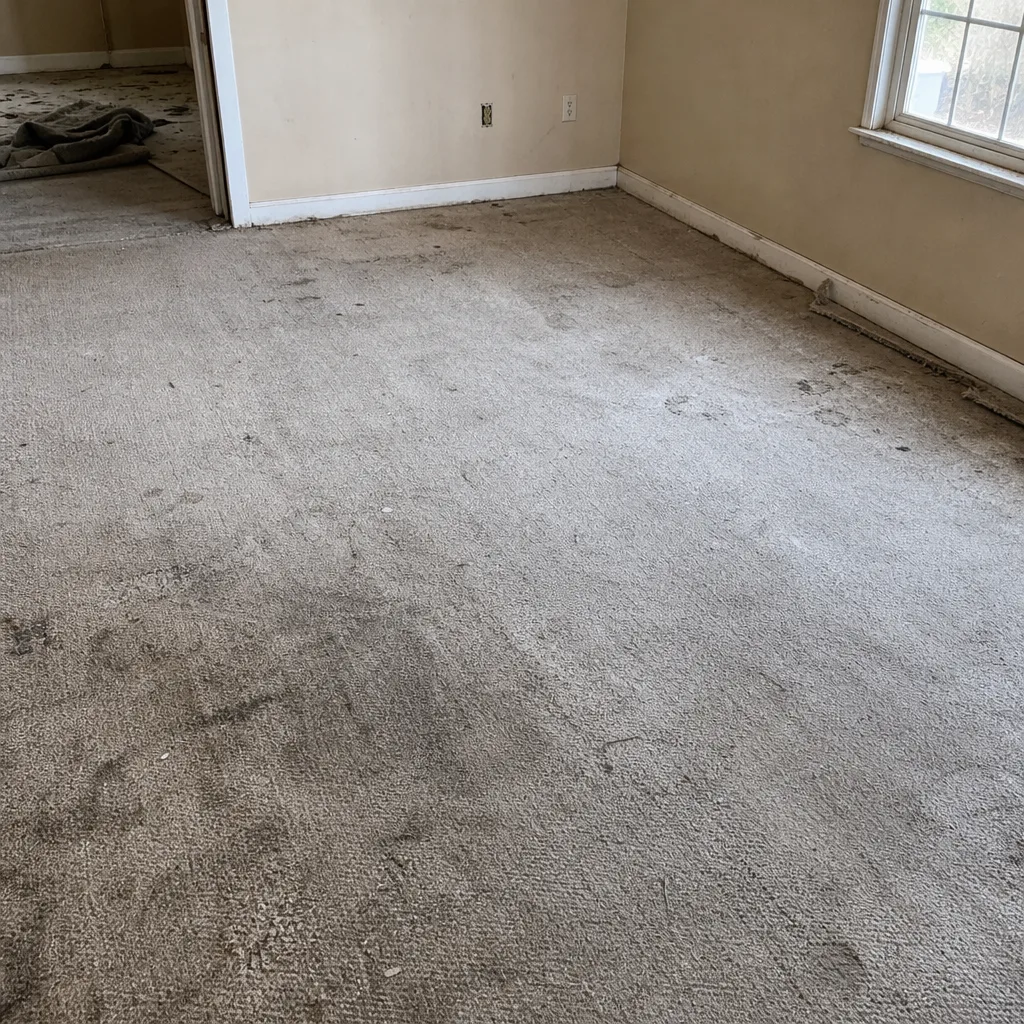 Before
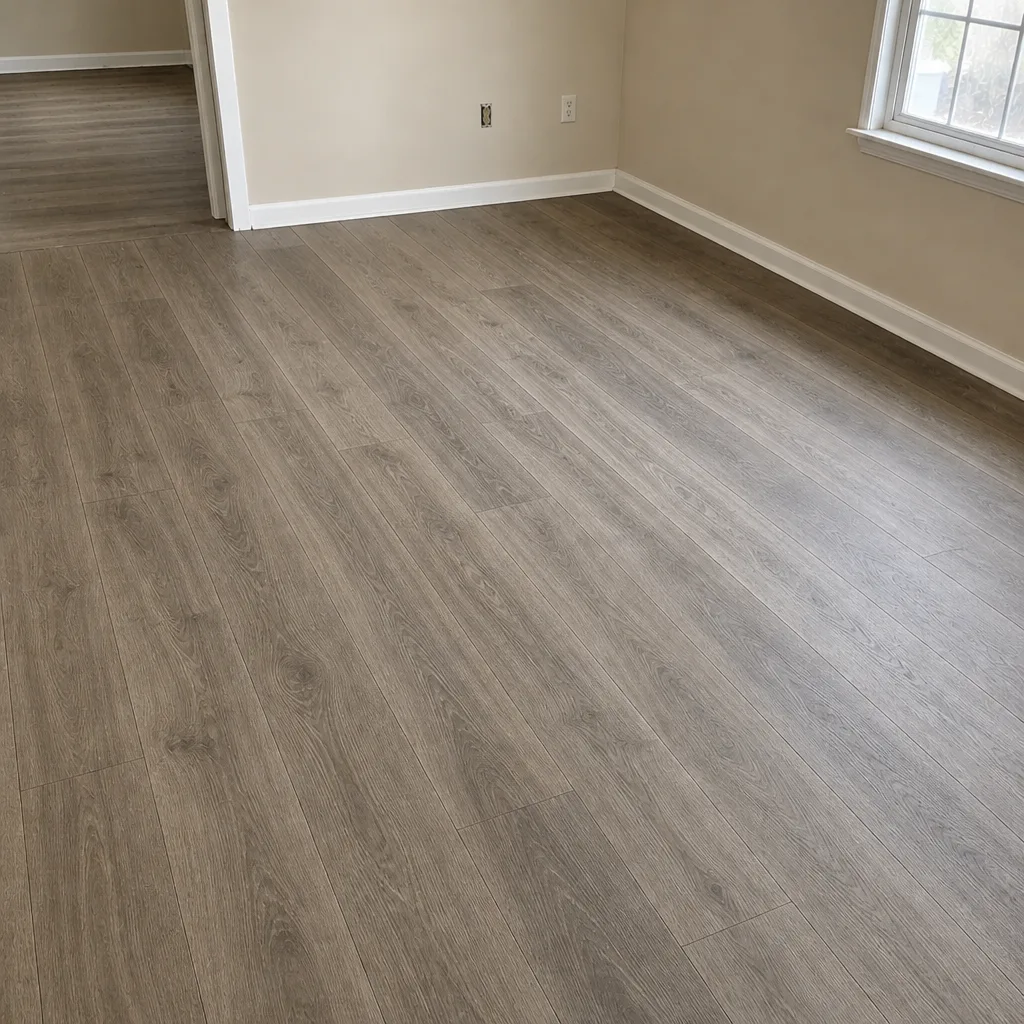 After
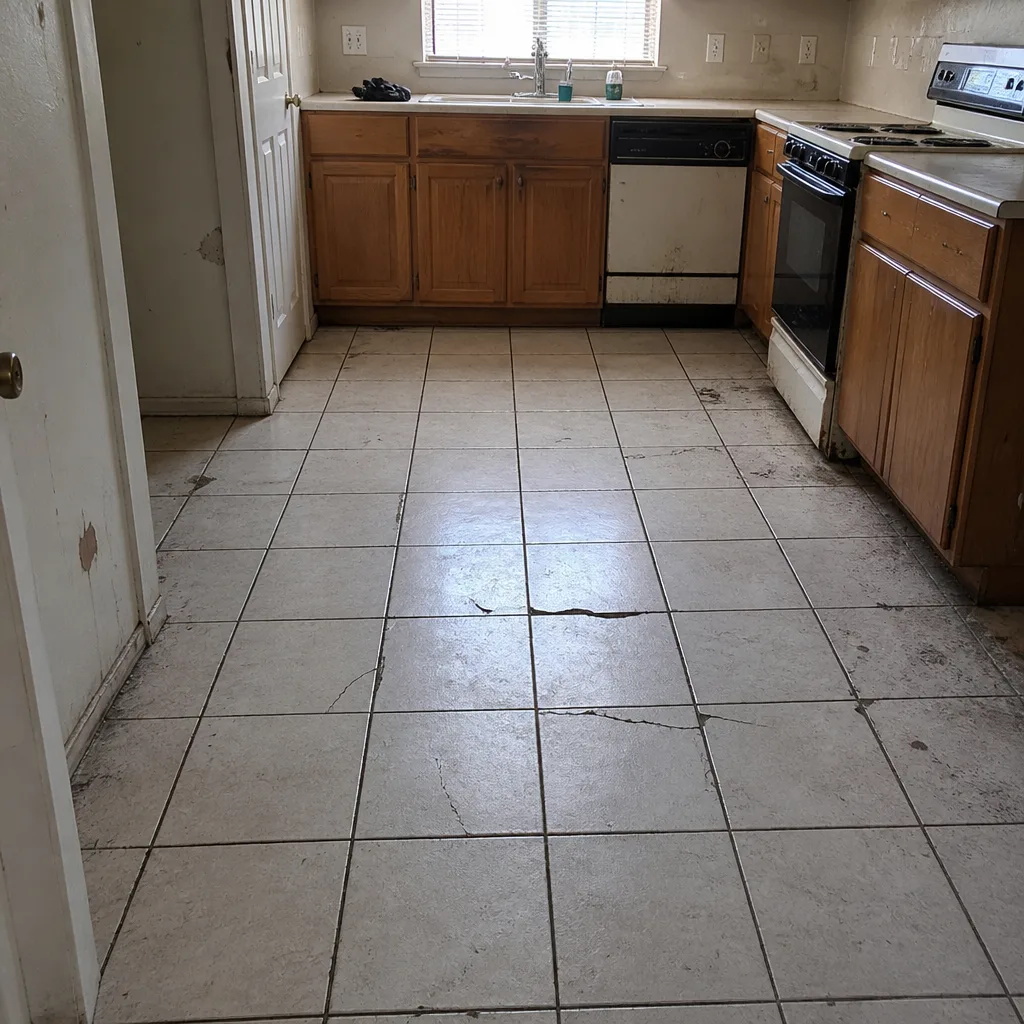 Before
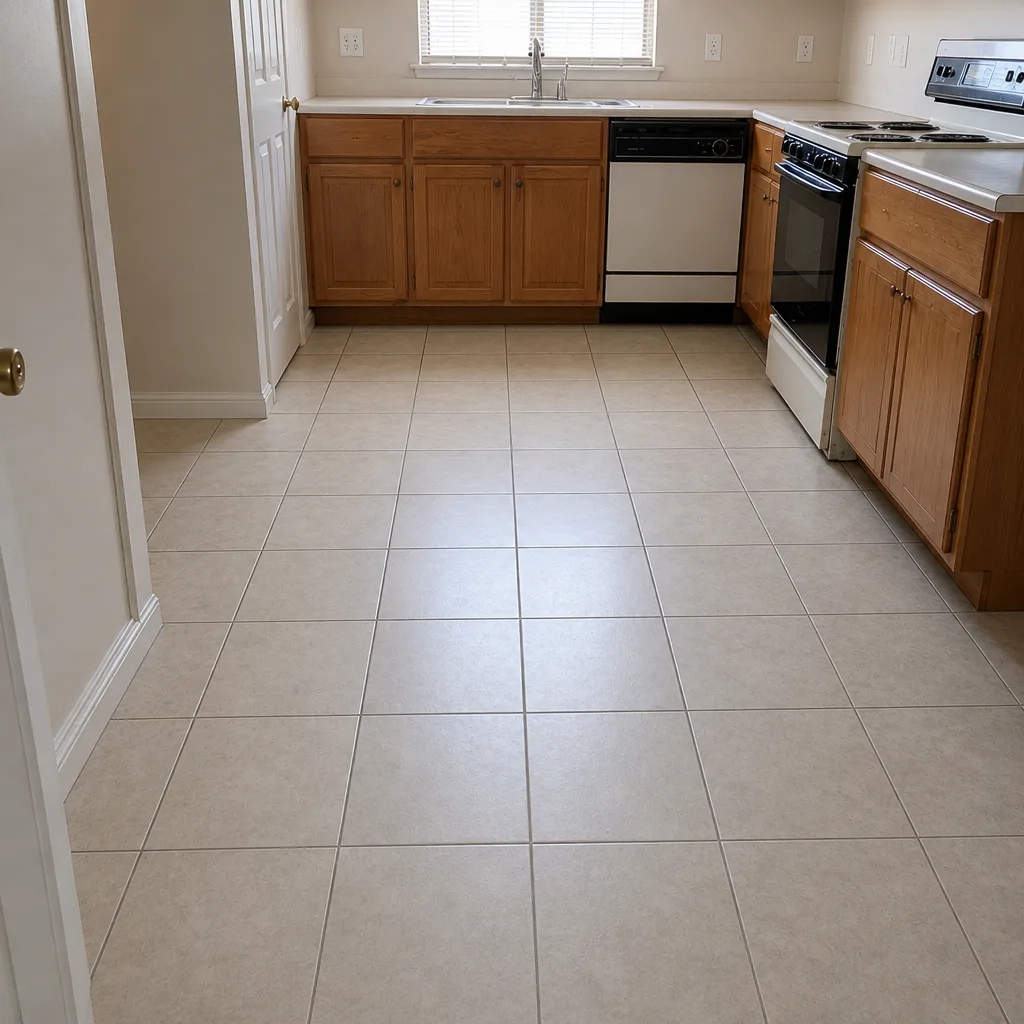 After
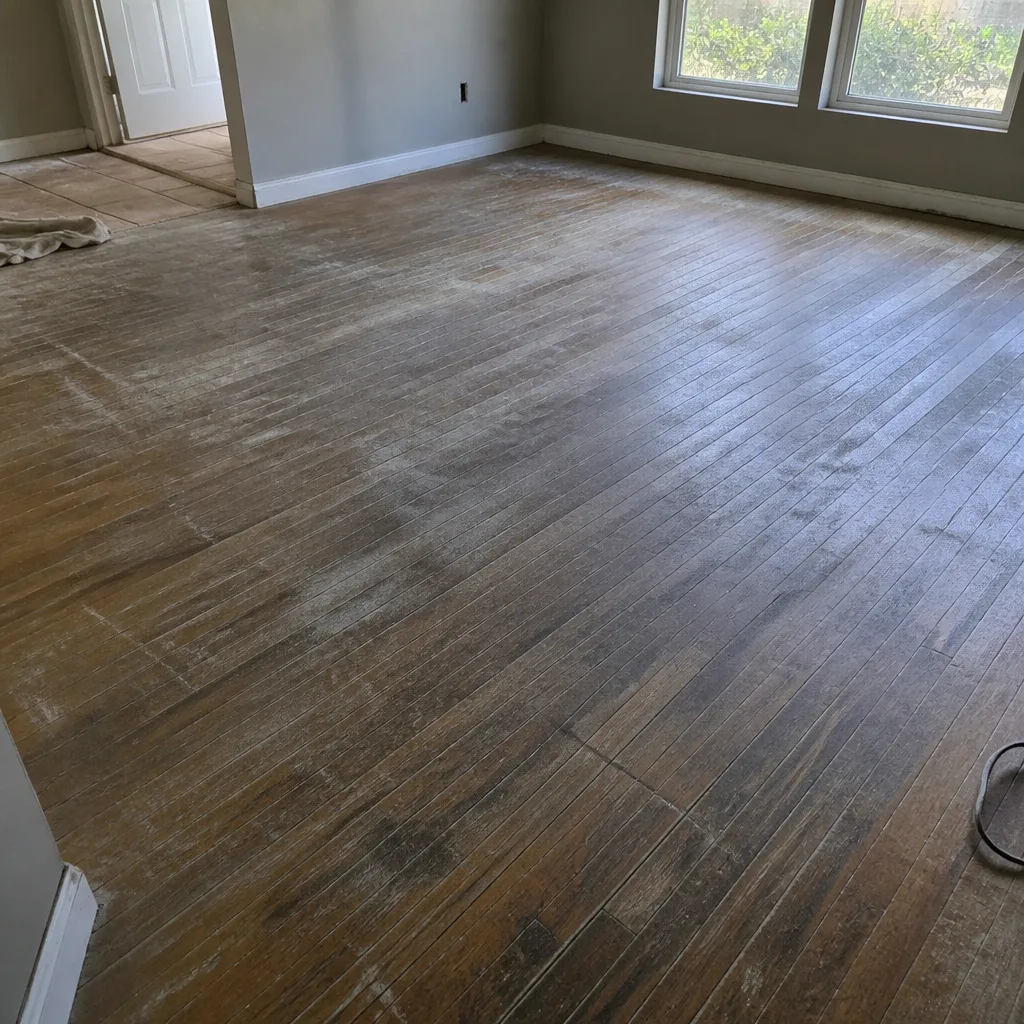 Before
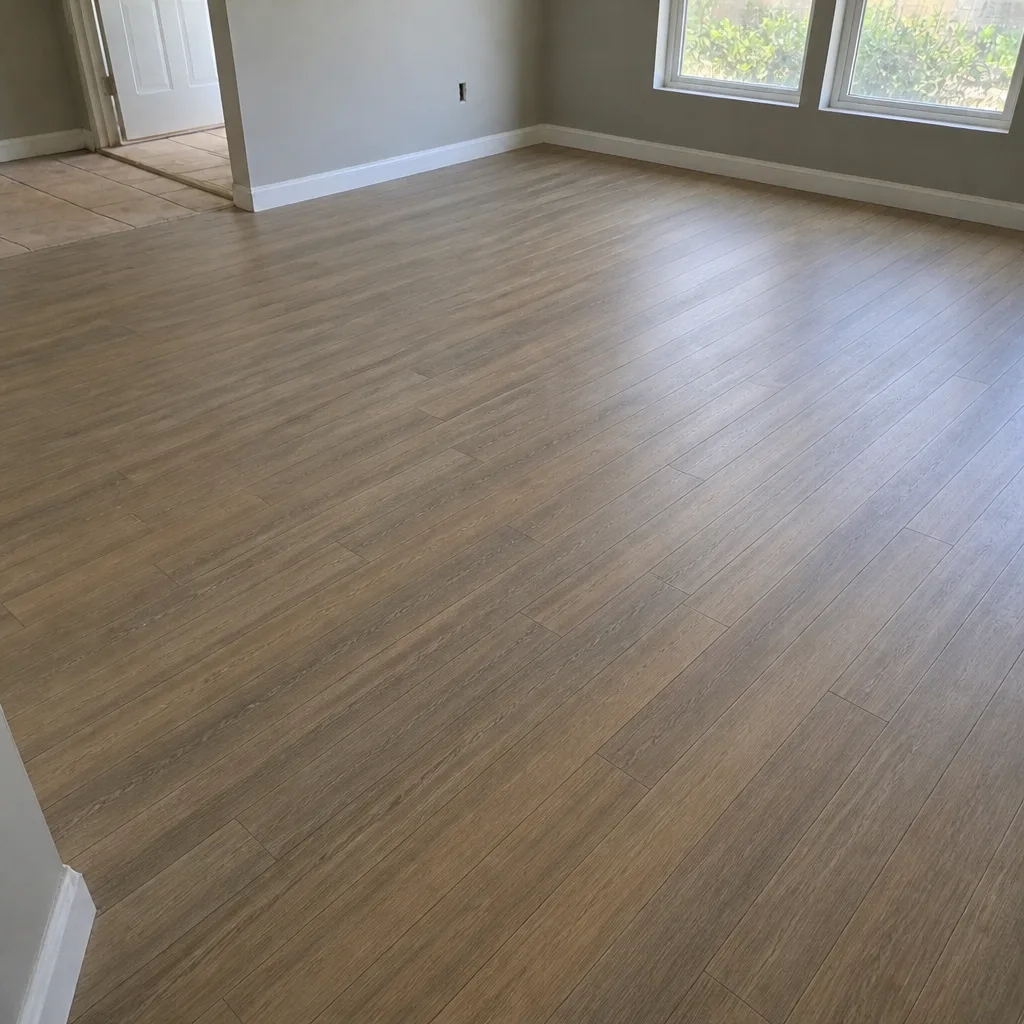 After
The Bottom Line
The biggest hiring mistake in Henderson isn’t choosing the wrong material. It’s hiring a generalist for a project that spans categories, which fragments accountability and destroys timelines. Verify the C-15 license yourself, ask the subfloor deflection question, confirm which flooring categories the contractor actually specializes in, and structure your contract so transitions, prep, and disposal are explicit. Watch out for out-of-town crews, bait-and-switch material grades, verbal-only scope changes, and the lowest bid in the room, which is usually the one with the most missing. If you want a flooring-only specialist to walk through your project and give you a written estimate, call us. We carry nine brands across carpet, tile, and hardwood refinishing, and we match the floor to the room. Call (844) 972-2185. We answer 24/7. Fast dispatch from 7am to 7pm, Sunday through Friday.
Hire With Confidence in Henderson
Henderson homeowners deserve a contractor who can explain why one product fits their household better than another, not just quote a number. If you’re ready to move from research to a written estimate, Henderson is where our team works every day, and the first step is a free in-home measure. Call (844) 972-2185 to schedule yours. We answer 24/7. Fast dispatch from 7am to 7pm, Sunday through Friday. Our technicians have up to 10 years of experience, and every job starts with a free estimate and a written quote before anyone lifts a tool.
Written by the team at Floors Henderson.