
Last updated November 18, 2026
 Hardwood
 Engineered hardwood
 Luxury vinyl plank
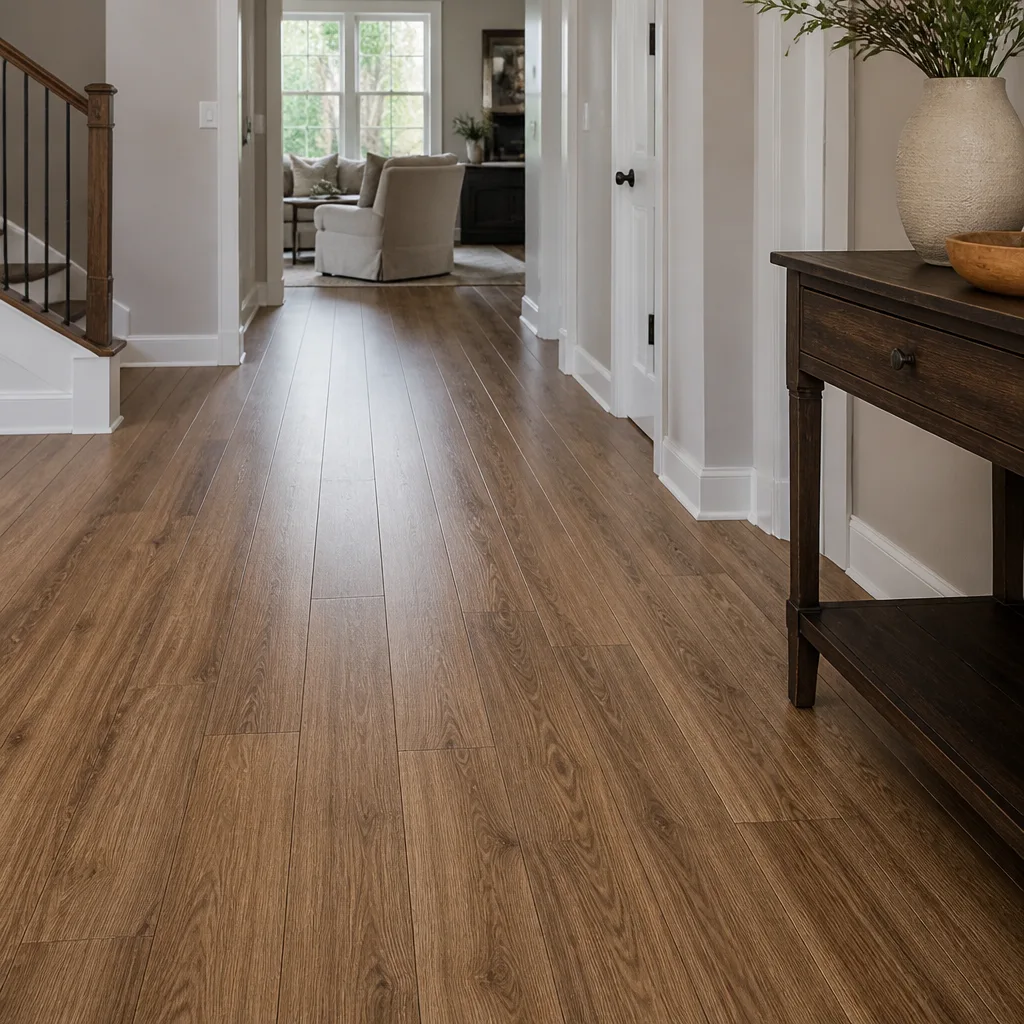 Laminate
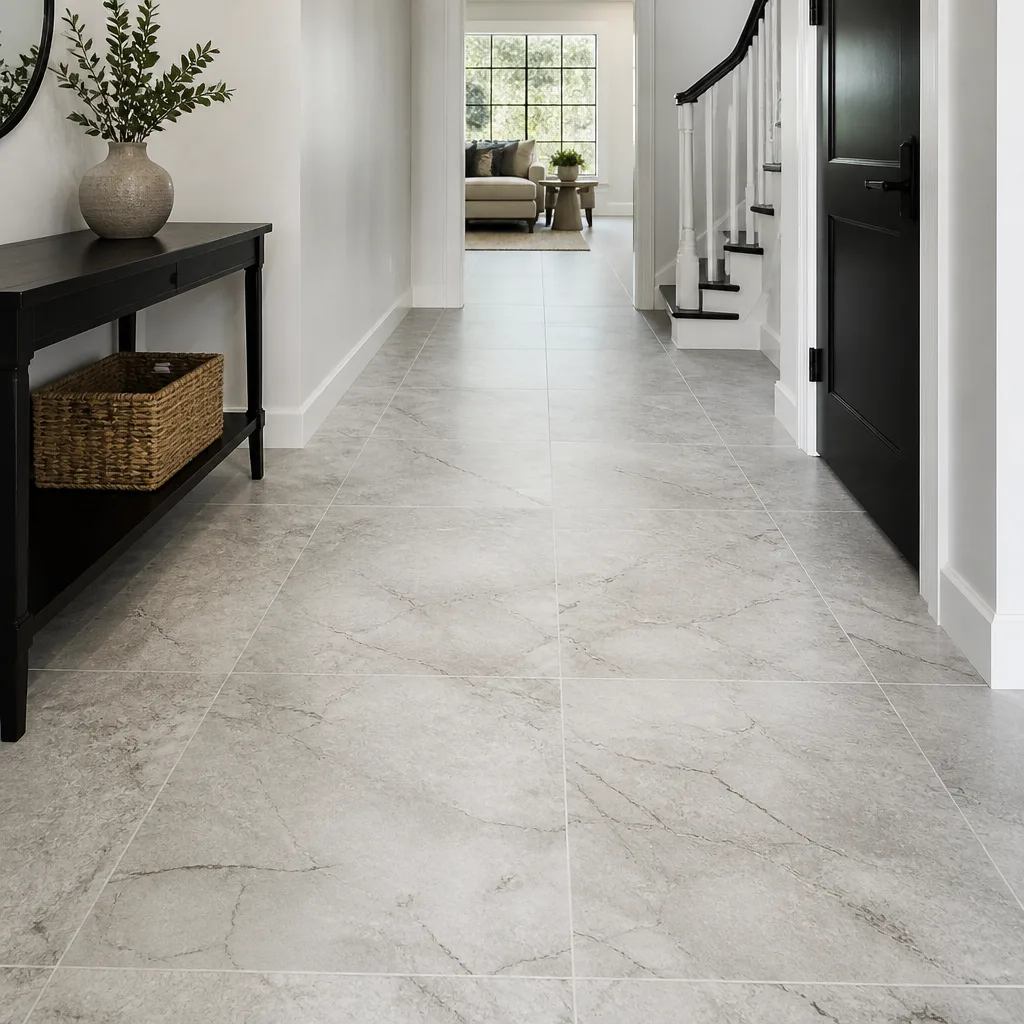 Porcelain tile
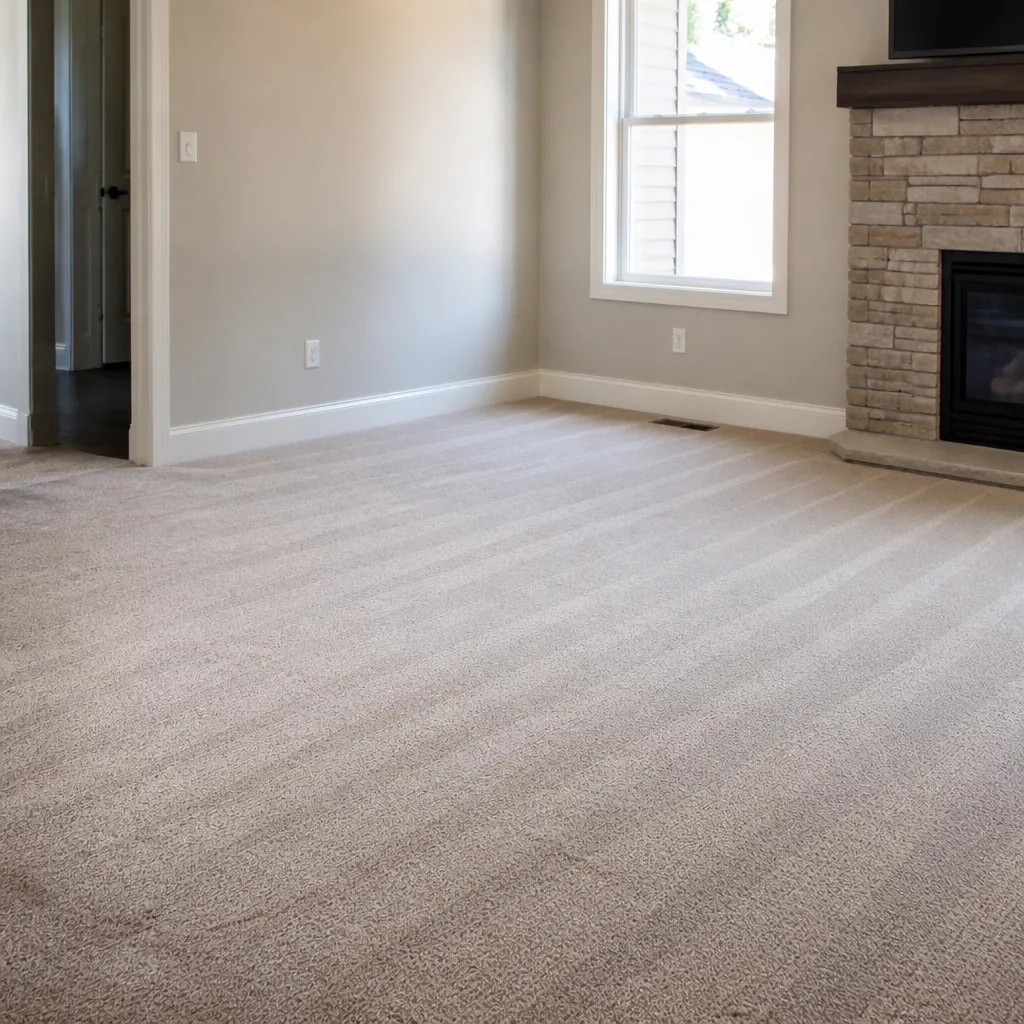 Carpet
 Shaw
 Mohawk
 COREtec
 Pergo
Free in-home measure and written estimate: Shaw, Mohawk, COREtec and Pergo lines compared on your own rooms, with carpet, tile, vinyl plank, laminate and hardwood laid out side by side
Get your free estimateWhat Happens at a Free In-Home Flooring Estimate in Henderson
Most homeowners walk into a free flooring estimate believing they’ve already picked their floor. They’ve browsed the samples, measured the room twice, and settled on a budget. Then the estimator pulls out a level and a moisture meter, looks at the slab under the carpet, and the whole plan shifts. That moment – where your actual subfloor either confirms or upends what you thought you were buying – is the real reason to book an in-home visit, and it’s what we’ll walk you through here. By the end, you’ll know exactly what a good estimator is checking, which questions to ask, and how to read the written quote so a low number doesn’t become a much bigger one later. This guide is written for homeowners in Henderson who want to price a floor intelligently, not just get a number on paper.
Quick Answer
A free in-home flooring estimate in Henderson is a diagnostic assessment, not a sales pitch. A trained estimator walks your rooms, tests the subfloor for flatness and moisture, checks transitions, baseboards and door clearances, and then hands you a written, itemized quote with no obligation to hire. The visit usually takes under an hour for a single room and longer for a whole-home re-floor, and the written estimate – not a verbal range – is what sets your final price.
Styles & brands we work with
- Hardwood
- Engineered hardwood
- Luxury vinyl plank
- Laminate
- Porcelain tile
- Carpet
- Shaw
- Mohawk
- COREtec
- Pergo
Table of Contents
- Why an In-Home Estimate Is a Diagnostic Visit, Not a Sales Call
- What the Estimator Is Actually Assessing
- The Questions You Should Ask the Estimator
- How to Read a Written Flooring Estimate Line by Line
- What “Free” Actually Means in Flooring Estimates
- How to Compare Two Estimates for the Same Project
- How to Prepare for the Visit
- Red Flags That Signal a Weak Estimate
Why an In-Home Estimate Is a Diagnostic Visit, Not a Sales Call
The gap between what a homeowner expects at an estimate and what actually happens is where most confusion starts. A flooring estimate done well is closer to a building inspection than a sales pitch. The estimator’s job is to figure out what’s under your existing floor, whether the subfloor can support the new one, and what the install will demand in labor before anyone quotes a price. Get that wrong and the quote is fiction.
In Henderson, that diagnostic angle matters more than in most places. Homes span decades of construction methods, from mid-century ranch slabs to newer builds with engineered subfloor systems, and the desert ground beneath them shifts. An estimator who hasn’t looked at your actual house can’t know whether you’re working over a flat slab, a plywood subfloor with a soft spot near a wet wall, or a concrete surface with a hairline crack that needs addressing before a rigid plank floor goes down.
When we visit a Henderson home, we’re not there to decide whether you buy. We’re there to decide what construction your floor will actually require. That’s how a flooring specialist differs from a generalist who happens to sell floors. The estimator who has walked hundreds of rooms in every housing style here knows the specific questions to ask as soon as they see the subfloor and door thresholds.
This is also why the visit is free. There’s a real cost to sending someone out, but the information gathered during that visit is what lets us quote accurately. A price quoted over the phone, sight unseen, protects no one. Henderson homes have enough structural variety that an in-person look is the only way to build a quote you can trust.
What the Estimator Is Actually Assessing
While you’re talking about colors and brand options, the estimator is quietly doing a survey of the room from five angles. Here’s what gets checked on almost every visit.
Subfloor Flatness
Every type of floor has a flatness tolerance the product itself demands. Luxury vinyl plank and rigid-core floors are especially unforgiving – they’re designed to float, and a hump or dip in the slab will telegraph through as a flexing, clicking plank within months. The estimator runs a straightedge across the room at multiple points and measures how far the floor deviates. On a concrete slab, that may mean noting where grinding or a self-leveling compound will be needed. On a wood subfloor, it means checking for sagging joists or high seams.
This is where the biggest surprises come from. A homeowner plans a $3,000 plank install, then learns the subfloor has a 3/8-inch problem in one zone. Remediation is a separate, real line item.
Moisture Readings
Even in a dry desert climate, moisture gets into concrete slabs. An estimator will use a moisture meter on the slab or a pinned test on a wood subfloor. Too much moisture under a rigid or plank floor causes adhesive failure, cupping, and delamination. This check is quick but non-negotiable – skip it and the floor’s performance is a gamble. If the reading is high in a Henderson home, your estimate may include a vapor barrier or surface prep.
Transition Points and Doorways
Every doorway where one floor meets another is a transition. The estimator measures the drop between rooms, checks whether the door will clear the new floor’s thickness, and notes whether existing transitions need to be removed or can be reused. A door that clears carpet at 3/4-inch thickness may need to be trimmed for tile at 3/8-inch or vice versa.
Baseboard and Trim Condition
Will the baseboards come off and go back on, or will the new floor go down against them? Pulling baseboards is the cleaner result but adds labor. Reusing existing baseboards requires careful cutting and re-installation. The estimator records what’s there so the quote reflects the actual scope.
Furniture and Property Access
An honest estimator asks where heavy furniture will be during the install. Moving a piano, a full bed or a loaded bookshelf is a real consideration. So is how the crew will enter, where materials will be staged, and whether stairs or a long haul exist. All of that affects scheduling and labor.
The Questions You Should Ask the Estimator
Think of the estimate as your best diagnostic window into the whole project. The estimator is an expert in your home right now – ask questions while that’s true. Here’s a numbered set worth bringing on a notepad.
- What’s the condition of this subfloor? Ask directly. A good estimator points out flatness, moisture and any soft spots without being prompted.
- Will there be prep work, and is it in the written estimate? Concrete grinding, leveling compound, patching – these should appear as distinct line items, not be hidden inside the install price.
- Which specific material is the best fit for this room? Not just category. Ask whether a plank floor from Pergo or a LifeProof option matches the way this room is used.
- How will the floor be installed – floating or glue-down? Some product lines offer both; the answer affects performance, cost and your subfloor prep needs.
- What’s the acclimation timeline? Materials often need to sit in the home before install. Ask so you can plan the room’s downtime.
- What’s the total labor line, and what’s included in it? Have the estimator walk you through every labor charge by line.
- What’s excluded from this quote? The most important question. It separates a complete estimate from a low-ball that will grow.
- Can you explain how you’ll prep and protect my home during install? Furniture protection, dust control, transitions – ask what comes with the service.
- What’s the schedule window once I approve? A written estimate should include a realistic install timeline based on product availability.
- If I’m considering refinishing my hardwood instead of replacing it, what would that require? If the home has real wood under carpet or a worn existing floor, ask whether refinishing is an option. It often is – and it’s a dedicated service, not an afterthought.
Ask these and you’ll have a far more detailed picture of the job than most homeowners leave with. It’s also how you’ll know whether you’re working with a real floor category specialist.
How to Read a Written Flooring Estimate Line by Line
A written estimate is only as useful as its detail. Two quotes can show the same total but represent entirely different jobs. Learning to read the line items is the single most valuable skill you can bring to this process.
Here’s what a thorough Floors Henderson estimate includes as distinct line items:
- Product by name and category. Not just “LVP” but “luxury vinyl plank from Pergo” or “carpet from Shaw.” Specific product lines matter because they perform differently.
- Measured square footage. The actual area to be covered, room by room.
- Material cost. Product plus waste factor – usually detailed separately so you can see what you’re paying for coverage versus waste.
- Removal and haul-away. If there’s an existing floor to pull up, it’s a line item.
- Subfloor prep or leveling. Separate, itemized, and honest. This is the line that separates a real estimate from a low-ball.
- Transition pieces and trim. Door thresholds, stair noses, reducer strips – each with a count.
- Baseboard removal and reinstallation. Stated clearly, whether included or excluded.
- Labor. Install labor, a separate number from materials, by the hour or by the job but accounted for explicitly.
- Total and terms. Payment timing, schedule expectations, and the note that the written estimate sets final pricing.
What signals a thorough contractor? Specifically: line items that name materials, show measurements, and account for prep. A low-ball quote that has a single “install – $X” number for the whole project should raise questions. It’s not a bargain; it’s a quote that will grow once the real conditions show up at the start of the job.
If you’re re-flooring more than one room, an estimate should also make clear whether you’ll get the same crew across the whole home. At Floors Henderson, carpet installation and tile installation are handled alongside refinishing, so a mixed-material whole-home plan can be quoted as one project with one point of contact rather than coordinated through multiple contractors.
What “Free” Actually Means in Flooring Estimates
A free flooring estimate means exactly what it says: no charge to have a trained estimator visit your home, assess the project and give you a written quote. There’s no obligation to hire, no service call fee, no trip charge. If that’s all you take away from the visit, you’ve still learned something valuable about your subfloor and your floor options.
But “free” is also a word that some companies use differently. That’s where homeowners need to pay attention. A genuine free estimate is a consultation. A weak one is a timed closing technique dressed up as a quote – friendly in the first ten minutes, then a talk about “act today” deals, limited-time numbers, or pressure to sign before the estimator leaves. If you feel that rhythm, something’s off.
Here’s how to tell the difference:
- Does the estimator want to look at the subfloor and talk about your home, or jump straight to price? Genuine consultations invest time in assessment first.
- Are you given the written estimate to review on your own time, or asked to sign on the spot? A written quote should come home with you.
- Are you pressured to make a decision before the visit ends? That’s a sign the primary goal is the close, not the consultation.
- Does the estimator answer your questions thoroughly, or redirect to the “deal”? A genuine expert wants you to understand what you’re buying.
- Is the estimate detailed or a single number? Detail shows the estimator actually did the work on your behalf.
Because we work with a focused set of categories – carpet, tile and hardwood refinishing – our estimate visits stay in that lane. We’re not a general contractor stretching across unrelated trades, so every line in the estimate represents real expertise in that category, not a guess.
How to Compare Two Estimates for the Same Project
Two estimators visit the same room and hand you two numbers that don’t match. This is where homeowners make the most expensive mistake: choosing by the bottom line alone. A higher total often reflects a more complete quote, and a lower total often reflects missing line items that will appear later.
Before deciding, use this checklist to reconcile the two quotes side by side:
- Total square footage. Are they measuring the same area, or has one estimator left out a closet or hallway?
- Product named identically. Same brand, same product line, same grade? A cheaper quote may use a lower-tier line within a brand.
- Waste factor. Both quotes should account for cutting waste. A shorter quote with no waste factor will likely need more material.
- Subfloor prep line. Does each quote include prep and leveling as a distinct line, or is one missing it entirely?
- Removal and disposal. Is existing floor removal and haul-away included in both?
- Transitions and trim. Count the transition pieces in each quote. If one has fewer, it’s probably not the full scope.
- Baseboard handling. Remove-and-replace, reuse, or leave in place – each is a different cost.
- Warranty and terms. What’s covered and for how long, and what does the payment schedule look like?
- Schedule. Does either quote give a clear install window, and does it align with product availability?
- Exclusions. What each estimate explicitly says it does NOT cover tells you where future charges may live.
Reconcile those ten items and you’ll see clearly which quote represents the fuller job. Sometimes the low quote is genuinely leaner and you’re comfortable with that – that’s a legitimate decision. But you’ll have made it knowing what you’re trading.
When comparing floors across categories – soft carpet versus rigid plank versus tile – a good quote also helps you understand how each fits the room’s use. LifeProof and Pergo typically come up in value-focused conversations, while Mannington and Armstrong are worth discussing when the design conversation matters more. Matching the floor to the room is part of the service, not a sidebar.
How to Prepare for the Visit
You don’t need to clean the house before an estimate. But a few small steps help the visit go better and produce a more accurate quote.
- Clear access to each room being quoted. The estimator needs to walk the full perimeter, measure transitions and check baseboards. Move boxes or furniture away from walls where you can.
- Note the age and condition of the existing floor. Is it original to the home, patched in a spot, or a recent installation? Tell the estimator what you know.
- Bring up any known issues. A soft spot you’ve noticed underfoot, a visible crack in the slab, a water stain on the ceiling below – these clues point the estimator straight to likely trouble.
- Have a rough budget in mind. It helps the estimator steer you toward the right product tier from the start.
- List every room you’re considering. Even if you’re only pricing one room today, knowing whether you’ll add more later helps the estimator plan a scope that can be handled efficiently across a full re-floor.
- Keep your questions on a notepad. The visit moves quickly and it’s easy to forget what you meant to ask.
In Henderson, this preparation matters especially if your home has had any water intrusion or a slab repair in its history. The estimator will find signs, but the more context you can give, the faster the visit lands on the right diagnosis.
Red Flags That Signal a Weak Estimate
Not every estimate is created equal. Some are thorough and honest; some will cost you real money later. Here are the patterns worth watching for at the visit.
- No moisture or flatness check. If an estimator walks the room without testing the floor surface in any way, they’re guessing at the subfloor condition. Expect a price change later.
- Verbal-only quote. An estimate not put in writing with line items is a number with no accountability. Insist on a written document.
- No removal or disposal line. If there’s an existing floor and the quote doesn’t mention removing it, that’s either an oversight or an intentional low-ball.
- No prep line. Any installer who quotes a rigid or plank floor over an untested subfloor without a prep line is likely planning to charge for it once the job starts.
- Pressure to sign today for a special price. A quote that changes based on a deadline is a sales tactic, not a fair price.
- Vague product description. “Luxury vinyl” with no brand or product line named means you can’t compare it to another quote.
- No mention of schedule. A quote that doesn’t offer an install timeline after approval is thin on commitment.
Common Mistakes to Avoid
- Buying from photos instead of the visit. The subfloor your home actually has is what drives the real cost. Choosing a plank online before seeing a level run across your room can mean a nasty surprise.
- Treating the estimate as a price only. The visit is diagnostic – if you skip the questions, you miss the information that determines whether the install succeeds.
- Comparing quotes by total only. Two quotes with different line items are different projects. Reconcile what’s included before you decide.
- Choosing a floor before knowing the category that fits the room. A warm, quiet bedroom might suit carpet where a plank would feel cold; a wet area may push you toward tile. Let the room’s use guide the category first, then the brand.
- Forgetting to ask about refinishing. If your Henderson home has real wood under old carpet or a worn existing floor, refinishing is often a real alternative to full replacement. It’s a dedicated service and worth asking about at the estimate.
- Not asking what’s excluded. The cheapest quote is often the one with the longest exclusions list. Ask directly before you sign.
- Ignoring the subfloor report. If the estimator notes a flatness or moisture issue, take it seriously. It’s the most important data point in the whole visit.
See the difference
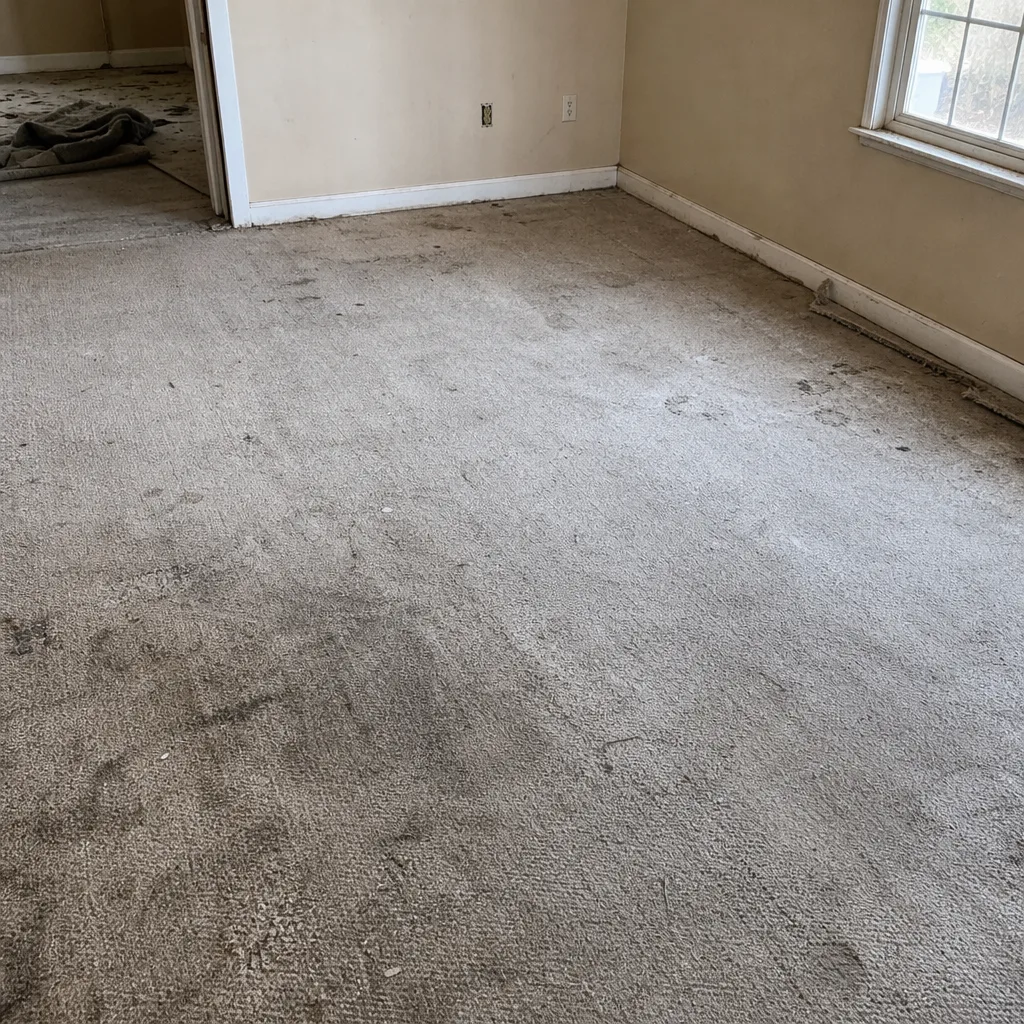 Before
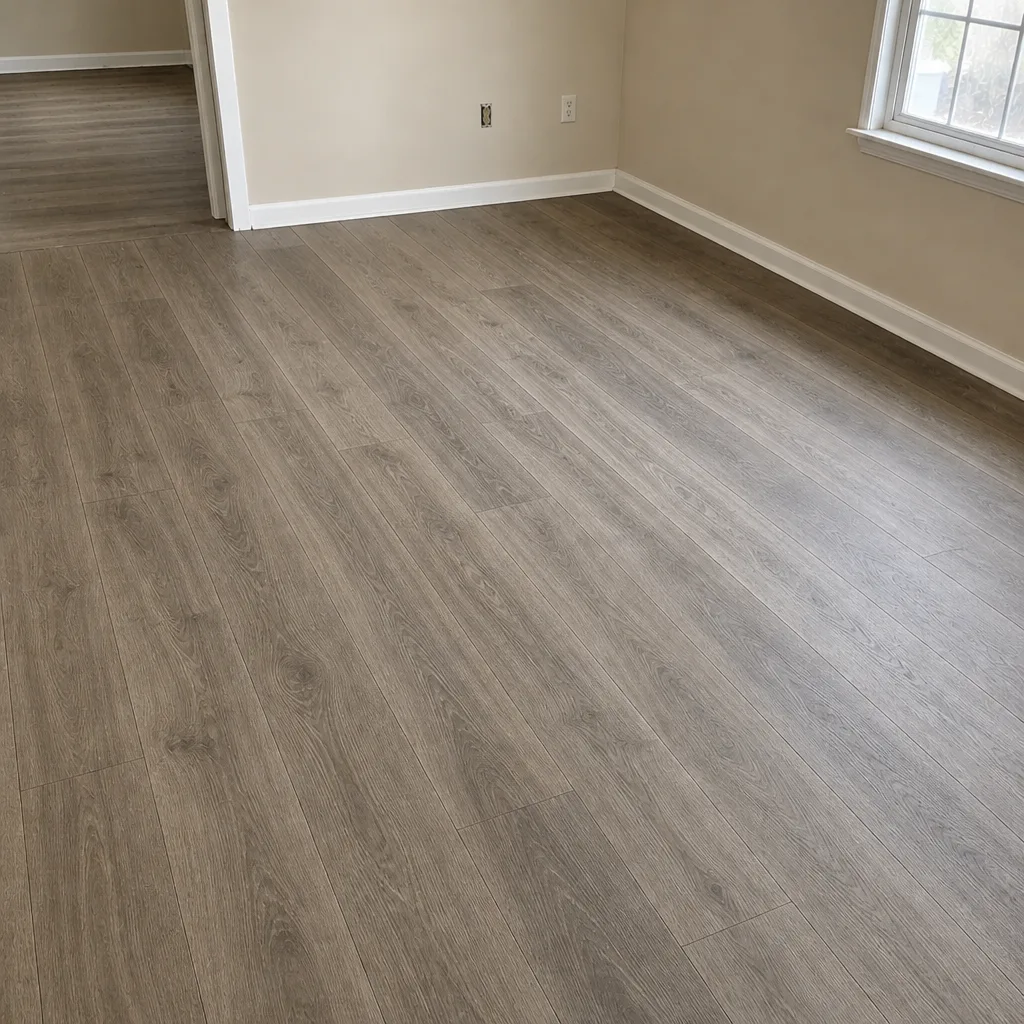 After
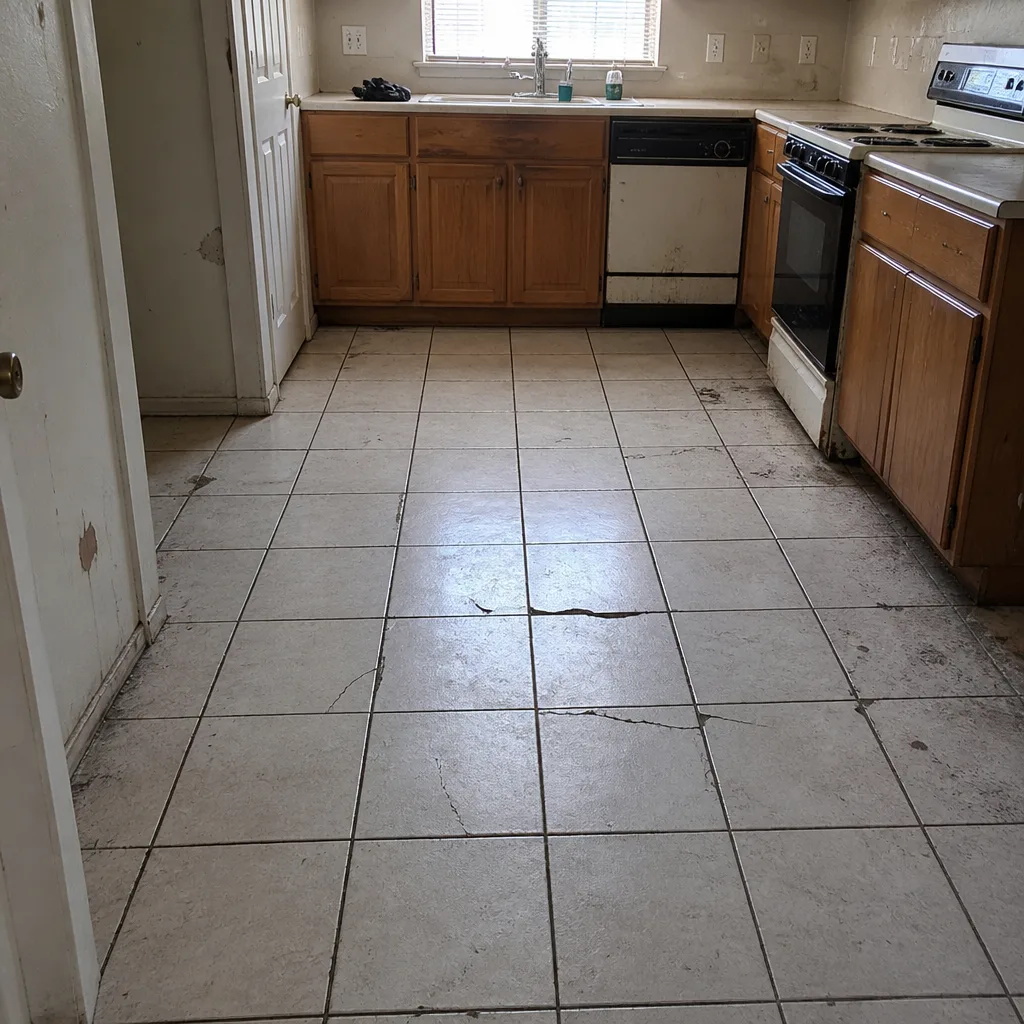 Before
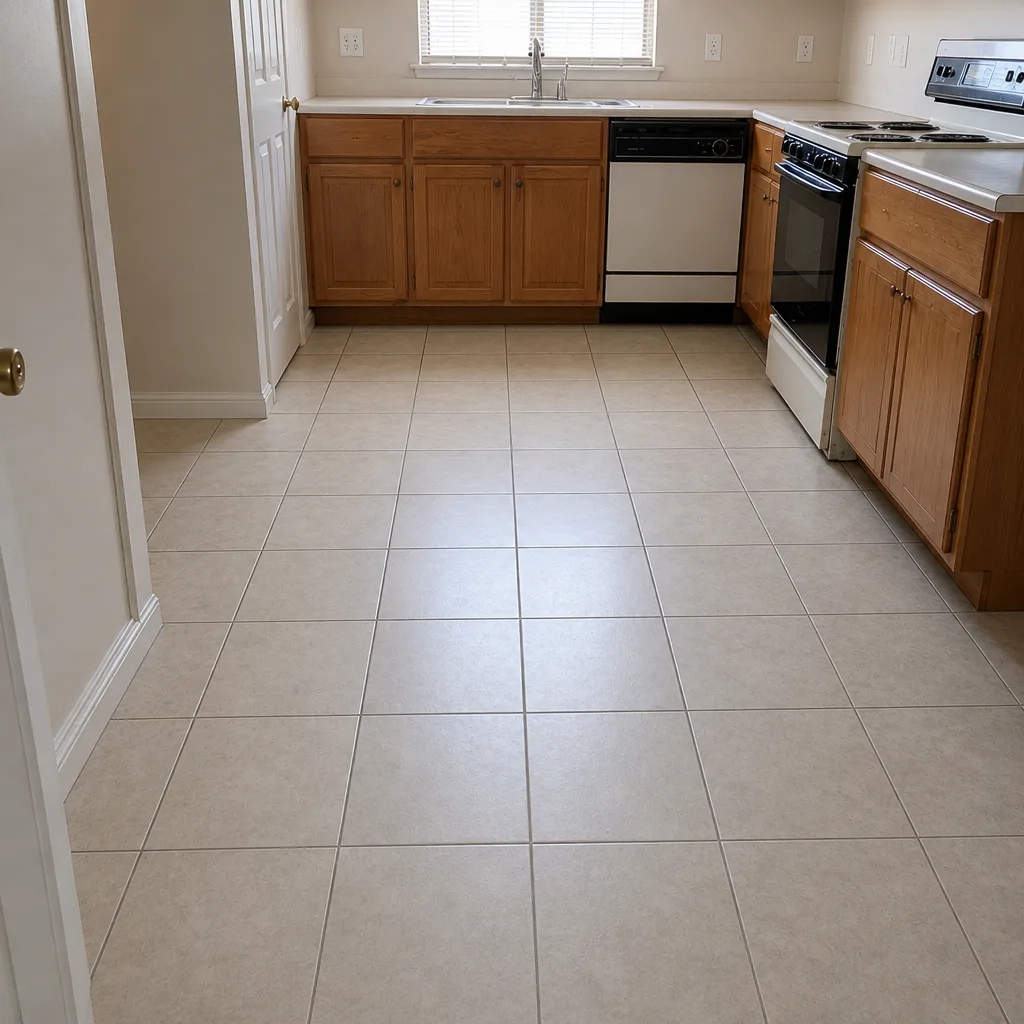 After
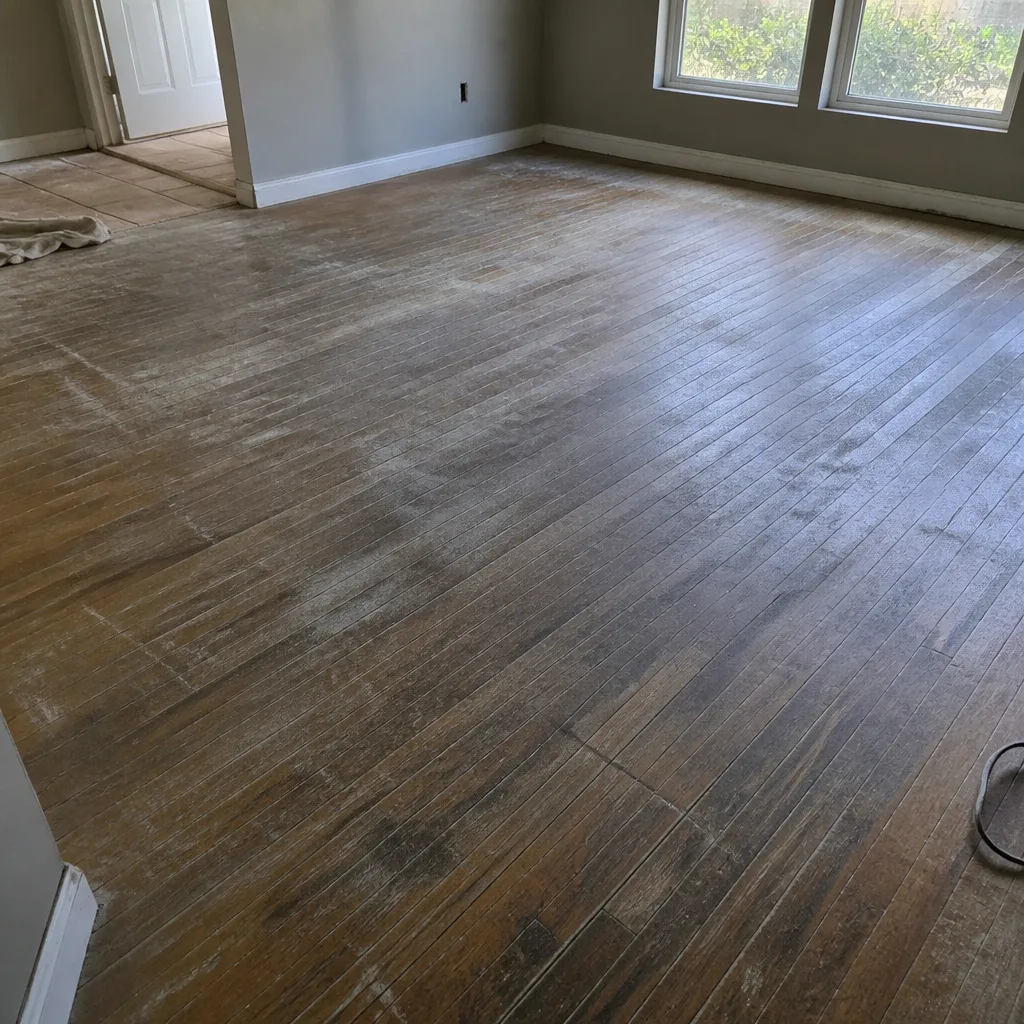 Before
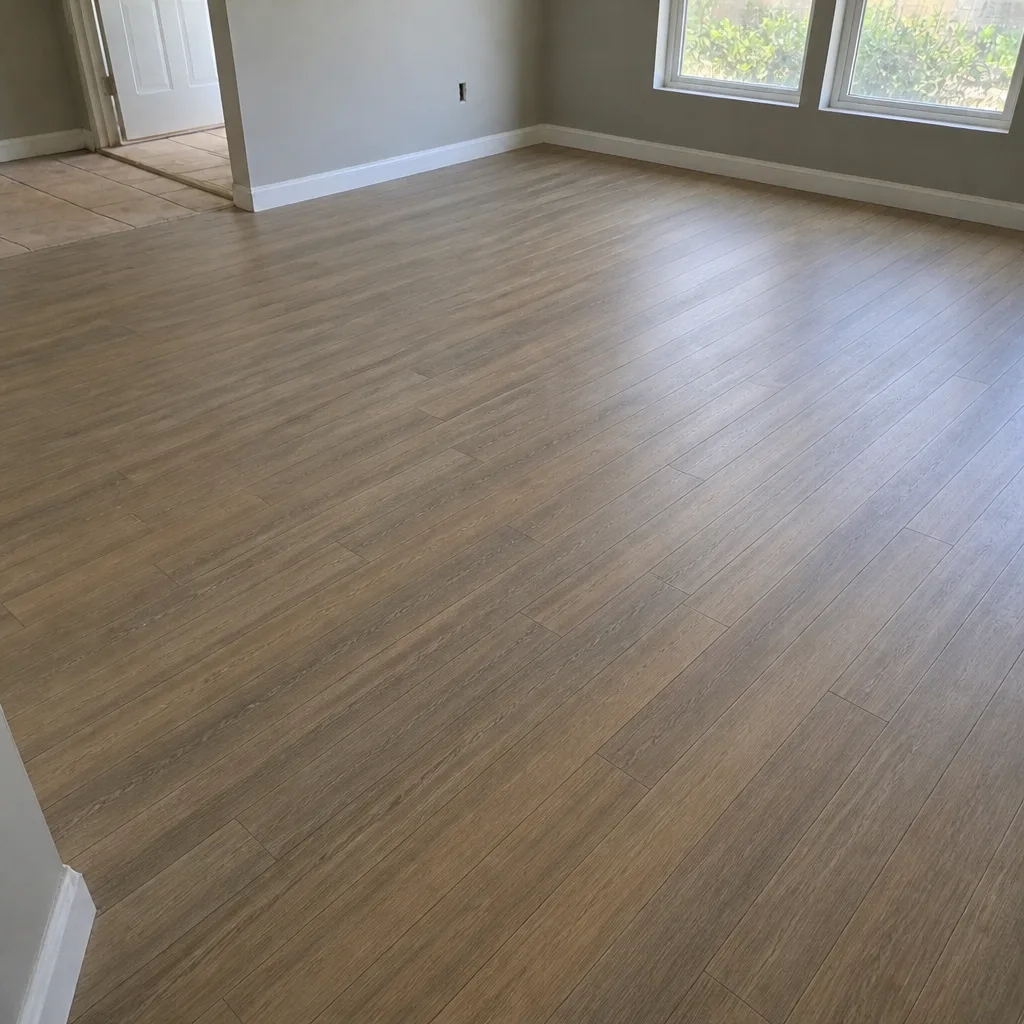 After
When to Call a Professional
Some flooring decisions are straightforward; others genuinely need an expert eye before a single box is opened. Call a professional when you’re planning a whole-home re-floor across mixed materials, when your existing floor is uneven or soft underfoot, when you’ve had any past water event in the home, or when you’re weighing refinishing against replacing a real hardwood floor. Our technicians have up to 10 years of experience and know how to spot the subfloor conditions that decide whether an install performs or fails. Floors Henderson offers free estimates in Henderson – call (844) 972-2185 to schedule yours. We’ll bring the level and the moisture meter, and leave you with a written quote you can actually use.
Frequently Asked Questions
A single-room estimate typically runs 30 to 45 minutes in a Henderson home, while a whole-home re-floor with multiple rooms and mixed materials can take an hour or more. The length depends on the number of transitions, furniture placement and the condition of the subfloor underneath. Call (844) 972-2185 to schedule yours – the visit is free and there’s no obligation to hire.
Yes. There’s no fee to have an estimator visit, assess the project and hand you a written quote, and no obligation to hire us for the job. You’ll still walk away knowing the actual condition of your subfloor and which floor categories fit your rooms. Call (844) 972-2185 to book the visit.
You’ll be told what the problem is, what it needs to address it, and what that adds to the estimate as a written line item. Prep work like leveling compound or grinding is a real construction step, not an upsell, and a thorough estimator will show you exactly where the issue is. Call (844) 972-2185 for a free estimate that accounts for it upfront.
You can get a ballpark range over the phone, but a phone quote can’t account for the subfloor, transitions or prep work your specific home needs. The written in-home estimate is what sets your final price, and the visit is free. Call (844) 972-2185 to schedule the visit.
Getting two estimates for a Henderson flooring project is a reasonable idea, and it’s worth doing thoughtfully – line the quotes up side by side and reconcile what’s included before deciding. Compare product names, waste factors, prep lines, removal, transitions and exclusions, not just the total. Call (844) 972-2185 for a free estimate with clear line items you can compare against any other quote.
Sometimes. It depends on the thickness of the existing wood and its overall condition, which the estimator checks at the visit – some floors can be restored and some are beyond sanding. Refinishing is a dedicated service we handle alongside carpet and tile work, so it’s a real question worth asking at the estimate. Call (844) 972-2185 to schedule yours and find out what your hardwood floor can do.
No. The estimate is a visual and physical inspection, not an install, so the estimator just needs reasonable access to the walls and floor edges to check baseboards, transitions and flatness. Move only what’s easy to move and leave the rest. Call (844) 972-2185 to schedule your free estimate.
Bring your list of rooms under consideration, a rough budget range, and any knowledge of the home’s floor history – whether it’s original, patched, or a recent installation. If you’ve had a water event in the home, say so; that’s a clue the estimator will use. Call (844) 972-2185 to schedule the visit.
The Bottom Line
A free in-home flooring estimate in Henderson is a diagnostic visit first and a price quote second. A thorough estimator tests your subfloor for flatness and moisture, checks transitions, baseboards and door clearances, and hands you a written, line-item quote that sets your final price. Prepare for the visit by clearing access and bringing your questions; then use the written quote to compare any other estimate – line item by line item, not by total alone. That approach is how you avoid a low-ball number that grows once the job starts. If you’re ready to see exactly what your floor really needs, call Floors Henderson at (844) 972-2185 to schedule your free estimate. Our technicians bring up to 10 years of experience to the visit, and we’ll leave you with a written quote and a clear read on your subfloor. We’re a Floors Henderson specialist covering tile flooring installation alongside carpet and hardwood refinishing – one team, every room, one written price.
Call (844) 972-2185. We answer 24/7. Fast dispatch from 7am to 7pm, Sunday through Friday. Estimates are free, and the written estimate sets the final price.
Written by the team at Floors Henderson.